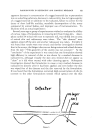
330 JOURNAL OF THE SOCIETY OF COSMETIC CHEMISTS evaluation" may be undertaken routinely in respect to removal of soil from textile fibers. In this respect extensive studies have been undertaken into the preparation of radioactive soil that would truly be representative of the usual soil found on cloth (24, 25). Among the radioactive materials used as tagging agents for soil have been fission products, carbon-14 and calci- um-45. One complete technique in use by several companies for detergent evaluation utilizes an oily paste prepared from radioactive carbon-14 lampblack mixed with mineral oil as the soiling agent (26). In the test, cloth is •i'oiled by first picking up a small amount of the oily soil on an etched plate and then mechanically rubbing traces of the soil onto Indianhead muslin swatches. The swatches are radioassayed to obtain the amount of radioactivity representative of the amount of initial soiling present, and are then washed in a miniaturized "washing apparatus" with the detergent to be tested. The swatches are dried and again radioassayed and the amount of soil remaining is thus determined. Soil redeposition in the pres- ence of the test detergent may be studied by including an unsoiled swatch in the washing apparatus and determining the amount of radioactivity picked up by this swatch. The commercial availability (27) of cloth swatches soiled with carbon-14 tagged lampblack, protein or fat has further simplified the technique. This test method is simpler, reasonably inexpensive, more sensitive and faster than usual evalua'tion studies utilizing reflectometers or visual in- spection as an index of cleaning ability. Furthermore, changes in the surface of the cloth which can cause changes in reflectance have no effect in the radiotracer technique. An additional advantage is that because of the small quantities of all substances used, very small amounts of detergent may be evaluated. Further improvement of the technique has recently been made with the preparation of a radioactive clay as a soiling agent (28). This clay is prepared by the addition of calcium-45 or strontium-90 salts to normal clay with subsequent isotope exchange and the formation of "tagged" clay. Determination of quantitative adsorption of tagged soaps and detergents onto textile fibers has also been undertaken. The adsorption of sulfur-35 tagged sodium lauryl sulfate and sodium alkyl benzene sulfonates arid carbon-14 tagged sodium palmirate has been studied. These studies were undertaken not only to correlate detergent action and soil removal prop- erties with adsorption, but also to study the effect of detergent adsorption on soil redeposition. Other uses are known for radiotracers in the detergent and cosmetic field. The complete theology of systems involving the addition of one component to another have been studied. By use of iodine-131 or sodium- 22, the addition of "builders" and additives to detergent bases has been

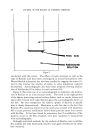
RADIOISOTOPES IN DETERGENT AND COSMETIC RESEARCH 331 followed in respect to motor speed, position and angle of stirring, amount of additive, temperature, time of stirring and shape of vessel. With use of a scintillation counter and gamma emitting isotopes (so that adsorption corrections are not necessary), techniques have been developed that are faster, more accurate and are far more sensitive than usual analytical methods. Stability of emulsions can also be evaluated using radioisotopes (19). By tagging one component in an emulsion and by radioassay along the vertical side of the vessel containing the mixture, the gradient of radio- activity obtained from the surface of the mixture to the bottom is an excellent index of homogeneity. Quite often, long before visual signs of separation occur, the gradiation of radioactivity has shown the emulsion mixture to be separating. Therefore the technique permits quicker evaluation of lotions and creams in respect to their stability toward separa- tion. SummARY Uses of radioisotopes in detergent and cosmetic research is demonstrated, with specific examples being given of radiotracer techniques applied to various problems. In the examples shown, the use of radioisotopes was stimulated by either lack of routine analytical techniques suitable for assay of the desired material or very high costs of experimental methods by use of these tech- niques. Manpower hours were saved and valuable research knowledge was gained which aided in product developement and improvement. REFERENCES (1) Nucleonics, 15, (9), 118 (1957). (2) Allison, J. B., Nelson, M. F., and Hilf, R., to be published. (3) N.Y. State Dental yourhal (June-July), 274 (1953). (4) "Radioactivity at Work," Vol. 7 (December), Nuclear Science and Engineering Corp., Pittsburgh (1957). (5) Nelson, M. F., and Stewart, D., y. Soc. Cosmetic Chemists, 7, 122 (1956). (6) Stam, P. B., and White, Jr., H. J., Textile Research 24, 789 (1954). (7) Nelson, M. F., Nucleonics, 14, (5), 43 (1956). (8) Nelson, M. F., and Stewart, D., unpublished results. (9) Allison, J. B., Zullo, R. J., and Nelson, M. F., unpublished results. (10) Sheneane, I., and Nickerson, M., Fed. Biol. $oc. Proc., 13, (1), 404 (1954). (11) Davis, W., Miya, T. S., Edwards, L. D., y. Arm. Pharm. Atssoc., $ci. Ed., 45, 60 (1956). (12) Meshbane, A., y. $oc. Cosmetic Chemists, 3, 291 (1952). (13) Lux, R. E., and Christian, J. E., y. Arm. Pharm. Atssoc., $ci. Ed., 40, 160 (1951). (14) Urakami, C., and Christian, J. E., y. Arm. Pharm. •'lssoc., Sci. Ed., 42, 179 (1953). (15) Banks, Jr., H. O., Nucleonics, 13, (12), 62 (1955). (16) Nelson, M. F., Afonsky, D., and Quigley, G., unpublished paper, presented at Interna- tional Association of Dental Research spring meeting (1957). (17) Harris, J. C., Kamp, R. E., and Yanko, W. H., "Improved Radioactive Tracer Carrier for Metal Cleaning Studies," ASTM Bulletin No. 170, 82, December (1950). (18) Hensley, J. W., Iron Atge, 170, 151 (1952). (19) Hensley, J. W., Plating, 40, 366 (1953). (20) Ashcraft, E. B., "Use of Radioactive Tracers in the Study of Soil Removal and Deter- gency in Symposium on Radioisotopes," ASTM Special Technical Publication No. 215. (21) Segura, G., Chemistry andIndustry, 1270 (1953).
Purchased for the exclusive use of nofirst nolast (unknown)
From: SCC Media Library & Resource Center (library.scconline.org)