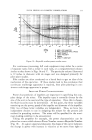
FLUID MIXING OF COSMETIC FORMULATIONS 355 Surface tension af[ects the formation of surface area in a two-phase system, but is usually not of great importance in those systems. Viscosity is the predominant force which influences the fluid regime in the vessel. The ratio of inertia force to the viscous force, F•/F,, is the Reynolds Number and has the value ND"p/I•. This is the ratio of what we apply to the system divided by the resisting force of viscosity. This determines the motion of the fluid in the tank. The process result is represented by R. The process result alone cannot be correlated with Reynolds Numbers, since (R) has units and depends upon the process definition given to it, while the Reynolds Number is a dimension less ratio. In heat transfer for example, the heat transfer coefficient (h) alone cannot be correlated with the Reynolds Number, but it can be combined by the principles of dimensional analysis to give a group (hd/k) which relates the process performance in the system to the fluid conductivity which governs the rate at which this process result will be obtained. Thus, the correlation of hd/k with Nae holds for all sizes of systems as illustrated in equation 4. When a dimensionless ratio involving (R) cannot be used, a second method of analysis for a particular process in both a small scale and a large scale in which the fluid properties are constant in both scales, takes the form of R = f(F•) (scale factor) (8) Geometric similarity is implied in this relationship. The group repre- senting the inertia force can either be speed, peripheral speed, power or power per unit volume, or even a dimensionless number such as Reynolds Number. The choice of which index to use is determined by the scale factor that results. The choice of horsepower per unit volume for Fz has several advantages. One advantage of this choice is that the scale factor varies the least above and below unit of any group that can be chosen. For scale-up, the factor must be known either by previous information, such as research or plant scale data, or must be determined as part of the pilot plant procedure. PILOT PLANTING Purpose of Pilot Plantin• The ultimate aim of all process designers is to design a process which successfully meets the requirements of the plant. To meet this aim, a complete investigation of the current mixing knowledge relative to the application should be made. By the most practical method, data should be extrapolated to the plant size process. At this point, the accuracy of

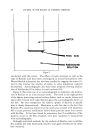
356 JOURNAL OF THE SOCIETY OF COSMETIC CHEMISTS this extrapolation should be determined, and the possible ranges of mixer sizes estimated. Then, the possible economic advantages to be gained by a thorough knowledge of mixing variables in the process should be estimated. This will give an adequate basis for deciding on the merits and extent of a proposed pilot plant study. Pilot plant studies can range from one "spot check" in a six-inch tank, t,) an extensive project covering several months of work with equipment in several tank sizes. ,4 Summary of Pilot Plant Procedures Regardless of the complexity of the process, which may even involve flows of three different phases or other complicating variables, a basic pattern of investigation must first be followed. Holding all other variables constant except impeller speed and diameter, a basic series of runs must be made. These experiments measure the effect of (a) Horsepower (three to six runs), (b) Impeller diameter to tank diameter ratio (one to three runs). The interpretation of the results from these basic runs is discussed below. In making these runs, there are several rules that should be followed: 1. The impeller must be geometrically similar to the proposed full scale installation. 2. The tank proportions must be geometrically similar. The only exception of this rule is that the ratio of liquid depth to tank depth need not be held constant. Corrections for this factor can usually be made to the basic pilot plant runs. 3. Horsep.o .wer must be varied in at least four steps over a tenfold range as a mm•mum. The total speed must thus be approximately two- fold. Wider variations in power are desirable. 4. When varying other variables, such as gas flow, liquid flow, etc., at least threefold variation between steps must be made, so that pronounced differences in process result will occur. Effect q/Horsepower The basic runs to be made first are to relate process result to mixer horsepower. Pilot plant impellets and tanks should be geometrically similar to projected full scale equipment if useful results are to be received. Pilot plant impellers whose power characteristics are known, enable horse- power to be calculated from speed measurements, and elaborate dyna- mometers are usually not necessary. These studies should be carried out from zero horsepower up to a value sufficient to cause a leveling out of the process result. From the slope of this curve of process result versus mixer horsepower, many preliminary observations can be made which will point the way to proper follow-up experiments.
Purchased for the exclusive use of nofirst nolast (unknown)
From: SCC Media Library & Resource Center (library.scconline.org)