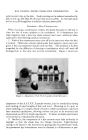
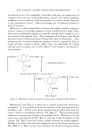
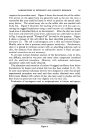
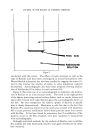
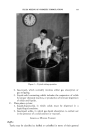
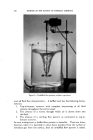
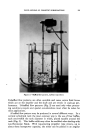
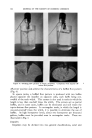
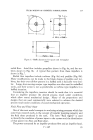
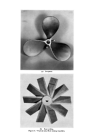
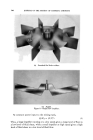
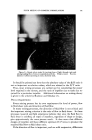
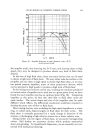
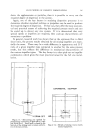
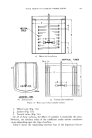
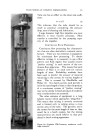
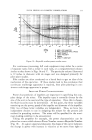
FLUID MIXING OF COSMETIC FORMULATIONS 357 EfiFct of D/T Ratio The ratio of impeller size to tank size is related to the ratio of fluid flow imp•!ler velocity head. In the remarks above on the effects of horse- power, these runs many times can be neglected or calculated from other known factors. If necessary, the effect of D/T should be evaluated at either constant horsepower and the result measured, or at constant result and the horsepower measured to achieve this result. Measurement of Power Input The power input to a mixing vessel can be measured by several different methods. Each of these methods has its own advantages and disadvan- tages and these are discussed below: A. Calibrated Impellers In an operation where the fluid properties can be accurately eval- uated, power consumption can be obtained from power curves and calibrated pilot plant turbines. Therefore, all that is necessary is to measure impeller speed and position and the factor to apply for fluid properties. This is by far the most common method, the most convenient and the least costly. A fiat blade turbine (Fig. 8a) can be supplied with calibration curves. B. Dynamometers The simplest dynamometer consists of a motor mounted on a trun- nion bearing with an attached pulley running to a scale. The torque reaction on the impeller gives an equal and opposite reaction on the frame of the motor. C. Electric Power Input For small scale equipment, it is often very difficult to get accurate power measurements from wattmeter readings. The problems norm ally encountered are: 1. Operation below one-third of the rated motor capacity. 2. Excessive no-load friction losses. 3. Unknown losses through variable speed devices. If wattmeter readings of high accuracy can be taken and if the losses of motor and drive assembly can be obtained with reasonable accuracy, this should offer an acceptable calculation for power input. TYPES OF MIXERS There are four basic types of mixers for fluid mixing. These are labora- tory, portable or permanently mounted propeller type mixers, side- entering propeller type mixers, and top-entering turbine type mixers. Laboratory Mixers Laboratory mixers range in size up from 1/20 of a horsepower. These

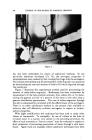
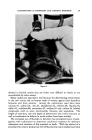
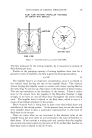
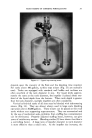
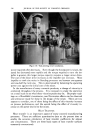
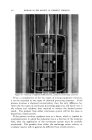
358 JOURNAL OF THE SOCIETY OF COSMETIC CHEMISTS are equipped with propellers ordinarily, but may be used with turbines for scale-up work. Various types of drives are available, constant speed and variable speed. Propeller Type, Portable or Permanently Mounted Top-Entering (Fig. Z) There are two types of units used, gear drive or direct drive. Gear drive mixers are often used in applications requiring high pumping capacities, such as blending and heat transfer. Direct drive mixers are used for op- erations not so sensitive to flow, such as solid dissolution, dispersions, emulsions and other similar types of operations. These units may be either permanently mounted on the side of the tank, or fixed-mounted with or without stuffing boxes or mechanical seals. Side-Entering Mixer, Propeller Type (Fig. 150 Side-entering mixers range in size up to 25 hp. and are equipped with propellers operating at 420 r.p.m. These mixers are very effective for blending operations and heat transfer, and in operations where high flow is desirable. They are normally permanently mounted on the side of the tank and are equipped with a stuffing box or a mechanical seal, and may be gear driven or belt driven depending upon the requirements of the plant. Top-Entering Turbine Type Mixers (Fig. 15) These mixers operate in ranges from three horsepower and up. Common speed ranges are from 56 to 125 r.p.m., although they can be used with any speed from 161/2 to 420 r.p.m. with 1750 motors. They are normally equipped with turbine type impellers, which give the mechanical characteristics desirable in a mixer of this size. By means of change gears, mixers of this type have much flexibility and can be adapted to many different process requirements. REFERENCES (1) MacMullin, R. B., and Weber, M., Jr., Chern. Met. Eng., 42, 5 (1935). (2) Oldshue, J. Y., and Gretton, A. T., Chern. Eng. Prog., 50, 12 (1954). (3) Oldshue, J. Y., Hirschland, H. E., and Gretton, A. T., Ibid., 52, 11 (1956). (4) Rushton, J. H., Costich, E. W., and Everett, H. J., Ibid., 46, Part l, 395 and Part lI, 467 (1950). (5) Rushton, J. H., and Oldshue, J. Y., ?bid., 49, 4 (1953).
Purchased for the exclusive use of nofirst nolast (unknown)
From: SCC Media Library & Resource Center (library.scconline.org)