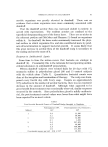
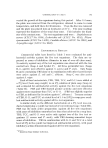
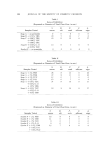
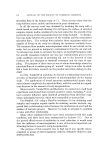
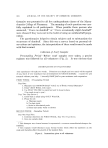
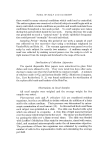
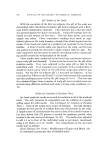
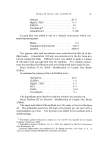
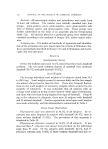
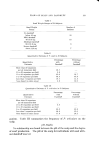
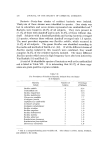
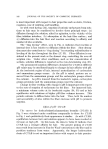
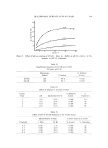
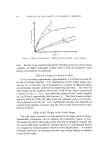
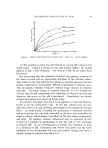
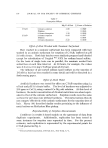
FLORA OF SCALP AND DANDRUFF 125 with dandruff. Only 29.2% of the subjects without dandruff had yeasts, but yeasts were found in 56.4% of those with scurf weights over 40 mg. The two most common yeasts were more prevalent on subjects with dan- druff than on those without dandruff. •Rhodotorula mucilaginosa oc- curred in 28.6% of subjects with dandruff and in 20.8% of those without dandruff. C. parapsilosis was isolated in 32.2% of those with scurf weights over 40 mg but only in 8.3•0 of those with less than 40 rag. Molds--Molds were found in 100•o of the subjects. The number of species varied from one to seven per individual. Those subjects with dandruff averaged 3.1 species of molds each, whereas those without dan- druff averaged 2.3 species. Of the 143 molds isolated, 133 were identified to species. The remaining ten molds included three species of •Penicil- lium, four species of Cephalosporium, two species lost in subculture, and one unknown genus. Six genera were represented: ,4spergillus, Penicillium, Pullularia, .4 Itemaria, Stemphylium, and Helminthosporium. The species of Aspergillus were identified according to the methods and media of Raper and Fennell. (37). The keys of Raper and Thom (38) were used to identify the species of Penicillium. Colors of colonies in both genera were compared to the descriptions and standards of Ridg- way (39). According to Ainsworth (40), there is only one species of Pullularia, Pullularia pullulans. This species corresponded to the de- scription given by Barnett (41). Alternaria and Stemphylium were classified according to the media and methods of Neergaard (42). A key by Luttrell (43) was used to identify the tlelminthosporium. Fifteen species of molds were included in six genera and they are listed in Table V. The prevalence of the four most common resident species of molds from subjects with and without dandruff is summarized in Table VI. Table VI The Prevalence of the Four Most Common Resident Molds in Persons with and without Dandruff Mold Isolate Percentage Pel centage of Subjects of Subjects with without Dandruff Dandruff Aspergillus awamori 100 95.8 Aspergillus fumigatus 67.9 95.8 _Pullularia pullulans 28.6 ... Aspergillus flayus 14.3 8.3

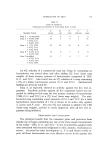
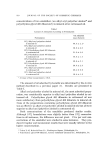
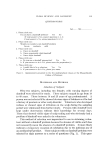
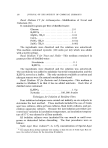
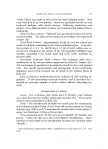
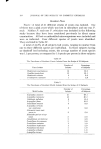
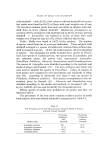
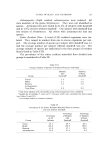
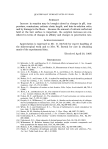
126 JOURNAL OF THE SOCIETY OF COSMETIC CHEMISTS Bacteria--Forty-four strains of resident bacteria were isolated. Thirty-six of these strains were identified to species. One strain was lost in subculture and seven strains represented one unidentified rod.* Bacteria were found in 42.3% of all subjects. They were present in 57.1% of those with dandruff and in only 25.0% of those without dan- druff. Subjects with a dandruff problem and having bacteria averaged 2.3 species whereas those without dandruff averaged only 1.3 species. The most prevalent organism was Bacillus subtilis, which occurred in 15.4% of all subjects. The genus Bacillus was identified according to the media and methods of Smith et al. (32). If all the different strains of Bacillus species isolated in this research were combined, they would comprise 52.3% of the resident bacteria isolated. The many different Bacillus species which occur in high frequency have also been noticed by Van Buskirk (10) and Beal (5). A total of 16 identifiable species of bacteria as well as the unidentified rod is listed in Table VII. It is interesting that 90.5% of these orga- nisms are gram-positive or gram-variable. Table VII The Prevalence of Resident Bacteria Isolated from the Scalps of 52 Subjects Bacteria Number of Percentage Isolate Isolates of Subjects Bacillus subtills 8 Unidentified rod 7 Bacillus megaterium 5 Bacillus pulvifaciens 5 Micrococcus candidus 4 Alcaligenes faecalis 2 Staphylococcus epidermidis 2 A erobacter aerogenes 1 Alcaligenes metalcaligenes 1 Bacillus circulans 1 Bacillus coagulans 1 Bacillus lichenif ormis 1 Bacillus pumilus 1 Bacillus s phaericus 1 Brevibacterium brunneum 1 Brevibacterium:•insectiphilium 1 Micrococcus caseolyticus 1 15.4 13.5 9.6 9.6 7.7 3.8 3.8 1.9 1.9 1.9 1.9 19 19 19 19 19 19 * This is a nonspore-forming gram-variable rod. The colony is yellow, raised, wrinkled, and adheres to the media.
Purchased for the exclusive use of nofirst nolast (unknown)
From: SCC Media Library & Resource Center (library.scconline.org)