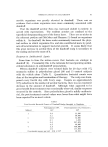
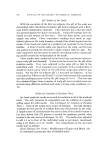
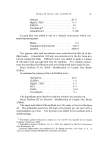
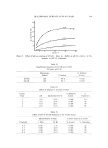
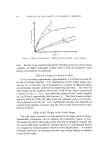
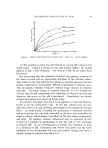
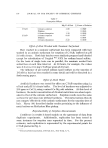
FLORA OF SCALP AND DANDRiJFI½ 131 Finally, it is conceivable that no specific microorganism is involved in scurf production, but rather dandruff is due to an increase in the entire resident microbial flora, with each member having similar nutritional requirements. SUMMARY 1. The nature of the resident microbial flora isolated fr'om the scalps of 28 college students with dandruff was compared to the resident flora isolated from 24 students without dandruff. The occurrence of dan- druff was determined visually, and by removing and weighing exfoliated dandruff flakes (scurf). 2. Studies included: a questionnaire survey of the prevalence of dandruff in 502 college students the isolation, identification, and prev- alency of the resident flora relationship of scalp pH to dandruff and relationship of resident flora to dandruff production. 3. A questionnaire survey of 502 students of college age indicated that 70.1% of them had a dandruff problem. 4. Four techniques of isolation of resident flora were used on the first six subjects. Best results were obtained using Noble Agar base method adjusted to the pH of the individual scalp and using scurf as the only source of nitrogen. This method was used to study the flora of the other 46 subjects. ,5. A total of 225 resident isolates was obtained by cultural methods. These included: 30 yeasts, 143 molds, 44 bacteria, and 8 actinomycetes. 6. The prevalency of Pityrosporum ovale and P. orbiculare was determined by direct smear observation. P. ovale was found in 96.4% of the subjects with dandruff and in 75.0% of the subjects without dan- druff. P. orbiculare occurred in 82.1% of the subjects with dandruff and in 70.8% of those without dandruff. P. orbiculare was always found less frequently than P. ovale on the same scalp. 7. The two most common resident yeasts isolated in culture were Rhodotorula mucilaginosa and Candida parapsilosis. Yeasts were found in 56.4% of the subjects with dandruff and in 29.2% of those without. 8. Resident molds were isolated from every subject regardless of scalp condition. The two most prevalent molds were Aspergillus awamori (98.1%) and A. fumigatus (80.7%). The average number of species of molds isolated from subjects with dandruff was 3.1, compared to 2.3 from subjects without dandruff. 9. Resident bacteria were found in 57.1% of subjects with dandruff and in 2,5.0% of those without dandruff. The most prevalent species

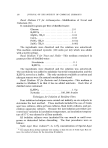
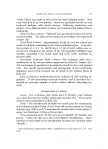
132 JOURNAL OF THE SOCIETY OF COSMETIC CHEMISTS was Bacillus subtilis (15.4%). If all the different strains of Bacillus species isolated in our research was combined, they would comprise 52.3% of the resident bacteria isolated. Gram-positive and gram- variable isolates accounted for 90.5% of the bacterial species. 10. Resident actinomycetes were found in 21.4% of subjects with dandruff and in 4.5% of those without dandruff. The eight resident isolates belonged to the genus Streptomyces. 11. There was no difference in the pH (,5.2) of the scalps of subjects with dandruff and those without. There is no correlation between scalp pH and dandruff. 12. No specific organism, with the possible exception of ?. ovale, showed any significant relationship to dandruff. It was concluded that an increase in the total microbial flora was a factor in the increase of dandruff production since almost twice as many species of organisms were found in the scalps of those subjects with dandruff than on the scalps of those subjects without dandruff. (Received April 26, 1968) REFERENCES (10) (11) (13) (1) Malassez, L., Note sur la champignon de la pelade, Arch. Physiol. iVorm. et Pathol., 1, 208 (1874). (2) Reddish, G. F., The etiology of infectious dandruff, J. Soc. Cosmetic Chemists, 3, 90 (1952). (8) Hechemy, K. E., The odoriferous principle obtained from Pityrosporum ovale when grown on a medium containing sesame oil, Master of Science Thesis, Massachusetts College of Pharmacy, Boston, 1965. (4) Roia, F. C., Jr., VanderWyk, R. W., and Beal, J. A., The human scalp as a habitat for yeasts, J. Soc. Cosmetic Chemists, 14, 81 (1963). (5) Beal, J. A., Isolation and classification of aerobic bacteria from the human scalp, Master of Science Thesis, Massachusetts College of Pharmacy, Boston, 1962. (6) Epstein, J. M., The isolation and identification of fecal organisms from the human scalp, Master of Science Thesis, Massachusetts College of Pharmacy, Boston, 1963. (7) Shaw, C. T., and VanderWyk, R. W., The human scalp as a habitat for molds, J. Soc. Cosmetic Chemists, 18, 563 (1967). (8) VanderWyk, R. W., and Roia, F. C., The relationship between dandruff and the micro- bial flora of the human scalp, Ibid., 15, 761 (1964). (9) VanderWyk, R. W., and Hechemy, K. E., A comparison of the bacterial and yeast flora of the human scalp and their influence upon dandruff production, Ibid., 18, 729 (1967). Van Buskirk, W. L., The aerobic bacteria of the human scalp and their relationship to scurf production, Master of Science Thesis, Massachusetts College of Pharmacy, Boston, 1967. Lubowe, I. I., Diseases of the scalp and hair, Soap, Perfumery Cosmetics, 34, 1028 (1961). Gordon, M. A., The lipophilic mycofiora of the skin. I. In vitro culture of oeityrosporum orbiculare n. sp., Mycologia, 43, 524 (1951). VanderWyk, R. W., Unpublished procedure, 1958.
Purchased for the exclusive use of nofirst nolast (unknown)
From: SCC Media Library & Resource Center (library.scconline.org)