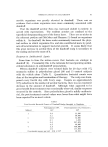
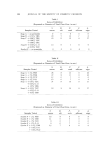
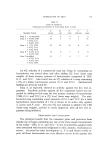
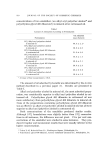
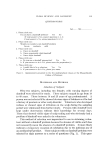
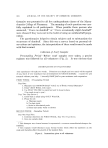
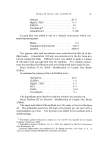
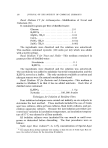
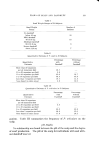
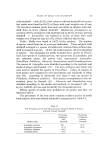
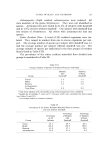
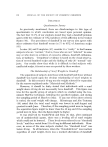
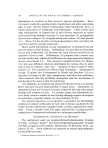
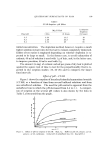
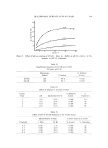
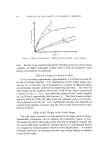
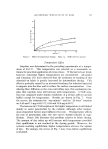
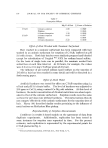
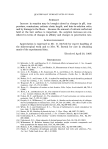
QUATERNARY SURFACTANTS ON HAIR 145 2O pH 64 5 10 20 30 40 (MINUTES) Figure 5. Effect of pH change in the acidic range. Hair, 2 g. Acetate buffers CTAB sorption to hair was determined at several pH values in the acidic range. Using 2 g of hair per run and acetate buffers, the results plotted in Fig. 5 were obtained. The data in Table IV are taken from the curves. It is interesting that the estimates of initial (one-minute) sorption by the fibers at each pH are appreciable fractions of the 24-hour values. This relates to the rapid pickup of cationic on sorption sites near the hair surface, followed by increasingly difficult penetration to interior sites. The one-minute sorption estimates indicate large changes in sorption with pH. The large change in sorption from pH 3.7 to 6.4 limits the 24-hour data for pH comparison since depletion of solutions increasingly depresses the curves as the pH is increased. Nonetheless, no abrupt changes in sorption were observed in this range. In practice, few basic dyes have been applied to wool and their be- havior is not too well known (33). At low pH, anionic dyes are con- sidered to sorb by an ion exchange mechanism to the positively charged fibers. At neutral pH, a leading ion mechanism is indicated wherein cations from the dyes are first attracted to the fiber and neutralize its negative charge, which makes it possible for the dye anions to approach and bind. By analogy, cationic surfactants may be expected to sorb to hair by a leading ion mechanism at low pH and by ion exchange at neutral pH. In an investigation of anionic dye sorption to wool as a function of pH, Deltachico and Peters (36) point out the basic similarity of the mechanisms for acid and neutral dyeing and show a smooth change of sorption from pH 4 to 9.

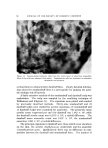
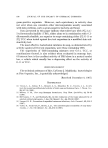
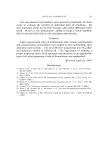
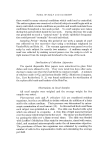
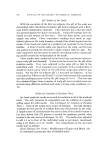
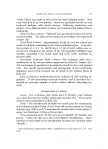
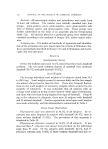
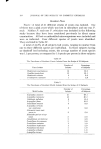
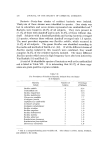
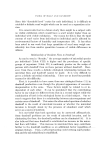
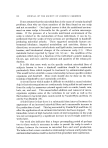
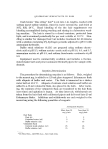
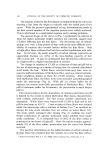
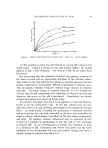
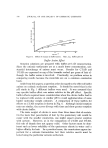
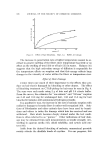
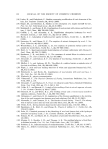
146 JOURNAL OF THE SOCIETY OF COSMETIC CHEMISTS 20 Figure 6. "•1 I• 5 IO 20 $0 40 Effect of change in buffer anion. Hair, 2 g buffer pH 3.6 Buffer A nion Effect Sorption solutions are prepared with buffer at 0.13//concentration. Since the cationic surfactants are at a much lower concentration, sub- stantial interchange of anions must occur. Results for CTAB and DTAB are expressed as mg of the bromide sorbed per gram of hair al- though the buffer anion is involved. Practically, no problem arises in comparing results because the materials are on a common counterion basis. Aside from this aspect, a question arises in regard to the effect of buffer anions on cationic surfactant sorption. It should be noted that in the pH study in Fig. 1 different buffers were used. It was assumed that any specific buffer effect was minor relative to the pH effect. Specific buffer effects required more consideration when the citrate buffer had to be replaced with acetate at similar pH to avoid agglomeration of some higher molecular weight cationics. A comparison of these buffers for effects on CTAB sorption is shown in Fig. 6. Although initial sorption rates are similar, the curves diverge with time and show greater sorption with citrate buffer. The ionic weight of citrate is more than three times that of acetate. On the basis that penetration of hair by the quaternary salt would be easier with the smaller counterion, one might expect greater sorption with acetate. However, as in the comparison of CTAB and DTAB, this rule of thumb does not appear valid. Other factors must be dom- inant such as lower solubility of the quaternary citrate in water and a higher affinity for hair. In a practical sense, the counterions appear im- portant for a cationic formulation but their relative merits must be tested using the particular cationic surfactant.
Purchased for the exclusive use of nofirst nolast (unknown)
From: SCC Media Library & Resource Center (library.scconline.org)