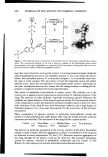
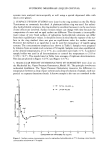
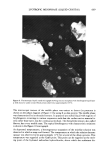
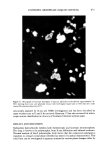
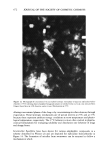
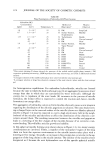
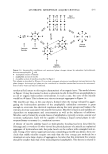
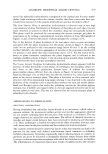
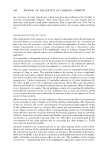
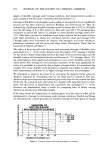
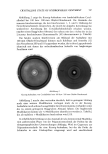
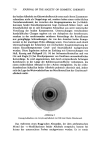
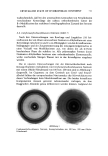
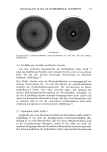
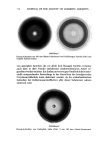
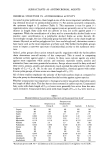
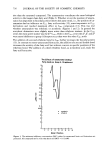
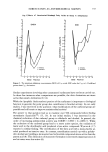
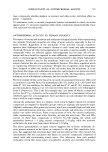
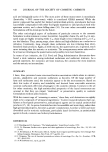
672 JOURNAL OF THE SOCIETY OF COSMETIC CHEMISTS Figure 12. Micrograph of concentrated viscous turbid lyotropic mesophase of aqueous nafoxidine hydro- chloride (•95%) showing microcrystalline hexagonal isolates in rod-like forms in a focal conic textured bire- fringent liquid layer at 43X objective under crossed Nicol prisms at 25øC. diluting concentrated phases of the drug or by concentrating miceliar solutions through evaporation. These lyotropic mechanisms are of special interest at 25øC and at 37øC because these represent ambient storage conditions at room temperature and physio- logical temperature, respectively. The 37øC behavior is most often studied in pharma- ceutical formulations for evaluating solubility and dissolution rate behavior of drugs and dosage forms. Intermicellar Equilibria have been shown for various amphiphilic compounds in a scheme described by Winsor (2) and are depicted for nafoxidine hydrochloride in Figure 14. The formation of micelies from monomers can be assumed to follow a mechanism in which

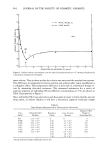
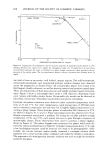
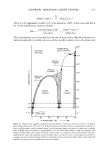
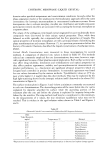
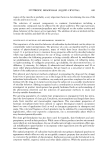
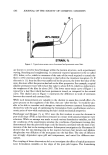
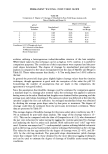
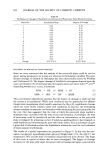
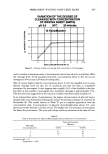
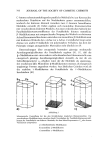
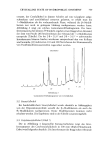
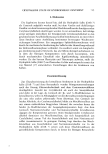
LYOTROPIC MESOPHASE (LIQUID CRYSTAL) 673 Km n[Naf+] +m[C1-] • [NafnClm]n-m where n is the aggregation number (CI) is the gegenion, (Naf +) is the cation and Km is the cicellar equilibrium constant such that [cations]n[gegenion] TM (aNaf+)n(aC1-) TM [micelies] (aNafn Clm) Thus micellization can be described by the law of mass action. Micelie formation is a thermodynamically reversible process and the miceliar solution obeys the phase rule I SOTROPI C SOLUTION THERMOTROPIC LIQUID CRYSTAL CRYSTAL PHASES -200 o 175 ø 150 ø MICELLAR PHASE VISCOUS ISOTROPIC MIDDLE NEAT (Nematic) ( S mectic ) 125 ø I00 ø .75 ø .50 ø 37 ø' 25 ø K. Pt. SOAP CURD 12ø 0 20 40 60 80 100 % NAFOXIDINE HCl • Figure 13. Binary phase diagram of nafoxidine hydrochloride in water as a function of mol % of drug in water. Phases observed at 25øC and 37øC isotherms (shown as dotted tie lines) are, sequentially: isotropic so- lution, miceIlar phase, middle (nematic) phase, viscous isotropic phase, neat (smectic) phase and crystalline solid. A Krafft point is estimated at approximately 12øC for dilute phases where a soap curd appears. The shaded micellar phase and shaded hydrated crystal phase are estimated from both thermal and spec- trophotometric data. The speckled viscous isotropic phase is observed only in heterogeneous systems of conjugate solutions involving either middle or neat phases with an isotropic gel phase. Data points marked X represent the presence of the middle phase with other phases.
Purchased for the exclusive use of nofirst nolast (unknown)
From: SCC Media Library & Resource Center (library.scconline.org)