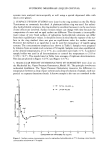
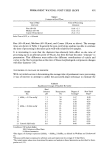
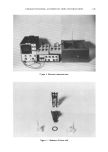
PERMANENT WAVING: POST-YIELD SLOPE 687 chemist is concerned with the variables of mercaptan concentration, pH, temperature and additives. At the same time, the ultimate user wants efficient and rapid processing. The post-yield slope can be used to assess the effect of formulation variables under actual waving conditions and can be correlated to molecular changes within the fiber, such as the degree of disulfide bond cleavage. The results of these investigations are reported herein. EXPERIMENTAL Hair samples were obtained from individual heads of known cosmetic history, or purchased as virgin European hair from DeMeo Brothers, New York, NY 10003. These samples were washed with a mild anionic commercial shampoo (Redken Labora- tories, Inc., Canoga Park, CA 91303) and thoroughly rinsed with tap water. For most experiments, 10 hair fibers were wrapped on single plastic mandrels (diameter 8 ram), saturated with the waving solutions, placed in plastic bags and treated for the desired length of time. For the reaction of hair keratin with sulfite, the procedures of Wolfram and Underwood (9) were duplicated. For the reaction of hair keratin with mercaptans to determine the degree of cleavage, the conditions of Haefele and Broge (6) were repeated. Mercaptan compounds of known purity were commercially available and obtained as samples from either Halby Division, Argus Chemical Co., New Castle, DE 19720, or Evans Chemetics, Inc., Darien, CT 06820. Solution concentrations throughout are based on the weight percent of active mer- captan species. All other chemicals were reagent grade. Stress-strain curves for individual fibers were obtained at ambient temperature (20- 25øC) and humidity (40-60% R.H.) utilizing the instrumentation described by Tyson and Curtis (10). • Post-yield slopes were obtained from the stress-strain curves by graphical interpolation. Reported slopes generally represent the average of 10 fiber de- terminations for each set of experimental conditions. In general the standard deviation was _+ 10% of the determined value. Penetration studies utilized the iodine decolorization technique as described by Herrmann (8). DISCUSSION AND RESULTS In order for the post-yield slope to be valuable in the assessment of formulation vari- ables in permanent waving it must be sensitive to these variables under actual permanent waving conditions. The data of Hamburger and Morgan (7) had been ob- tained by immersing the hair fibers in containers of the waving lotion, which represents very high solution to fiber ratios. The treated hairs were rinsed and subjected to analysis. In permanent waving practice, the weight ratio of solution to fiber is typically between 0.6 and 1.2, with a value of 1.0 being most representative. • A single hair fiber is horizontally suspended between a set of clamps. Force is applied by a constant speed motor which elongates the fiber at the rate of 1.5%/sec. Stress is monitored on the other end by a strain gauge transducer, while the stress-versus-strain graphs are plotted on an XY Recorder (Hewlett-Packard, Inc., ?alo Alto, CA 94303).

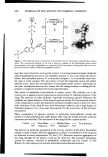
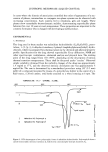
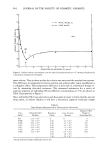
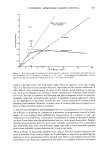
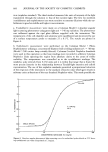
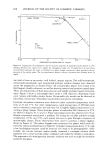
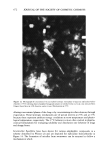
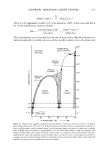
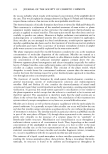
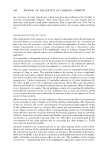
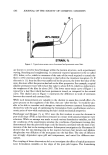
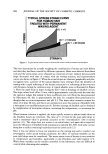
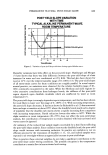
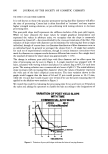
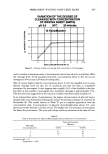
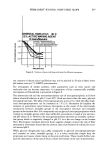
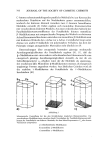
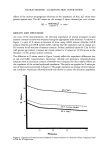
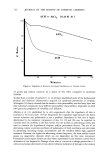
688 JOURNAL OF THE SOCIETY OF COSMETIC CHEMISTS TYPICAL STRESS STRAIN CURVE FOR HUMAN HAIR TREATED WITH PERMANENT WAVING AGENT (1) t =0 f = 5 minutes (3) •- = 20 minutes STRAIN% Figure 2. Typical stress-strain curves for human hair treated with permanent waving agent. This was determined by actually weighing the combination of tresses and rods before and after they had been treated by different operators. Hairs were selected from these rods and the stress-strain curve obtained as a function of time. Indeed, the post-yield slope decreased with time of contact with the waving solution, and representative curves are shown in Figure 2. When the actual slopes are obtained graphically and plot- ted against time, a picture of the typical alkaline wave emerges from the initiation of waving with a rapid softening of the keratin structure to a reforming of the structure with bromate during the oxidation step. A typical alkaline wave is illustrated in Figure 3. Note the rapid drop in slope during the first 5 min as breakage of disulfide occurs. The slope values level off at 15 min, which approximately coincides with the time that the operator judges this sample to have a sufficient test curl. From the data presented by Herrmann (8), this is approximately the time for complete fiber penetration by thioglycolate at room temperature and pH 9.2. The slope value remains constant for times of at least 40 min, and this is not unexpected, since the reaction of disulfide with a mercaptan is an equilibrium process (9). Further cleavage of disulfide can be obtained by reapplication of mercaptan solution, increasing the temperature, or increasing the pH. When bromate solution is applied, the slope rapidly returns to almost initial values as the disulfide bonds are reformed. The time of 5-10 min for the post-yield slope to reach a maximum value is generally accepted as the "neutralization" time in actual practice (11). The slope does not return to its initial value, and again this is expected since the efficiency of disulfide bond restoration is typically 80-90% with some cystine being lost to sulfur containing by-products such as cysteic acid (12). Since it was our desire to focus our attention on the waving step and to conduct our investigation under actual waving conditions, the effect of external variables on the post-yield slope must be considered. The stress-strain curve of keratin is very sensitive to temperature and humidity, particularly in the Hookean and yield regions (13). While these variables can be readily controlled in the laboratory, they are difficult to control while obtaining salon samples.
Purchased for the exclusive use of nofirst nolast (unknown)
From: SCC Media Library & Resource Center (library.scconline.org)