PERMANENT WAVING: POST-YIELD SLOPE 701 (3) (4) (5) (6) (7) (8) (9) (10) (11) (12) (13) (14) (15) (16) M. Feughelman, The mechanical properties of permanently set and cystine reduced wool fibers at various relative humidities and the structure of wool, Text. Res. J., 33, 1013-1022 ( 1963). W. G. Crewther, The stress-strain characteristics of animal fibers after reduction and alkylation, Text. Res. J, 35,867-877 (1965). S. D. Gershon, M. A. Goldberg and M. M. Rieger, Permanent waving, in "Cosmetics: Science and Technology," 2nd Ed., M. S. Balsam and E. Sagarin, Eds., Wiley Interscience, New York, 1972. J. W. Haefele and R. W. Broge, Properties and reactions of hair after treatment with mercaptans of dif- fering sulfhydryl acidities, Proc. Sci. Section of the Toilet Good Association, 36, 31-39 (1961). W.J. Hamburger and H. M. Morgan, Some effects of waving lotions on the mechanical properties of hair, Proc. Sci. Section of the Toilet Goods Association, 18, 41-48 (1952). K. W. Herrmann, Hair keratin reaction, penetration, and swelling in mercaptan solutions, Trans. Fara- daySoc., 59, 1663-1671 (1963). L. J. Wolfram and D. L. Undersood, The equilibrium between the disulfide linkage in hair keratin and sulfite or mercaptan, Text. Res. J, 36, 947-953 (1966). R. K. Curtis and D. R. Tyson, Birefringence: polarization microscopy as a quantitative technique of human hair analysis, J. Soc. Cosmet. Chem., 27, 411-431 (1976). R. Helingotter, Permanent waving of hair, in "The Chemistry and Manufacture of Cosmetics," 2nd ed., M. G. deNavarre, Ed., Continental Press, Orlando, Florida, 1975. J. G. Gumprecht, K. Patel and R. P. Bono, Effectiveness of the reduction and oxidation steps in acid and alkaline permanent waving, Annual Scientific Meeting, Society of Cosmetic Chemists, December 6, 1976, New York, In press. R. Meredith, Ed., "The Mechanical Properties of Textile Fibers," North-Holland Publishing Company, Amsterdam, The Netherlands, 1956. L. J. Wolfram and M. K. O. Lindemann, Some observations on the hair cuticle, J. $oc. Cosmet. Chem., 22,839-850 (1971). J. W. Haefele and R. W. Broge, The synthesis and properties ofmercaptans having different degrees of acidity of the sulfhydryl group, Proc. Sci. Section of the Toilet Goods Association, 32, 52-59 (1959). N. F. Estrin, Ed., C.T.F.A. Cosmetic Ingredient Dictionary, 2nd ed., The Cosmetic, Toiletry and Fragrance Association, Inc., Washington, D.C., 1977, p 125.

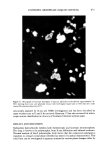
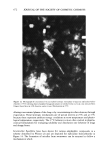
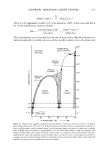
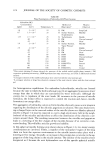
J. Soc. Cosmet. Chem., 29, 703-716 (November 1978) Strukturuntersuchungen von Salben 1. Mitteilung' RiSntgenstrukturuntersuchungen an der Hydrophilen Salbe DAB 7 C. F•IHRER, H. JUNGINGER und S. FRIBERG* Synopsis -- In order to characterize the crystalline state of Hydrophilic Ointment DAB 7 as well as of its components, X-ray studies {using Kiessig's low angle technique and goniometric diffractometry} have been carried out. Both cetyl and stearyl alcohols crystallize in a mixture of [• o-and ¾ 4-polymorphs. Depending on the conditions of crystallization one m- the other polymorphic phase is in excess. The mixture of these two alcohols, cetostearyl alcohol, forms mixed crystals with a uniform Bragg's distance, wich is between the two ]• o-polymorphic forms of the single components. On the other hand sodittm cetyl sulfate and sodium stearyl sulfate crystallize as separate entities from their mixtures. The predominant species in Emulsitying Wax (90% cetostearyl alcohol and 10% sodium cetyl sulfate and sodium stearyl sulfate] are mixed crystals, which consists mainly of cetyl alcohol and sodium cetyl sulfate and partly of stearyl alcohol. In additio•a, mixed crystals of stearyl alcohol and sodium stearyl sulfate are found in small amounts. In Hydrophilic Ointment DAB 7 both types of mixed crystals form a framework of gel in which the white soft paraffin and the liquid components of the white petrolatum are immobilized either mechanically or by capillary attraction. Since the wide angle interferences are nearly identical, it may be assumed that the paraffinic carbon chains of all components of the ointment can form similar orthorhombic subcells. 1. Einleitung Zum Nachweis des Gelcharakters bei Salben konnte von Ftihrer {1} bei erstarrten Schmelzen yon Cetylalkohol und fltissigem Paraffin aufge- zeigt werden, dag diese Gemische ausgedehnte, stark vernetzte Kristalli- sate bilden, die eindeutig ftir eine Gelnatur dieset Modellsysteme sprechen. Anhand yon polarisationsmikroskopischen Untersuchungen konnten * Institut fiir Pharmazeutische Technologie der Technischen Universitiit Braunschweig, Pockelsstrage 4, und Department of Chemistry, University of Missouri-Rolla, Rolla Mo 65401 (USA}. 703
Purchased for the exclusive use of nofirst nolast (unknown)
From: SCC Media Library & Resource Center (library.scconline.org)