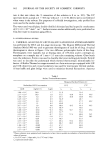
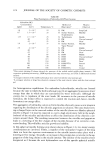
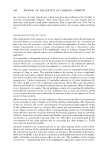
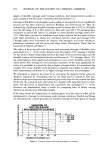
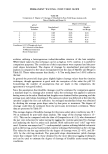
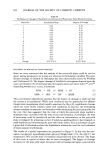
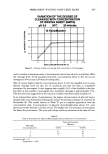
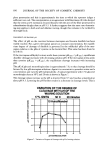
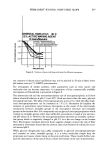
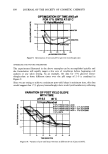
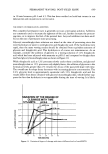
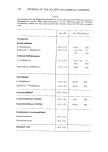
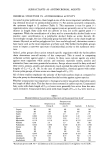
SURFACTANTS AS ANTIMICROBIAL AGENTS 735 CHEMICAL STRUCTURE VS. ANTIMICROBIAL ACTIVITY As noted in prior publication, chain length is one of the more important variables relat- ing chemical structure to antimicrobial activity (7). For anionic-saturated compounds, the optimum length is 12 carbons (Table I). This statement is true for gram (+) organisms alone since compounds active against yeast are generally one or two carbons shorter in length. Fatty acids with six carbons or less, are active against gram (-) organisms. While the esterification of a fatty acid to a monohydric alcohol leads to an inactive ester, esterification to a polyhydric alcohol forms an active biocide (8). Interestingly enough, the size of the polar group has little effect on the chain length op- timum. Glycerol, as well as polyglycerol (trL hexa and decaglycerol), derivatives seem to have lauric acid as the most important acyl fatty acid. The bulkier hydrophilic groups seem to impart a narrower spectrum of antimicrobial activity to the surfactant struc- ture. Indeed, polar groups direct action towards specific organisms while the hydrocarbon chain determines over-all activity of the compound. This is noted in comparing surfactant activity against gram (-) strains. In these cases cationic agents are active against most organisms while anionic and nonionic materials (esters, amides and minimides) have narrower germicidal activities. Except where noted for fatty acids and their esters, amines, amides and aminimides reach optimal biocidal activity with chain lengths of C•4-•C•6 (9, 10). In the case of aminimides, chemical agents with rather diverse polar groups, all were active at a chain length of C•6 (11). All of these studies emphasize the priority of the hydrocarbon chain as compared to the polar group in determining surfactant biocidal activity against a given species. Whether unsaturation was important to biological activity was greatly dependent upon the length of alkyl chain. This fact has not been stressed in earlier reports. Unsaturated fatty acids with chain length of C•2 or lower were generally less active than the satu- rated derivative. Unsaturated fatty acids with chain length of C•4 to C•8 were more ac- Table I Minimal Inhibitory Concentrations of Saturated and Unsaturated Fatty Acids a Streptococcus Streptococcus betahemolytic Pneumococci Group A non-A Candida S. Aureus Caproic NI NI NI NI NI Caprilic NI NI NI NI NI Captic 1.45 1.45 2.9 2.9 2.9 Lauric 0.062 0.124 0.249 2.49 2.49 Myristic 0.218 0.547 2.18 4.37 4.37 Myristoleic 0.110 0.110 0.110 0.552 0.441 Palmitic 0.48 3.9 3.9 NI NI Palmitoleic 0.024 0.098 0.049 0.491 0.983 Stearic NI NI NI NI NI Oleic NI 1.77 NI NI NI Elaidic NI NI NI NI NI Linoleic 0.044 0.089 0.089 0.455 NI Linolenic 0.179 0.35 0.35 NI 1.79 Linolelaidic NI NI NI NI NI Arachidonic NI NI NI NI NI a Results are given in mM. NI = not inhibitory at the concentrations tested (1.0 mg/ml or 3 to 6.0 mM).

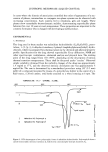
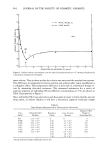
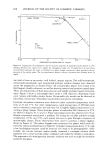
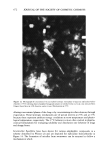
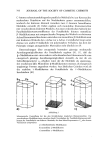
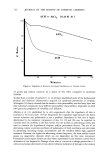
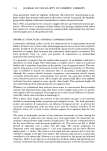
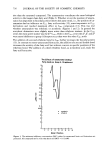
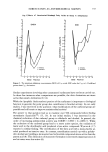
736 JOURNAL OF THE SOCIETY OF COSMETIC CHEMISTS tive than the saturated compound. The unsaturation contributes the most biological activity to the longer chain fatty acid (Table I). Whether or not the position of unsatu- ration was important to biocidal activity follows this same trend, i.e., the position ofun- saturation had no influence on Cn: • fatty acids activity (12), some importance to Cm derivatives and reached maximum effect in C•8:• compounds (13). This was true whether unsaturation was ethylenic or acetylenic (Figures 1 and 2). In general the acetylenic derivatives were slightly more active than ethylenic isomers. In the series the most active isomer was the A •ø Cm •, while in the C•8: • series the A2, A7 and A8 were more inhibitory to group A Streptococcus than were the other C•8: • acids. The addition of a second ethylenic bond to C•8:• further increases the biocidal activity (13). In contrast to mono-unsaturated fatty acids, the addition of a second double bond increases the activity of the fatty acid but without concern to specific positions of the ethylenic bond. The addition of a third ethylenic bond, as in linolenic acid, made the fatty acid less active. 0.8 0.6 0.. • 0.2 O. 0.08 6 2 The Effects of Unsaturated Dodecyl Fatty Acids on Group A Sfrep/ococci ocetylenic ethylenic I I I I I I I I I I 2 4 6 8 I0 12 14 16 18 Bond Position Figure 1. The minimum inhibitory concentration (MIC) values for unsaturated lauric acid derivatives are presented. All compounds are less toxic than lauric acid (MIC = 0.12 mM).
Purchased for the exclusive use of nofirst nolast (unknown)
From: SCC Media Library & Resource Center (library.scconline.org)