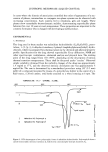
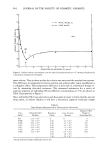
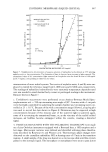
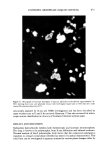
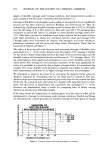
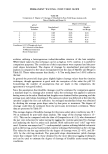
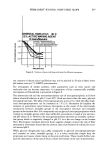
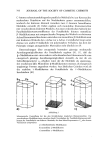
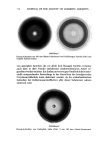
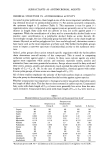
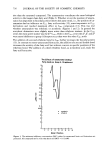
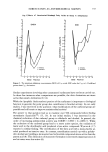
SURFACTANTS AS ANTIMICROBIAL AGENTS 737 The Effects of Unsoturoted Octodecyl Forty Acids on Group A Streptococci i 0.4 0.3 0.2 0.08 EVEN o ocetylenic '• 0.8 E 0.4 .õ ß "- 0.2 0 0.08 ODD ß ethylemc o ocetyleni½ I I I I i I I I I J I I I I I I I I I 2 4 6 e •o •2 •4 •6 m 2 4 6 e •o •2 •4 •6 •e Bond Position Bond Position Figure 2. The minimum inhibitory concentration (MIC) of Czs:z acids. MIC value for C zs:0 is 3.52 mM and greater than C •8: • derivatives. Similar experiments involving other unsaturated surfactants have not been carried out. In those few instances wher comparisons are possible, the oleic derivatives are more active than stearic derivatives (9, 14). While the lipophilic (hydrocarbon) portion of the surfactant is important to biological function in general, the polar group also contributes to biocidal activity. In our early studies, I was interested in the question: what modifications of the carboxyl group are possible and still retain or improve antimicrobial activity? The answer to that question lead us to examine over 500 compounds before finding monolaurin (Lauricidin TM) (15, 16). In our initial studies, I was interested in the chemical reduction of the carboxyl group to aidehyde and alcohol. In general, the order of increasing antimicrobial activity was COOH CHO C•OH (7). While the reduction of the carboxyl group lead to a more active species, the oxidation of lauric acid to the dicarboxylic acid produced a less active compound. Wyss et al. (17) reported a similar finding. The esterification of the fatty acid with a mono-hydric al- cohol produced an inactive ester. In contrast, esterification carried out with a polyhy- dric alcohol and yielding a monoester lead to biocidal compounds more active than the parent acid (8). This distinction ofmonoester formation is extremely important since di and tri esters were less active (8).

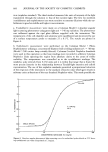
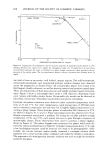
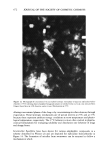
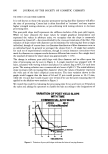
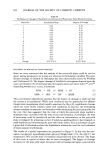
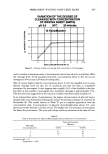
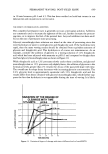
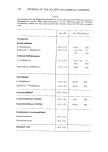
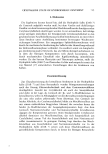
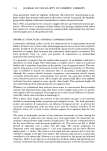
738 JOURNAL OF THE SOCIETY OF COSMETIC CHEMISTS Other modifications of the carboxyl group were studied. The formation of a hydroxamic acid derivative lead to an inactive specie, while amide and substituted amide species retained or increased their biological activity (10). Aminimides, a hybrid between amides and amines, represent a new class of surfactants (18). These com- pounds were particularly effective against yeast and fungi while possessing weak an- tibacterial activity. Of special note was the fact that aminimides, R•C--NN--R2 •CHa are effective when R• or R2 was C•4--C• in length (10, 11). This again emphasizes the importance of chain length over polar structure. The final change in surfactant struc- ture studied was the structure-function activity of amine compounds. Amines possess wide spectrum activity and are particularly active against gram (-) organisms (Figure 3). From this figure two observations can readily be made and reinforce previous con- clusions. Where agents are tested against the gram (-) genera, lower chain (C•0--C•a) derivatives are active. Alkyl amines with chain length between C •z--C •8 were more ac- tive against gram (+) organisms. From these and other studies I have concluded that all KE S O K E SO KE SO K E SO KE SO K E S O K E S O K E S O K E S O K E SO K E SO 8 9 10 I1 12 13 14 15 16 18 20 CHAIN LENGTH Figure 3. Effect of chain lengthening on amine activity tested against Klebsiella-Enterobacter sp. (K), E. coli (E), S. aureus (S) and S. pyogenes group A (O).
Purchased for the exclusive use of nofirst nolast (unknown)
From: SCC Media Library & Resource Center (library.scconline.org)