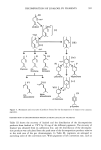
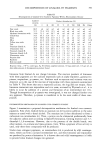
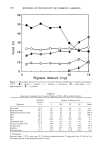
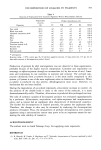
372 JOURNAL OF THE SOCIETY OF COSMETIC CHEMISTS chlorine concentration is only about 0.5-2.5 ppm (5,6). However, the liquor-to-hair ratio is very large, the exposure times are long (of the order of hours), and the resultant damage to the hair can be significant if the effects are cumulative. Thus, although in both swimming and shrinkproofing, keratin is exposed to chlorine, the conditions under which this happens are widely different. Therefore, the results of chlorination found in wool, which were reviewed earlier (1), could not be taken directly to represent the behavior expected in human hair. Reported here are the results of a study in which human hair fibers were exposed to dilute concentrations of chlorine for extended periods of time. The hair fibers were treated with 10 ppm chlorine solutions adjusted to pH levels of 2, 7, and 10 for dura- tions of up to 30 hours. The concentration of 10 ppm was selected, being only slightly higher than concentrations found in swimming pools. The pH levels were chosen to correlate with conditions used in studies of the chlorination of wool. The effects of these treatments were examined on the surface morphology, interhair friction, weight loss, and tensile properties. The results obtained were compared with those generally found on wool and interpreted in light of the mechanisms proposed for the latter. MATERIALS AND METHODS SAMPLE PREPARATION Natural blond and dark brown Caucasian hair were used in this study, with samples prepared to suit the physical property being studied. For friction, morphological, and knot strength tests, both types of hair were mounted onto polytetrafluoroethylene frames and held in place with waterproof tape. The hair was aligned in an array so that each fiber was separate from its neighbor. The root ends of the fibers were mounted on the same end of the frame and clearly marked. For the measurement of weight loss, full-length blond hair fibers were wound into loops and secured with a separate hair fiber. The loops weighed between 6 and 12 mg. For the measurement of force required to extend fibers 20%, hair fibers were cemented onto acetate tabs using a gauge length of 2.5 cm. CHLORINATION PROCEDURE Solutions with chlorine concentrations of 10 ppm were prepared by dilution of a sodium hypochlorite solution with deionized water. The chlorine concentration was analyzed by iodometric analysis with KI and Na2S203. The pH level of the solutions was adjusted to 2, 7, and 10 with HC1 and NaOH. The treatments were carried out at room tempera- ture using a ratio of 2000 ml liquor to 1 g hair. Two chlorination procedures were used, one for the hair mounted on frames for friction, morphological, and knot strength tests, and the other for hair wound into loops or mounted onto tabs for weight loss or tensile tests, respectively. The hair mounted onto frames was subjected to 5, 10, 15, and 30 cycles of chlorination. Each cycle consisted of soaking the hair for one hour in the chlorine solution, rinsing in water, and drying it for 15 minutes in an air-circulating oven at 40-50øC. The samples for weight loss and tensile tests were subjected to 10, 20, and 30 cycles of treatment. Each cycle consisted

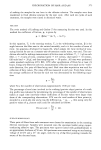
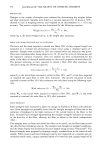
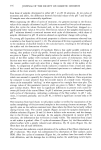
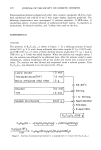
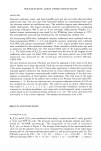
CHLORINATION OF HAIR AND pH 373 of soaking the samples for one hour in the chlorine solution. The samples were then transferred to fresh chlorine solution for the next cycle. After each ten cycles of such treatment, the samples were rinsed in deionized water. FRICTION The twist method of Lindberg and Gralen (7) for measuring friction was used. In this method the coefficient of friction, pt, is given by pt = ([•'rrn)-• (In T 2 - In T•). In this equation, T• is the entering tension, T 2 iS the withdrawing tension, • is the angle between the fiber axes in the twisted assembly, and n i• the number of turns of twist. An apparatus developed by Gupta (8), which adapts the twist method of mea- suring friction for use on a constant-rate-of-extension tensile tester, was used. The con- ditions selected for making measurements of friction were as follows: T• = 3 gf on each fiber, n = 2 turns of twist, crosshead speed = 0.5 in/min, chart speed = 10 in/min, full-scale load = 20 gf, and data sampling rate = 30 pts/sec. All tests were performed under standard conditions (65% RH, 20øC) after equilibration of fibers for at least 24 hours. Using new fibers for each test, measurements of friction were made in the "with" scale direction, five pairs of fibers being used. Real time data acquisition was used for collection of force values. The value of • was measured in each test. From these values, the average coefficient of friction for each test was determined by the following equa- tion: N where N is the number of observations (approximately 1500 per test). The percentage of total time involved in the sticking (positive slope) portion of a stick slip profile was evaluated by determining the percentage of the number of observations (taken at equal time intervals) whose coefficients of friction values were larger than those of the corresponding observations. If N was the total number of data points pti recorded in a stick-slip test and X was the difference pti - pti - •, then using only the positive values of X, percent stick could be calculated as follows: Percent stick = •X x 100. -- N SURFACE MORPHOLOGY Three pairs of fibers from each treatment were chosen for examination in the scanning electron microscope. Samples were mounted onto the specimen holder using copper- conducting adhesive tape. The specimens were sputter-coated with gold/palladium to an approximate thickness of 50 nm. All specimens were examined using an accelerating voltage of 20 kV and a 45 ø tilt angle, with the tip of the fiber pointing towards the source of the electron beam.
Purchased for the exclusive use of nofirst nolast (unknown)
From: SCC Media Library & Resource Center (library.scconline.org)