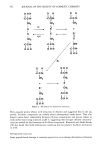
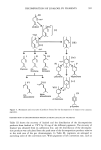
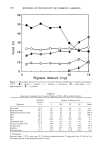
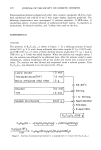
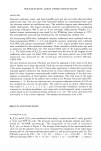
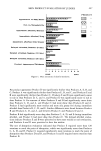
360 JOURNAL OF THE SOCIETY OF COSMETIC CHEMISTS into the reaction mechanisms occurring in keratin fibers can be obtained from studies of reactions of halogens with simpler structures--disulfides, amino acids and peptides. In this review, therefore, these reactions are examined along with their general effect on the physical properties of the fibers. REACTION MECHANISMS REACTION VARIABLES The most important variable in the reaction of halogens with kerarin fibers has been shown ro be the pH of the reaction medium (1-7). Depending on the pH, halogens are present either as X 2, a aliaromic molecule HOX, a weak acid or OX-, a strong base. Reaction rares in aqueous chlorinarion, determined by reduction of the amount of active chlorine in solution with rime, are extremely rapid below pH 2, somewhat slower bur relatively constant in the pH range of 3-7, and much slower above pH 8 (1-6). The very rapid reaction in the acid region has been attributed ro the formation of chlora- mines in addition to oxidation (6-7). The constant rate of reaction between pH 3-7 has been explained by the similar diffusion rares of C12 and HOC1, both of which are neutral species (3). The reduced rate of reaction in the alkaline region (3) has been attributed ro the surface charge of wool fibers, which has been determined ro be nega- tive (8). The fiber will thus tend ro repel the negatively charged hypochlorire ions, prohibiting their penetration into the fiber. Other variables also affect the rare of reaction of halogens with kerarin fibers. The rare of reaction increases with stirring and remains constant over a wide range of stirring speeds (3,9-11), suggesting that diffusion through a liquid layer is nor the rare-deter- mining step bur rhar diffusion into the fiber is. Stirring gives the least effect on reaction rare in the alkaline region. The rate of reaction also has been found ro increase with the temperature of the reaction medium (12,10,12). Finally, the size of the fibers also affects the rare of reaction. Generally, the finer the fibers, the higher the reaction rare. This has been attributed ro the finer fibers having greater surface area (9). DISULFIDE BOND OXIDATION Although chlorine is capable of reacting with all amino acids present in keratin fibers, cystine and tyrosine are found to be particularly susceptible to attack (13-15). Cystine generally is oxidized to cysteic acid (13-23), but intermediate sulfur compounds are also possible which could break down during the amino acid analysis of the protein (22). Insight into the possible intermediate compounds can be obtained by a review of the reaction of halogens with simple disulfides. A pathway summarizing reactions of disulfides and chlorine (24) is illustrated in Figure 1. Cystine is readily oxidized in the acid-neutral region, but much less so in the alkaline region (7,18,25). Alexander et al. (19) attributed this reactivity to the presence of two separate cystine fractions in wool, one of which is not accessible to the hypochlorite ion. Earland and Raven (20), instead, concluded that the attack of the hypochlorite ion is not restricted to the disulfide bond but proceeds more generally in the wool fiber. The idea of a general attack is reinforced by the fact that lanthionine (Cy-S-Cy) has also been found among the reaction products in the alkaline region (18), suggesting that nonoxi-

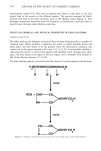
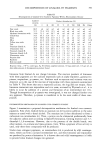
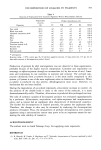
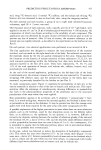
REVIEW OF CHLORINE-HAIR INTERACTION 361 R'CHCISCI N HO RSCI : RSOCl CI H O 2 2 RSSR + Cl RSCl RSOH • RSO Cl : RSOH 2 2 CI 2 H O 3 2 RSO SR 2 Figure 1. Interrelationships of the products from the chlorination of alkyl disulfides. dative C-S fission could also be taking place. A mechanism suggested for this reaction involves a bimolecular [3-elimination of the disulfide group initiated by a proton ab- straction from the tx-carbon by the attack of a nucleophile (26) (Figure 2). Tyrosine also has been found to be more readily oxidized in the acid region than in the alkaline region (13,21,22,25,27,28). N-CHLORO COMPOUNDS N-chloro compounds can be of two types in proteinous materials, either a chloramine, formed by the chlorination of a terminal amino group, or a chloramide, formed by the chlorination of a peptide bond. Some authors have suggested that N-chloro compounds are formed as a first step in the oxidation of wool by chlorine (4,6,7,23). Others have suggested that N-chloro compounds are formed but play no further part in the oxida- tion process, and remain a part of the keratin fiber (4,6,29,30). All amino acids have been found capable of being chlorinated and oxidized at the amino group (31-35). Monochloramines (RNHC1) and dichloramines (RNHC12) are readily formed. Mono- chloramines are relatively stable in slightly basic and slightly acidic solutions, while dichloramines are relatively stable only below pH 6 (36,37). Oxidation is generally an oxidative deamination, resulting in the formation of an aidehyde. In cystine, however, the predominant reaction is oxidation of the disulfide group (31,38), with little or no oxidative deamination. The effect of halogens can be expected to be more important on the amide group than on the amino group in protein materials, since the peptide bond, consisting of the amide group, is much more prevalent than the amino group in these structures. Chlor- amides, however, are not readily formed under conditions by which cystine is oxidized. For example, Pereira eta/. (39) reacted N-acetylalanine in HOCI solution at room temperature for 48 hours. No amide chlorination took place. These authors also chlori- nated a series of dipeptides and found that only the terminal amino groups were reacted. Other researchers have reported similar results (36,37,40,41). However, Mc- Laughlin and Simpson (9) did find that in the acid chlorination of wool, a lag period existed during which chlorine was consumed by the fibers and no protons were released.
Purchased for the exclusive use of nofirst nolast (unknown)
From: SCC Media Library & Resource Center (library.scconline.org)