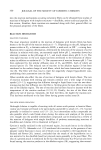
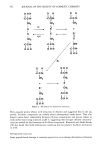
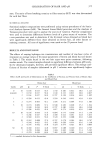
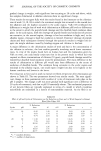
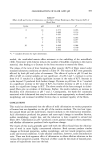
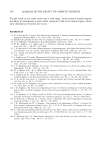
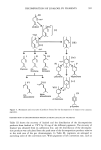
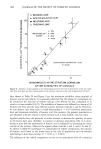
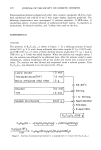
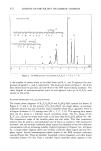
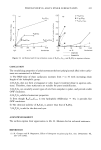
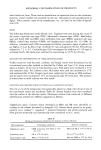
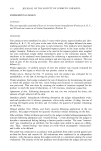
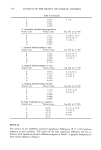
362 JOURNAL OF THE SOCIETY OF COSMETIC CHEMISTS OHH O H -C-C-N- -C-C?N- I CH 2 CH2 S .-- I I s .• s CH 2 CH2 I -C-C-N- II I I OHH O H II I -C-C-N- Il CH 2 . CH 2 I -C-C-N- OHH O H II I -C-C-N- Il CH 2 I I -C-C-N- / (•H2 II I I O H H /• -C-C-N- / II I I OHH OHH II I I -C-C-N- I CH 2 I .-- S I CH 2 I -C-C-N- II I I OHH Figure 2. Mechanism for lanthionine formation. They equated proton release with reduction of chlorine and suggested that in the lag period, N-chloro compounds are formed which subsequently break down. They also found a more direct relationship between chlorine consumption and proton release in weak rather than strong solutions at pH 3, suggesting that stronger chlorine concentra- tions are needed for the formation of N-chloro compounds. Kantouch and Abdel-Fattah (18) also found that mild chlorination conditions did not produce N-chloro derivatives in wool. PEPTIDE BOND CLEAVAGE Some peptide bond cleavage is certainly expected to occur during chlorination of keratin

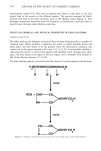
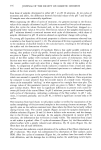
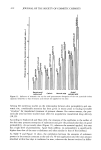
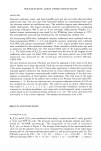
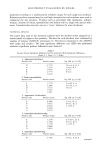
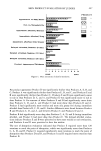
REVIEW OF CHLORINE-HAIR INTERACTION 363 fibers. In chlorinating wool, Valk (22) found amino acid residues in the spent chlorine reaction liquors at all Ph levels. It has been suggested that peptide bond cleavage can occur in wool at the tyrosine residue. Studies on the bromination of tyrosine peptides have indicated a probable mechanism (Figure 3) (42,43). Tyrosine peptides (I) are readily brominated in bromine water to 3,5-dibromotyrosyl residues (II). Further bromination ruptures the tyrosyl peptide bond by way of tribromodienone (III) and iminolactone (IV) intermediates, resulting in a new N-terminal peptide fragment and a dibromodienone spirolactone (V). The dibromodienone spirolactone (V) ultimately results in the C-terminal 3,5 di- (I) (11) (111) R'-CH-CONHR R'-CH-CONHR •s•,,.• • I I I HE CH 2Br CH + O• "•CH R' I 2 2 . 12 Br • I Br'" •Br Bd • •Br OH OH O Br"' •Br Br"' •Br + Hfin 3 (V) IHBr R'-CH-COOH I Br I Br OH Figure 3. Mechanism of cleavage of the tyrosyJ peptide bond with bromine water.
Purchased for the exclusive use of nofirst nolast (unknown)
From: SCC Media Library & Resource Center (library.scconline.org)