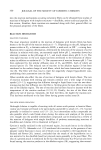
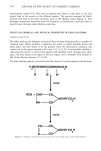
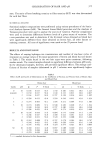
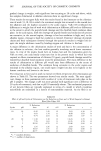
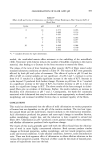
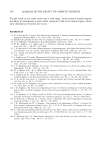
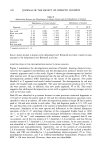
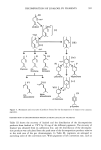
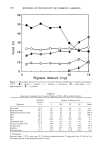
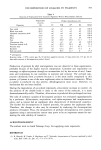
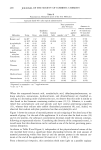
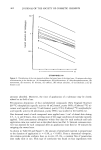
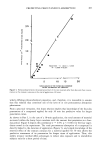
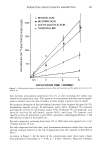
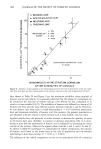
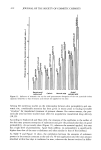
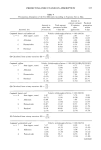
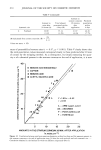
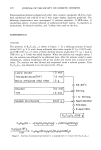
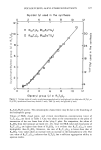
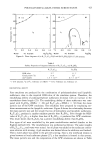
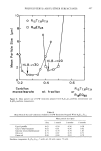
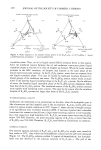
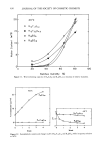
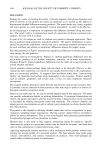
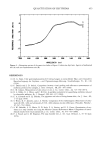
402 JOURNAL OF THE SOCIETY OF COSMETIC CHEMISTS o o o o lO O. 1 J c B A STRIPPINGS Nr Figure 3. Distribution of the test materials within the horny layer of the dosed area, 30 minutes after their administration in the hairless rat. (A) dexamethasone, (B) hydrocortisone, (C) dehydroepiandrosterone, (D) testosterone, (E) mannitol, (F) thiourea, (G) caffeine, (H) sodium salicylate, (I) acetylsalicylic acid, (J) benzoic acid. amounts absorbed. Moreover, the time of application of a substance may be closely related to its field of use. Percutaneous absorption of four radiolabelled compounds (New England Nuclear) [(8-•4C) theophylline (specific activity 40 mCi/mmol, purity 98%) (Carboxyl 14C) ni- cotinic acid (specific activity 55 mCi/mmol, purity 97%) (Carboxyl 14C) acetylsalicylic acid (specific activity 60 mCi/mmol, purity 98%) was studied in the hairless rat. One thousand nmol of each compound were applied onto 1 cm 2 of dorsal skin during 0.5, 2, 4, and 6 hours, thus covering most of the usage conditions of materials topically applied. Total percutaneous absorption within four days for each molecule and each application time was carried out as described above (see Part I). Stratum corneum reser- voir was assessed for each compound after an application time fixed at 30 minutes by stripping the treated area. As shown in Table III and Figure 5, the amount of penetrated material is proportional to the duration of application (r = 0.98, p (0.001). From a theoretical viewpoint, this relation provides evidence that, as in vitro (15,16), a constant flux of penetration does really exist in vivo. This type of correlation was found on four ingredients with

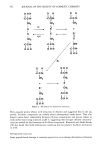
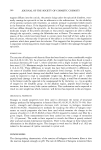
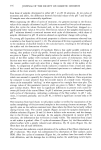
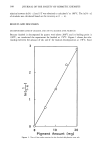
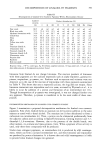
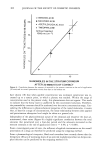
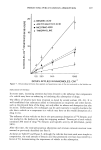
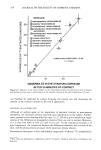
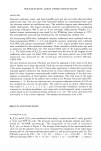
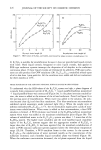
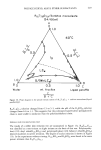
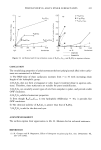
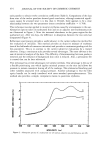
PREDICTING PERCUTANEOUS ABSORPTION 403 25 o o ? o o : Y . 1.644 x - 0,536 998 P 0.001 lO 15 NANO MOLES IN THE STRATUM CORNEUM AFTER 30 MINUTES OF CONTACT Figure 4. Relationship between the penetration level of the test materials after four days and their concen- tration in the stratum comeurn at the end of application (30 min). widely differing physicochemical properties, and, therefore, it is reasonable to assume that this relation may constitute one of the laws of in vivo percutaneous absorption phenomena. From a practical viewpoint, this linear relation implies that knowledge of the four-day penetration of a compound applied for only 30 min has predictive value for longer penetration times. As shown in Part I, in the case of a 30-min application, the total amount of material recovered within the horny layer correlates with the amount that penetrates in a four- day period. Figure 6 depicts this correlation (r = 0.99, p 0.001) for the four ingre- dients tested in the experiment. The total percutaneous absorption of a compound is directly linked to the duration of application (Figure 5), and simple knowledge of the reservoir effect of the stratum corneum for a material applied for 30 min allows the predictive assessment of its penetration for longer times of application. Thus, this mildly invasive method offers advantages to reduce skin exposure and to immobilize subjects only for a short period of time.
Purchased for the exclusive use of nofirst nolast (unknown)
From: SCC Media Library & Resource Center (library.scconline.org)