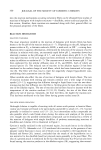
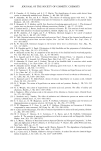
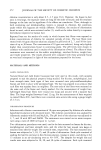
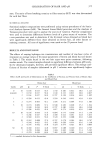
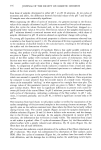
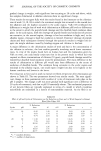
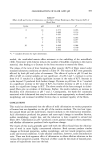
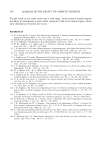
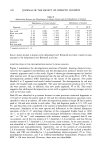
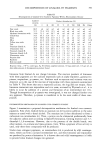
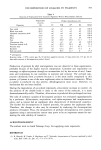
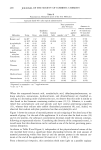
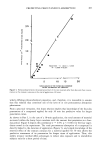
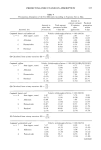
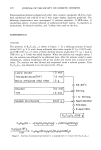
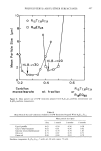
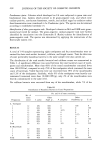
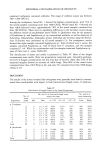
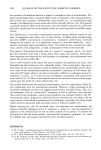
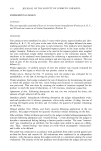
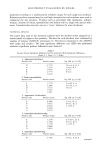
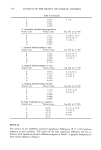
404 JOURNAL OF THE SOCIETY OF COSMETIC CHEMISTS Table III Percutaneous Absorption Levels of the Test Molecules According to Their Application Time in the Hairless Rat Total amounts found 96 h after topical application Epidermis + dermis area Animal Compounds Urine Feces treated body Total penetration Amounts in stratum corneum of treated area 30 min after application Theophylline 0.5 1.61 a 0.20 0.04 0 '-• (0.11) b (0.03) (0.09) • 2 5.78 0.77 0.35 0.08 '• (1.22) (0.08) (0.17) (0.05) g 4 10.79 1.14 0.25 0.14 • (1.12) (0.23) (0.07) (0.05) • 6 21.18 2.93 0.57 0.42 1 (4.31) (0.62) (0.13) (0.19) Acetylsalicylic acid 0.5 6.86 0.80 0.42 0 (1.16) (0.53) (0.11) • 2 21.29 2.53 1.72 0.15 • (0.14) (0.45) (0.41) (0.05) .:2. 4 45.28 4.57 3.71 0.01 • (2.64) (t.89) (0.77) (0.006) • 6 72.21 8.02 2.40 0.01 (13.90) (1.14) (1.32) (0.01) Nicotinic acid • 0.5 6.67 1.12 0.71 7.20 • (1.35) (0.22) (0.06) (1.01) .• 2 16.30 6.11 3.06 19.31 = (5.39) (1.14) (0.23) (5.81) ß • 4 48.02 6.62 4.87 63.94 • (11.35) (1.23) (0.49) (13.90) c• 6 79.02 7.40 8.71 84.89 (26.74) (2.75) (1.45) (33.83) 1.85 2.53 (0.11) (0.30) 6.98 (1.36) 12.31 (1. is) 25.12 (4.78) 8.09 5.15 (1.67) (0.60) 25.69 (1.90) 53.57 (2.39) 82.65 (13.99) 15.71 9.72 (2.46) (0.86) 44.75 (11.67) 123.45 (25.50) 180.02 (61.47) Benzoic acid 0.5 17.43 0.85 0.40 0.06 18.75 (2.38) (0.27) (0.13) (0.02) (2.57) 2 73.10 4.65 0.63 0.21 78.60 (3.06) (2.85) (0.15) (0.01) (5.18) 4 135.58 7.77 1.73 0.23 145.32 (13.53) (1.67) (0.39) (0.07) (12.69) 6 173.20 9.90 1.81 0.25 185.20 (22.72) (3.12) (0.36) (0.11) (22.55) 10.46 (0.98) a Expressed in nanomoles ß cm -2 application area b S.D.' (n = 5). INFLUENCE OF DOSE APPLIED In most medical and toxicological specialties, the administrated dose is defined pre- cisely. This has not always been the case in dermatotoxicology and dermatopharma- cology. However, it is well known that increased concentration of applied chemical on

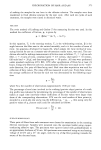
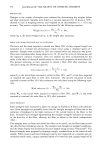
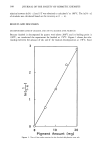
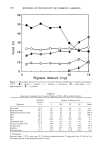
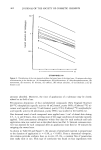
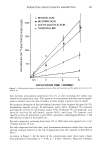
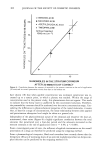
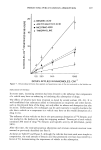
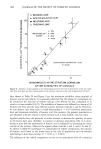
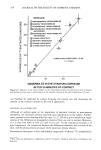
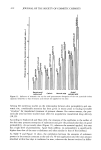
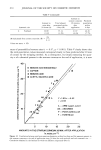
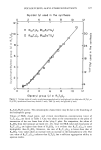
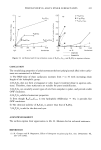
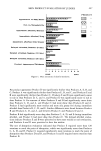
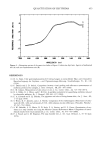
PREDICTING PERCUTANEOUS ABSORPTION 405 I o o z z 200 150 100 - 50 o BENZOIC ACID ß NICOTINIC ACID , ACETYLSALICYLIC ACID ß THEOPHYLLINE O,S 2 4 6 APPLICATION. TIME (HOURS) Figure 5. Relationship between the penetration levels of the test materials and the application time in the hairless rat. skin increases percutaneous penetration (5,6,17), as does increasing the surface area treated or the application time. This question of concentration may have special signifi- cance in infants, since the ratio of surface to body weight is greater than in adults. Percutaneous absorption of four radiolabeled materials (New England Nuclear) [(8-•4C) theophylline (specific activity 40 mCi/mmol, purity 98%) (Carboxyl-•4C) nicotinic acid (specific activity 55 mCi/mmol, purity 97%) (Carboxyl-•4C) acetylsalicylic acid (specific activity 60 mCi/mmol, purity 98%) and (ring •4C) benzoic acid (specific activity 45 mCi/mmol, purity 98%), dissolved in ethyleneglycol/Triton X 100 (90/10)] was studied in the hairless rat. For each compound, increasing doses from 125 to 1000 nmol were applied onto 1 cm 2 of dorsal skin for 30 min. For each compound and each dose, total percutaneous absorption within four days and stratum corneum reservoir at the end of application time were assessed as described in Part I. As shown in Figure 7, for the limits of the concentrations used, there exists a linear dose-penetration relationship (r = 0.98, p 0.001). However, Skog and coworkers
Purchased for the exclusive use of nofirst nolast (unknown)
From: SCC Media Library & Resource Center (library.scconline.org)