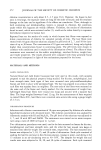
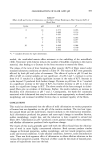
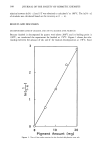
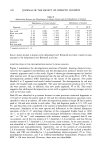
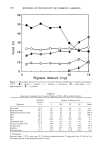
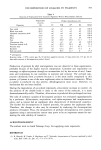
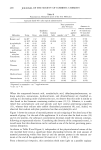
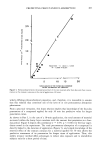
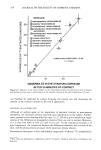
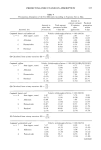
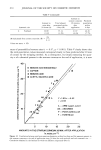
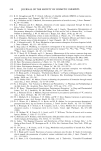
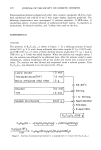
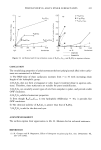
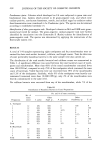
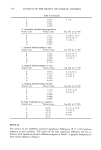
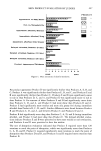
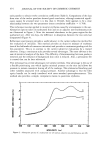
414 JOURNAL OF THE SOCIETY OF COSMETIC CHEMISTS Table V (continued) Anatomic site Amount in urine after 24 hours (A) Amount in stratum corneum Predicted Total amount 30 minutes penetration penetrated within after within 4 days (B) application 4 days 6 Forehead 10.89 35.14 21.97 40.20 (1.02) (3.29) (4.24) (7.75) (B) Calculated from urinary excretion: (B) - (A) 0.31 Values are mean _+ SD. ences of permeability between sites (r = 0.97, p 0.001). Table V clearly shows that the total penetration values measured correspond closely to those predicted after 30 rain of contact by the stripping method. As a consequence, by simply measuring the quan- tity x of a chemical present in the stratum corneum at the end of application, it is now 40- 3O 2O 10 B BENZOIC ACID SODIUM SALT O CAFFEIN ß BENZOIC ACID • ACETYL SALICYLIC ACID /' A AB F AB 1 I Y= 1.83 x -0.52 r =0.97 A = ARM (upper, outer) AB = ABDOMEN P • POST AURICULAR F = FOREHEAD I I 1 5 10 15 20 25 AMOUNTS IN THE STRATUM CORNEUM 30 MIN. AFTER APPLICATION ( n. moles.cm '2 ) Figure 12. Correlation between total percutaneous absorption within four days and the amounts present in the stratum corneum at the end of application time (30 min) for each molecule and each anatomic site. -- Correlation obtained in the hairless rat with ten different compounds (Part I).

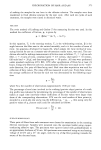
PREDICTING PERCUTANEOUS ABSORPTION 415 possible to predict the total quantity y absorbed over a four-day period. It should also be mentioned that this correlation curve is similar to that established in the hairless rat (see Part I), thus suggesting that the relationship between reservoir function of the horny layer and percutaneous absorption is independent of the animal species. CONCLUSION The consequences of these findings make it easier to screen new drugs in animals and thus to predict their toxicological and/or pharmacological implications. They permit circumvention of some ethical difficulties of human experiments, particularly in the case of potentially toxic agents. It is obvious that the experimentor has a higher degree of responsibility when performing in vivo percutaneous absorption studies in humans. Moreover, blood and urine analysis used generally in in vivo methods provide severe technical problems due to the low concentrations that must be assayed. Radiolabeled compounds are detected with high sensitivity but imply ethical problems when applied to humans. For technical convenience, labeled compounds were used in our experi- ments. However, because of the relatively large amounts of substance present in the stratum corneum at the end of application, it should be possible, with the stripping method, to measure percutaneous absorption in both animals and humans by appro- priate nonradioactive analytical techniques. However, in cases where it is essential to use labeled substances, this method makes it possible both to substantially reduce the level of radioactivity administered and to limit contact time. ACKNOWLEDGMENTS The authors would like to thank A. M. Cabaillot, C. Patouillet, M. H. Grandidler, and M. Zanini for their excellent technical assistance. REFERENCES (1) R. T. Tregear, "The Permeability of Skin to Molecules of Widely Differing Properties," in Progress in Biological Sciences in Relation to Dermatology, 2nd ed., A. Rook and R. H. Champion, Eds. (Cambridge University Press, Cambridge, 1964), pp. 275-281. (2) R. K. Winkelmann, The relationship of structure of the epidermis to percutaneous absorption, Br. J. Dermatol., 81 (suppl. 4), 11-22 (1969). (3) F. N. Marzulli, Barrier to skin penetration, J. Invest. Dermatol., 39, 387-393 (1962). (4) D. Lindsey, "Percutaneous Penetration," in Proceedings of the XII International Congress of Dermatology, D. M. Pillsbury and C. S. Livingood, Eds. (Excerpta Medica, Amsterdam, 1963), pp. 407-415. (5) H. I. Maibach and R. J. Feldmann, Effect of applied.concentration on percutaneous absorption in man, J. Invest. Dermatol., 52, 382 (1969). (6) R. C. Wester and H. I. Maibach, Relationship of topical dose and percutaneous absorption in rhesus monkey and man, J. Invest. Dermatol., 67, 518-520 (1976). (7) B. J. Poulsen, "Design of Topical Drug Products: Biopharmaceutics," in Drug Design, Vol. IV, E. J. Ariens, Ed. (Academic Press, New York, 1973), pp. 149-190. (8) F. D. Malkinson and S. Rothman, "Percutaneous Absorption," in Handbuch der Haut und Geschlecht Skrauberten Normale und Pathologische der Haut, Vol. 1, Part 1, A Marchionini and H. W. Spier Eds. (Springer, Berlin-Heidelberg, 1963), pp. 90-156. (9) R. B. Stoughton, Percutaneous absorption, Toxicol. Appl. Pharmacol., 7 (suppl. 2), 1-6 (1965). (10) C. F. H. Vickers, Existence of a reservoir in the stratum comeurn, Arch. Dermatol., 88, 20-23 (1963).
Purchased for the exclusive use of nofirst nolast (unknown)
From: SCC Media Library & Resource Center (library.scconline.org)