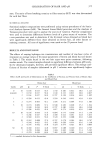
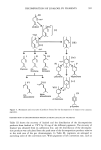
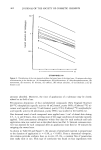
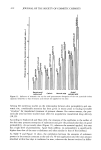
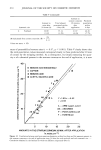
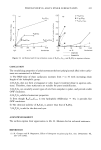
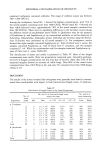
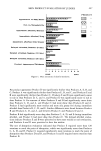
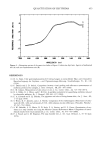
POLY(GLYCERYL) ALKYL ETHER SURFACTANTS 431 Rle,lEO•o 8 õ 4 • o 0•,- -- • , • // o IO 20 30 IOO H20 wt % Surfactant 50 40 30 20 I0 0 0 H•O (b) El Rm.lEOio ß R 18:1E02_o o RisTi4.1Gi3.2 5 I0 30 I00 wt % Surfactant ....... Chemosls Hyperemla Figure 13. (a) Dermal and (b) eye irritation scores of R•sT•4.•G•3.2 and RnEO x in aqueous solution. CONCLUSION The emulsifying properties of poly(oxytetramethylene) poly(glyceryl) alkyl ether surfac- tants are summarized as follows: 1) The HLB-value of these surfactants increases from 7 to 30 with increasing chain length of the hydrophilic group. 2) RnTxGy does not form a hexagonal or cubic liquid crystalline phase in aqueous solu- tions. Therefore, these surfactants are suitable for paste emulsification. 3) RnTxGy can emulsify several types of oils from nonpolar to polar, and provide stable O/W emulsions. 4) R•T•Gy exhibits humectant properties. 5) Even though R18T14.6G13.2 is very hydrophilic (HLB-value = 30), it provides fine O/W emulsions. 6) The chemical stability of R•T•Gy is greater than that of R•EO•. 7) RnTxGy is safe for the skin and eyes. ACKNOWLEDGEMENT The authors express their appreciation to Mr. H. Momota for his technical assistance. REFERENCES (1) H. Gissepen and B. Magnusson, Effects of detergents on guinea pig skin, Acta. Dermatovener, 46, 269-274 (1966).

432 JOURNAL OF THE SOCIETY OF COSMETIC CHEMISTS (2) (3) (4) (5) (6) (7) (8) (9) (10) (11) (12) (13) (14) (15) (16) (17) (18) (19) (20) (21) (22) (23) (24) (25) (26) (27) M. Hannuksela, M. Kousa, and V. Pirila, Contact sensitivity to emulsifiers, Contact Dermatitis, 2, 201-204 (1976). W. C. Griffin, P.J. Carter, and R. W. Cehrens, Hydrophilic lanolin, Drug & Cosmetic Ind., 63, 312-313, 409-411 (1948). R. G. Harry, Modern Cosmeticology (Chemical Publishing, New York, 1947). R. G. Harry, Cosmetics.' Their Principle and Practices (Chemical Publishing, New York, 1956). B. W. Barry, Structure and rheology of emulsions stabilized by mixed emulsifiers, Rheol. Acta., 10, 96-105 (1971). I. Eros and E. Ugri-Hunyadvari, Investigation of the rheological characteristics of ointment gels containing emulsifiers and emulsion-type ointments, Cosmetics & Toiletries, 94(10), 67-79 (1979). A.M. Kligman and W. M. Woocling, A method for the measurement and evaluation of irritants on human skin, J. Invest. Dermatol., 49, 78-94 (1967). S. Fujii, M. Suzuki, K. Uehara, and T. Nakajima, The irritation and cell growth inhibition of POE nonionic surfactants, NishinihonJ. Derm., 41, 97-103 (1979). K. Shinoda, H. Saito, and H. Arai, The effect of the size and the distribution of the oxyethylene chain lengths of nonionic emulsifiers on the stability of emulsions, J. Colloid Interface Sci., 35, 624-630 (1971). R. T. Mcintyre, Polyglycerol esters, J. Am. Oil Chem. Soc., 56, 834A-840A (1979). W. Hemker, Associative structures of polyglycerol esters in food emulsions, J. Am. Oil Chem. Soc., 58, 114-119 (1981). Pharmaceutical Society of Japan, Ed., Standard Methods of Analysis for Hygiene Chemists (Kinbara Pub- lishing, Tokyo, 1980), p. 683. H. Sagitani, Making homogeneous and fine droplet O/W emulsions using nonionic surfactants, J. Am. Oil Chem. Soc., 58, 738-743 (1981). Appraisal of the Safety of Chemicals in Foods, Drugs and Cosmetics by the Staff of the Division of Pharmacology Foods and Drug Administration, Department of Health Education and Welfare Pub. 1959, by F.D.A. Officials of U.S. Business Office Topeka, Kansas, pp. 48-52 (1959). H. Saito, The relation between the foaming properties and the solute states of nonionic surfactants in aqueous solutions, Nippon Kagaku Zasshi, 92, 223-226 (1971). D. J. Mitchell, G. H. Tiddy, and L. Waring, Phase behaviour of polyoxyethylene surfactants with water, J. Chem. Soc. Faraday Trans., I, 79, 975-1000 (1983). K. Shinoda, Thermodynamic aspects of nonionic surfactant water system, J. Colloid Interface Sci., 34, 278-282 (1970). S. Friberg and L. Mandel, Phase equilibria and their influence on the properties of emulsions, J. Am. Oil Chem. Soc., 47, 149-152 (1970). N. Moucharafieh, S. E. Friberg, and D. W. Larsen, Effects of solubilized hydrocarbons on the struc- ture and the dislocation pattern in a lameIlar liquid crystal, Mol. Cryst. Liq. Cryst., 53, 189-205 (1979). W. C. Griffin, Calculation of HLB-values of non-ionic surfactants, J. Soc. Cosmet. Chem., 5, 249-256 (1954). H. Saito and K. Shinoda, Determination of average oxyethylene chain length of nonionic surfactants by cloud point measurement, J. Jpn. Oil Chem. Soc., 22, 785-789 (1973). J. M. Corkill, J. F. Goodman, and R. H. Ottewill, Micellization of homogeneous, nonionic deter- gents, Trans. Faraday Soc., 57, 1627-1636 (1961). M.J. Schick, Surface film of nonionic detergent. I. Surface tension study, J. Colloid Sci., 17, 801-813 (1962). K. Shinoda and T. Yoneyama, Evaluation of emulsifier blending , J, Dispersion Sd. Technolol., 1, 1-12 (1980). P. Becher, Emulsions.' Theory and Practice (Reinhold Publishing Co., 1965), p. 268. H. Saito and K. Shinoda, The stability of W/O type emulsions as a function of temperature and of the hydrophilic chain length of the emulsifier, J. Colloid Interface Sci., 32, 647-651 (1970).
Purchased for the exclusive use of nofirst nolast (unknown)
From: SCC Media Library & Resource Center (library.scconline.org)