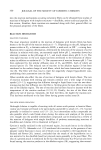
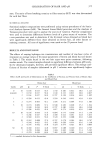
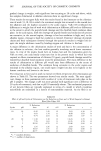
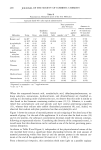
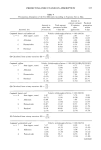
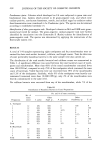
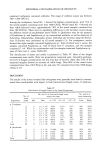
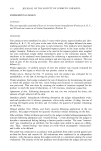
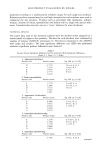
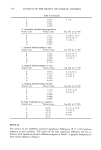
436 JOURNAL OF THE SOCIETY OF COSMETIC CHEMISTS ever, studies have shown that although many cosmetic preparations contain preserva- tives, microbial spoilage can still occur during storage or use (3-6). Using cosmetic preparations which are contaminated with microorganisms has been associated with several diseases. For example, four babies died from Clostridium tetani infections attributed to use of a talcum powder contaminated with this organism (6). Wilson and Ahearn (7) have demonstrated that eye cosmetics may serve as a possible medium in transmission and persistence of microorganisms in clinical eye infections. Bruch (8) detected several opportunistic pathogens, such as Pseudomonas and Acineto- bacter sp., which were commonly associated with serious infections, in facial cosmetic creams and a liquid eyelid preparation. A preliminary investigation in Egypt indicated that a commercial hexetidine mouth- wash was not only heavily contaminated with both bacteria and mold but that it also often harbored Candida species (9). As a part of a comprehensive survey for the microbial contamination of cosmetic preparations and personal care items manufactured and/or used in Egypt, this report describes the results of a qualitative and quantitative investi- gation of the microbial content of eight commonly used toothpastes and four popular mouthwashes. MATERIALS AND METHODS TESTED PREPARATIONS Eight different toothpastes and four mouthwashes were examined (Table I). A total of 12 samples from each preparation representing three different batches were purchased at Table I Distribution of Aerobic Bacterial Counts in Tested Preparations No. of items Preparation tested Min. Max. Bacterial No. and % of items with colony No. and % count/ml count within the range of samples containing 100 0-( 102 102-103 103-104 104 coliforms/ml A. Toothpaste 1 12 200 5.7 X 2 12 0 2.2 X 3 12 20 9.0 X 4 12 0 3.0 X 5 12 0 9.0 X 6 12 0 8.0 X 7 12 200 1.3 X 8 12 0 3.2 X Total 96 0 9.0 X B. Mouthwash 1 12 0 8.0 X 2 12 0 9.0 X 3 12 0 9.0 X 4 12 0 2.6 X Total 48 0 2.6 X 10⁴ 0(0) 3(25) 6(50) 3(25) 0(0) 103 3(25) 6(50) 3(25) 0(0) 1(8) 104 2(17) 6(50) 2(17) 2(17) 3(25) 103 8(67) 2(17) 2(17) 0(0) 2(17) 102 4(33) 8(67) 0(0) 0(0) 0(0) 102 3(25) 9(75) 0(0) 0(0) 0(0) 103 0(0) 7(58) 4(33) 1(8) 1(8) 104 4(33) 6(50) 2(17) 0(0) 0(0) 104 24(25) 47(49) 19(20) 6(6) 7(7) 103 6(5 o) 4(33) 2(17) 0(0) 0(0) 102 9(75) 3(25) 0(0) 0(0) 0(0) 103 7(58) 2(17) 3(25) 0(0) 0(0) 104 8(67) 3(25) 0(0) 1(8) 0(0) 104 30(63) 12(25) 5(10) 1(2) 0(0)

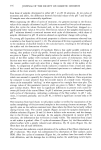
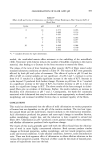
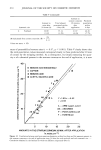
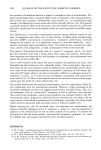
MICROBIAL CONTAMINATION OF PRODUCTS 437 retail outlets in Cairo. There were no manufacture or expiration dates on the containers however, a batch number was recorded on each one. All products were manufactured in Egypt. Their contents, name of the manufacturer, etc., are listed in the Index of Special- ities (10). MEDIA The following dehydrated media (Oxoid, Ltd., England) were used during the course of the study: trypticase soya agar (TSA), Sabouraud's dextrose agar (SDA), MacConkey agar and broth (MA and MB), eosin methylene blue agar (EMB), mannitol salt agar (MSA), cooked meat medium (CMM), and Staphylococcus medium No. 110 (SM). In addition, cetrimide broth (CB) was prepared as follows: pancreatic digest of gelatin (20 g), MgCI 2 (1.4 g) K 2 SO 4 (10 g) cetrimide (0.3 g) and glycerol (10 ml). The pH was adjusted to 7.2 -+ 0.2. Cetrimide agar (CA) was prepared by addition of 1.5% agar to cetrimide broth. All media were sterilized by autoclaving at 121øC for 20 min. QUANTITATIVE DETERMINATION OF VIABLE MICROORGANISMS Viable counts for total bacterial, coliform, and fungal counts were determined by the conventional pour plate method as described by Collins and Lyne (11), using normal saline as diluent. In the case of total bacterial count, TSA plates were incubated at 37øC and examined daily. For coliform count, MA plates were used and incubated at 37øC and examined after 24 hrs. Fungal counts were carried out by plating on SDA medium, and the plates were incubated at 25øC and examined daily for seven days. The presence of either yeast or mold colonies was then noted. DETECTION AND IDENTIFICATION OF POTENTIALLY HAZARDOUS BACTERIA Two ml or 2 g of the preparation were aseptically mixed in a flask with 20 ml of one of the enrichment media and incubated (Table II). Several loopfuls were then transfered onto the surface of the selective media. Developed colonies were subjected to different identification schemes for different organisms as follows: Staphylococcus species. Colonies which developed on MSA and SM were identified ac- cording to the scheme described by Adegoke (12). Solares which proved to be gram- positive cocci, catalase (+), coagulase ©, mannitol fermenter, and which produced acid from glucose aerobically and anaerobically were considered to be S. aureus. Table II Media and Incubation Conditions for Isolation of Certain Bacteria Microorganisms Enrichment conditions Selective conditions Staphylococcus species CMM containing 10% NaC1 at 37øC MSA and SM at 37øC for 48 hr for 72 hr CB at 37øC for 48 hr MB at 37øC for 24 hr P seudomonas species Gram-negative rods CA at 37øC for 48 hr MA and EMB at 37øC for 48 hr
Purchased for the exclusive use of nofirst nolast (unknown)
From: SCC Media Library & Resource Center (library.scconline.org)