SKIN PRODUCT EVALUATION BY JUDGES 449 REFERENCES (1) J. Close, R. Blank, A. Gelinas, and N. Penkin, Sensory evaluation: A scientific aid for R&D chemists, Cosmetic Technology, 42-45 (December 1982). (2) Sensory Evaluation Division of iFT, Sensory evaluation guide for testing food and beverage products, Food Technology, 50- 59 (November 1981). (3) ASTM Committee E-18, Guidelines for the Descriptive Analysis of Skinj%l (in progress). (4) N. O. Schwartz, Adaptation of the sensory texture profile method to skin care products, Journal of Texture Studies, 6, 33-42 (1975). (5) M. O'Mahoney, Some assumptions and difficulties with common statistics for sensory analysis, Food Technology, 75-98 (November 1982).

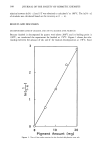
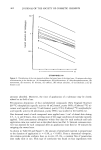
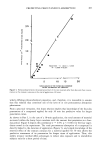
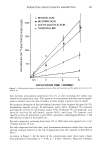
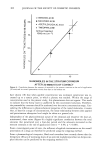
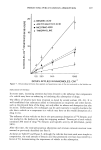
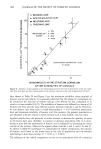
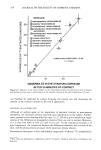
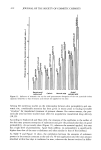
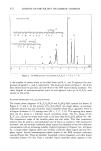
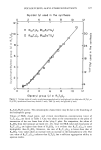
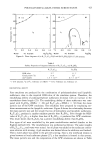
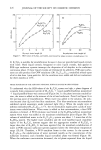
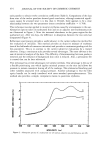
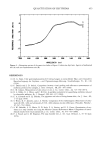
j. Soc. Cosmet. Chem., 38, 451-455 (November/December 1987) Quantitation of erythema by reflectance spectroscopy DANIEL M. CROWE, MARCIA S. WILLARD, and RICHARD I. MURAHATA, Department of New Science and Technology, Dial Technical Center, 15101 North Scottsdale Road, Scottsdale, AZ 85254. Received April 24, 1987. Synopsis A fiber optics bundle was added to a Pye-Unicam scanning spectrophotometer allowing its use in quanti- tating erythema in vivo. Standard chamber irritation test sites were evaluated subjectively by a trained observer and objectively by quantitating the relative absorption of green light (570-580 nm) due to the presence of the hemoglobin chromophore. There appears to be a good relationship between subjective erythema scores and spectrophotometric readings. Reflectance spectroscopy provides a valuable objective adjunct to the subjective evaluation of skin irritation. INTRODUCTION Erythema caused by ultraviolet irradiation or chemical irritation is commonly graded by a visual estimation of redness by a trained observer. This evaluation uses a discontinuous grading scale and is, by its subjective nature, often imprecise. It is most accurate for detecting threshold irritation, but not ideally suited for evaluating graded differences or for readings separated temporally (1,2). In order to remove the subjectivity and to provide a continuous scale of erythema values, we modified a scanning spectrophotom- eter to take reflectance values directly from the skin in vivo. The use of reflectance spectroscopy to determine skin color and erythema is not a new idea. Investigators have custom modified their own equipment (3,4), used a rather expensive integrating sphere (5,6), and used a tristimulus reflectance meter (7) to ex- amine erythema. We interfaced a fiber optics bundle with a Pye-Unicam spectropho- tometer. Initial studies demonstrated that the sensitivity of this technique was suffi- cient to distinguish among the entire range of subjective erythema scores (Figure 1). Note the increase in absorbance of green light (535-580 nrn) corresponding to the increase in the degree of erythema. The present study was designed to demonstrate the correlation between spectrophotometric measurements and' clinical evaluation of ery- thema. MATERIALS AND METHODS Twelve panelists (five males, seven females) participated in a modification of the 451
Purchased for the exclusive use of nofirst nolast (unknown)
From: SCC Media Library & Resource Center (library.scconline.org)