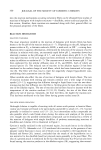
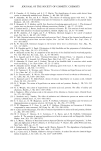
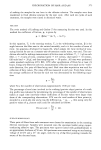
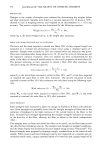
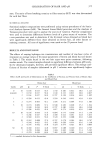
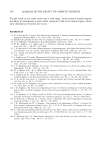
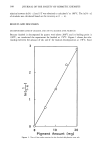
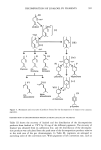
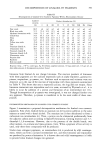
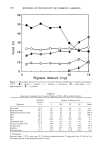
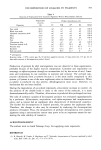
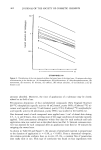
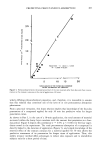
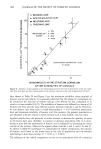
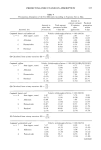
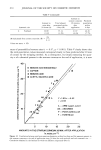
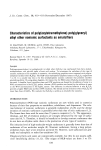
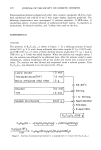
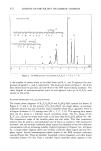
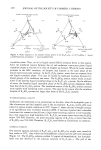
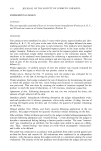
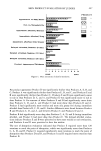
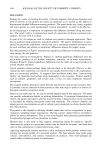
452 JOURNAL OF THE SOCIETY OF COSMETIC CHEMISTS .9' .8 .7 .6 I I I I I I I I ! I I I 'I I I 660 640 62• 600 580 560 540 520 WRVELENGTH Figure 1. Absorption spectrataken •om •ursites on asingle panelist. Erythemascores:(A) 3,(B)2,(C) 1,(D) 0. chamber irritation test (8). Informed consent was obtained from all subjects at the beginning of the study. They were tested for an irritancy response to three bar cleansers. Eight per cent solutions (w/w) in deionized water were prepared by heating to 40øC. The products were applied to the volar forearm according to a randomization table. One site remained untreated. The first occlusion was for 23 1/2 hours. The chambers were then removed and the sites were rinsed gently with tap water and blotted dry with a paper towel. Thirty minutes later the sites were scored for erythema using the following scale: 0 = no redness, 1 = slight redness, 2 = moderate redness, 3 = intense redness. The sites were then repatched for an additional five hours. The chambers were removed, rinsed, and scored as described above. After the second set of visual scores was assigned, light reflectance was measured using the modified scanning spectrophotometer (Figure 2). A bifurcated, mid-UV fiber optics bundle with a common leg diameter of 4 mm (Highlight Fiber Optics, Union City, CA) was attached to the spectrophotometer. The tip of the common leg of the optics bundle was placed against the volar aspect of the forearm using a flexible positioning arm. Light from the illumination side of the spectrophotometer was collected by one leg of the fiber optics bundle and directed onto the skin. Light reflected from the skin was returned to the photomultiplier through the other leg of the fiber optic. The instru- ment was interfaced with a MINC 11/03 minicomputer for data analysis. Spectrophotometric readings were taken between the wavelengths of 510 and 650 nm. The absorbance maximum fbr hemoglobin is in the green region of the spectrum. Thus, the relative absorbance for the red and green regions is related to the degree of erythema (4). The values used for the correlation were calculated as follows: adjusted absorbance = (G

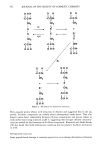
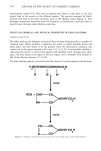
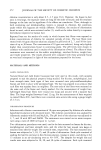
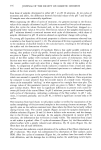
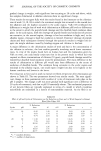
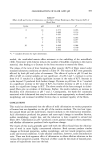
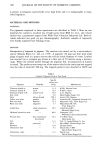
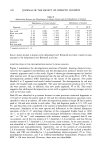
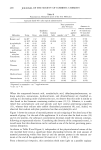
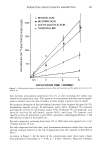
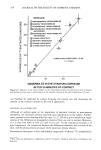
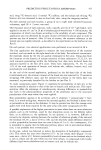
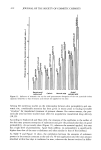
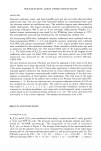
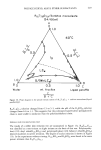
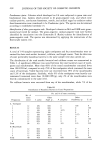
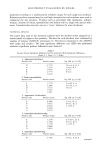
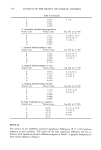
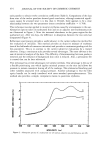
QUANTITATION OF ERYTHEMA 453 Figure 2. The fiber optics equipped Pye-Unicam spectrophotometer with flexible positioning arm. where G is the absorbance in the green region (570-580 nm), R is the absorbance in the red region (645-650 nm), t is the treated site, and c is the control site. The data were analyzed using Spearman's rank correlation procedure. RESULTS AND DISCUSSION The adjusted absorbance values and their corresponding erythema scores were ranked for Table I Relationship Between Adjusted Absorbance and Clinical Scores Using Spearman's Rank Correlation Procedure Panelist r Value 1 0.125 2 1.000 3 O.875 4 O.875 5 0.125 6 0.125 7 O.875 8 1.000 9 0.875 10 0.875 11 0.875 12 0.875 Mean = 0.708.
Purchased for the exclusive use of nofirst nolast (unknown)
From: SCC Media Library & Resource Center (library.scconline.org)