346 JOURNAL OF THE SOCIETY OF COSMETIC CHEMISTS (30) W. Mitchell and P. Rahn, High performance liquid chromatography in cosmetic analysis, Drug Cosmet. Ind., 123(5), 56-66, 126, 130 (1978). (31) S. K. Vohra and G. W. Harrington, Chromatopolarography of N-nitrosamines including determina- tion of N-nitrosodiethanolamine in cosmetic products, Fd. Cosmet. Toxicol., 19, 485-487 (1980). (32) H. J. Chou, R. L. Yates, R. J. Gajan, and H. M. Davis, Differential pulse polarographic determina- tion of N-nitrosodiethanolamine in cosmetic products, J. Assoc. Off. Anal. Chem., 65, 850-854 (1982). (33) B. Rollmann, P. Lombart, J. Rondelet, and M. Mercier, Determination of N-nitrosodiethanolamine in cosmetics by gas chromatography with electron capture detection, J. Chromatogr., 206, 158-163 (1981). (34) C. F. Poole, W. F. Sye, S. Singhawangcha, F. Hsu, and A. Zlatkis, New electron capturing penta- fluorophenyldiakylchlorosilanes as versatile derivatizing reagents for gas chromatography, J. Chrom•- togr., 199, 123-142 (1980). (35) H. Ohshima, M. Matsui, and T. Kawabata, Gas chromatographic separation of hydroxylareal N-ni- trosamines, J. Chrom•togr., 169, 279-286 (1979). (36) V. H. Baptist and R. Brown, Nitrosamine determination by use of conventional equipment, J. Soc. Cosmet. them., 31, 219-222 (1980). (37) G. M. Telling and P. C. Dunnett, The determination of N-nitrosodiethanolamine (NDELA) at trace levels in shampoos and skin creams by a simple rapid colorimetric method, Int. J. Cosmet. Sci., 3, 241-248 (1981). (38) D. M. Coulson, Electrolytic conductivity detection in gas chromatography, J. Gas Chromatogr., 63, 134-139 (1965). (39) R. C. Hall, A highly sensitive and selective microelectrolytic conductivity detector for gas chroma- tography, J. Chromatogr. Sci., 12, 152-160 (1974). (40) J. W. Rhoads and D. E. Johnson, Gas chromatography and selective detection of N-nitrosamines, J. Chromatogr. Sd., 8, 616-617 (1970). (41) E. Von Rappard, G. Eisenbrand, and R. Preussmann, Selective detection of N-nitrosamines by gas chromatography using a modified microelectrolytic conductivity detector in the pyrolytic mode, J. Chromatogr., 124, 247-255 (1976). (42) J. F. Palframan, J. Macnab, and N. T. Crosby, An evaluation of the alkali flame ionization detector and the Coulson electrolytic conductivity detector in the analysis of N-nitrosamines in foods, J. Chromatogr., 76, 307-319 (1973). (43) J. F. Lawrence, Effect of some operating parameters on the response of the Coulson conductivity detector, J. Chromatogr., 87, 333-339 (1973). (44) B. P. Wilson and W. P. Cochrane, Comparison of the Coulson and Hall electrolytic conductivity detectors for the determination of nitrogen-containing pesticides, J. Chromatogr., 106, 174-179 (1975). (45) W. W. Daniel, Biostatistics: A Foundation j•r Analysis in the Health Sciences, 3rd. ed. (John Wiley & Sons, New York, 1983), pp. 289-292. (46) J. D. Wineforder and J. L. Ward, The reliability of detection limits in analytical chemistry, Anal. Lett., 13(A14), 1293-1297 (1980). (47) Y. Fukuda, Y. Morikawa, and I. Matsumoto, Ion-exchange chromatographic separation of N-nitro- sodiethanolamine in cosmetics, Anal. Chem., 53, 2000-2003 (1981). (48) W. Fiddler, R. C. Doerr, and E. G. Piotrowski, "Observations on the Use of the Thermal Energy Analyzer as a Specific Detector for Nitrosamines," in International Agency for Research on Cancer Scientific Publication No. 19, Environmental Aspects of N-Nitroso Compounds, E. A. Walker, M. Cas- tegnero, L. Griciute, and R. E. Lyle, Eds. (Oxford University Press, New York, 1978), pp. 33-39.

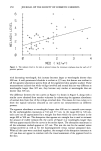
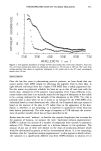
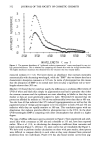
j. Soc. Cosmet. Chem., 39, 347-354 (November/December 1988) The role of human melanin in providing photoprotection from solar mid-ultraviolet radiation (280-320 nnl) N. KOLLIAS and A. H. BAQER, Physics Department, Kuwait University, and Department of Dermatology, A1-Sabah Hospital Ministry of Public Health, Kuwait. Received August 11, 1988. Synopsis It has been assumed that eumelanin is responsible for both the absorption of visible light in the skin and for the absorption of UVB (280-320 nm). We have determined experimentally that the pigment level in the skin is only weakly correlated with the minimum dose of UVB needed to elicit an inflammatory reaction (MED). These data suggest that skin color does not indicate the amount of protection provided against UV radiation. By studying the difference in absorption between vitiligo-involved and normal skin we have arrived at an absorption spectrum for melanin in the ultraviolet range, which shows a resonance at 335 nm, dropping off quickly at shorter wavelengths. These results indicate that while melanin provides significant protection from UVA (320-400 nm), it provides only partial protection from UVB radiation. The high sensitivity of human skin to UVB and simultaneous low sensitivity to UVA radiation can be partially understood in terms of the difference in absorbance of melanin in these two wavelength ranges. The term "epidermal melanin pigmentation" (EMP) is introduced to describe the brown-black pigment in human skin which consists of a collection of chemical species and to differentiate it from "melanin" which refers to the end product of a polymerization process. The absorption spectra of these are not the same. INTRODUCTION The principal absorber of visible radiation in human skin is melanin (1). Oxy- and deoxyhemoglobin are strongly competing absorbers only in cases of very lightly pig- mented individuals or in cases of inflammation. While there seems to be agreement on the absorption of visible radiation by melanin in human skin, there is disagreement about its role in protection of the skin from the UVB (280-320 nm). Amblard et al. (2) have shown that native pigment and eye color exhibit a good correla- tion with the minimum erythema dose and Shono et al. (3) have found that there is a strong correlation between native pigment and minimum erythema dose in a small sample. The study of Kaidbey et al. (4) showed that pigmented epidermis offered a significant protection from UVB. On the other hand, Westerhof et al. (5) reported that pigment seems to provide a stronger protection in the visible than in the UVB. Van der Leun (6) found, comparing 347
Purchased for the exclusive use of nofirst nolast (unknown)
From: SCC Media Library & Resource Center (library.scconline.org)