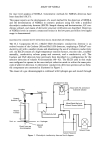
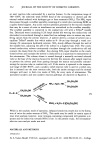
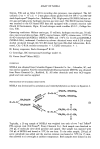
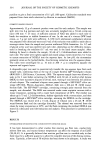
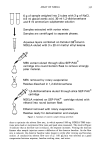
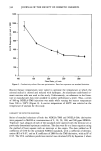
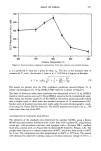
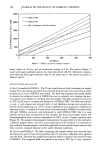
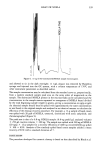
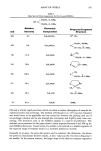
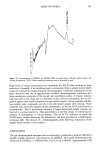
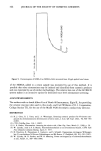
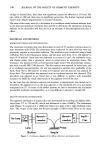
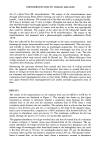
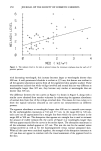
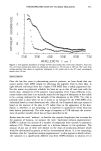
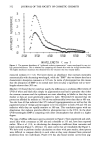
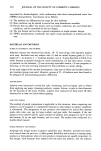
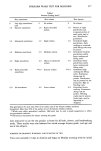
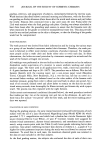
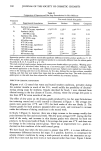
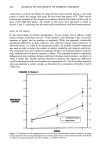
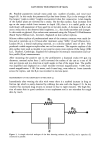
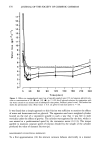
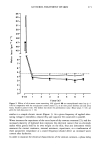
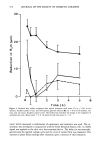
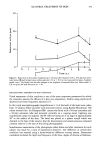
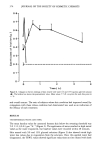
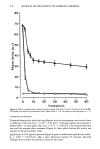
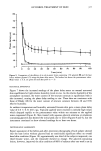
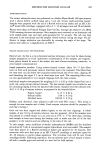
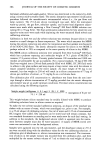
350 JOURNAL OF THE SOCIETY OF COSMETIC CHEMISTS z 3 + . +++ • ++ + ++ 0 1 2 3 4 MED ( kJ/rn 2) Figure 2. The melanin level in the skin is plotted versus the minimum erythema dose for each of 47 psoriatic patients. with decreasing wavelength this increase becomes larger at wavelengths shorter than 400 nm. A well-pronounced shoulder is evident at 335 nm this feature was evident in all the apparent absorption spectra from all the pigmented skin samples studied. These measurements indicate that while vitiligo-involved and normal skin are very different at wavelengths longer than 305 nm, they become very similar at wavelengths that are shorter than 305 nm. The difference between the two curves on Figure 3 is shown in Figure 4, along with a similar curve obtained from another volunteer by subtracting the apparent absorbance of normal skin from that of the vitiligo-involved skin. The reason for two curves is to show the typical variation obtained as one carries out measurements on different persons. The apparent absorbance at wavelengths longer than 400 nm is a smooth curve except for the oxyhemoglobin resonances at 542 and 577 nm. In the range 620 to 720 nm, each curve can be approximated by a straight line from which the curve deviates in the range 400 to 500 nm. The absorption that appears as a straight line is used to estimate the amount of visible melanin (8) the curves of Figure 4 at wavelengths longer than 400 nm appear exactly like the curves in the earlier report. The absorption maximum in all the volunteers studied appears at 335 nm. This was the case for the normal versus vitiligo-involved as well as for the hyperpigmented versus normal unexposed skin. When all the cases were considered together, the strength of the absorption resonance at 335 nm does not appear to correlate with the visual assessment of the pigment level in the skin.

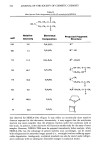
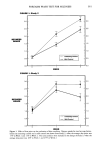
PHOTOPROTECTION BY HUMAN MELANIN 351 s % 25g 35g 45g 550 850 75g WAVELENiZTH ( nm ) Figure 3. The apparent absorbance of vitiligo-involved and normal skin of the same volunteer. Note that the curve from normal skin shows two absorption resonances at 335 nm and at 285 nm. The curve from vitiligo-involved skin shows no significant absorption in the visible and in the UV until wavelengths shorter than 320 nm. DISCUSSION Over the last few years in phototesting psoriatic patients, we have found that one cannot predict their MED simply by observing the pigment level in their skin. A light-skinned individual often has a higher UVB MED than a darkly pigmented one. For this reason our phototest schedule has been set up so that all tests start with the lowest dose, irrespective of the patient's visual pigment level. Upon reflection it be- comes evident that there is no scientific reason for the degree of absorption in the visible to be a strong indicator for the strength of the absorption in the UVB. Yet, this is precisely what is done when we try to arrive at an estimate for the UVB MED of an individual based on visual observation only. After all, the Fitzpatrick skin type system is based on the reaction of the skin to UV rather than on the appearance of the skin. Figure 2, therefore, is not surprising, as it expresses in quantitative terms what has been known qualitatively. The wide range of responses to UVB indicates the involve- ment of another variable which has not been identified so far. Rather than the word "melanin" to describe the complex biopolymer that accounts for the pigment of humans, we propose the term "epidermal melanin pigmentation" (EMP) to indicate the mixture of a number of compounds from tyrosine to polymeric melanin (10). These compounds exist in a delicate balance in the epidermis. The amount of any one of these will depend on the chain of production-demand which would be determined by genetic as well as environmental factors. It is not surprising, therefore, that the "epidermal melanin pigmentation" in skin appears to absorb ultravi- olet radiation in a significantly different way from DOPA-melanin in solution (1) or
Purchased for the exclusive use of nofirst nolast (unknown)
From: SCC Media Library & Resource Center (library.scconline.org)