68 JOURNAL OF COSMETIC SCIENCE various cellulosics. Frequently the purpose of a given additive is to overcome or alleviate a given difficulty. It is instructive to consider some of the difficulties and to consider the role of the additives. The rheology of aqueous polymer dispersions is less favorable for application than that of more Newtonian polymer solutions. Addition of water-soluble polymers (thickeners) is vital to increase high shear rate viscosity to an acceptable level for application of the nail polish and the low shear rate viscosity necessary to effect the flow and levelling characteristics. Although, the advantages of aqueous nail polishes are well recognized, there are several other difficulties associated with its formulation. An obvious disadvantage is that water has a high latent heat of evaporation (approx. 540 cal/g) therefore, at high temperature, a high-energy input is required to facilitate drying, while at ambient temperature and/or high relative humidities drying is slow. These effects can be alleviated by the use of selected volatile cosolvents. A significant problem encountered is that the surface tension of water (approx. 72 dynes/cm.2) is very high, leading to a number of difficulties, e.g., wetting of most surfaces (especially low energy ones such as nails), crawling, cratering and pigment wetting. The addition of surfactant to aid surface wetting and/or to help stabilize the dispersed component in an aqueous system (polymer and pigments) can itself cause difficulties because such additives are, by necessity, surface active and may cause foam and pinhole formation by stabilizing the water-air interface of entrained air bubbles by increasing surface elasticity and/or surface viscosity. The adhesion strength of the aqueous coating may be adversely effected. In general, it is more difficult to achieve a good pigment dispersion in an aqueous nail polish system than in the case of a corresponding solvent system. The freezing point of water is high compares to most organic solvents therefore, it is frequently necessary to add freezing point depressants to protect the formulations from freezing. Finally, bacterial growth requires an aqueous environment. It is frequently necessary to add a preservative in an aqueous formulation to prevent bacterial growth in the wet formulation, thus further increasing the number of components. Conclusion: It is clear from the foregoing discussion that the formulation of aqueous nail polish is generally more complex than is the case for solvent systems. Many patents have been issued, but to date no major cosmetic firm had entered the marketplace with a water- based product because of these inherent problems.

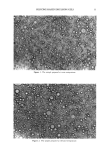
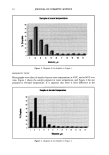
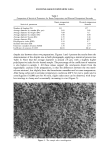
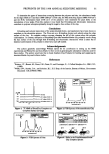
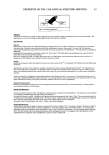
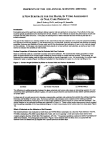
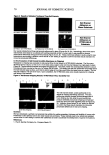
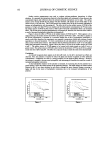
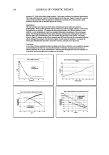
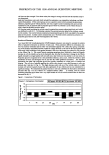
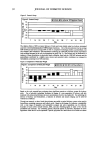
PREPRINTS OF THE 1998 ANNUAL SCIENTIFIC MEETING 69 A NEW SUBSTRATE FOR THE RAPID, IN VITRO ASSESSMENT OF NAIL CARE PRODUCTS John P. Sottery, Ph.D., and Jorge H. Jaramillo Innovative Measurement Solutions Inc., Milford, CT 06460 Introduction Formulators around the world are working to deliver superior nail care products to consumers. Their efforts in this area would be greatly accelerated by the development of fast, reliable, in vitro methods to assess the performance of both nail enamels and nail polish removers. In the past, the development of these methods has been limited by the lack of a suitable substrate. The goal of this research is to develop reliable in vitro nail methods that are predictive of the consumer perceived benefits. Our approach involves two phases: (1) the development of a reproducible, synthetic nail substrate that exhibits the wetting properties, thickness and flexibility of human nails, and (2) the development and validation of new in vitro methods based on this substrate. In this paper, we present preliminary results on a new synthetic nail substrate, as well as a new in vitro method to evaluate the durability of nail enamels. Surface Properties of Substrates Used to Evaluate Nail Care Products Glass is commonly used as a substrate to assess nail enamel adhesion. We examined the wetting properties of clean glass via measurement of the contact angle exhibited by various liquids in contact with this surface. Concurrently, we measured the contact angles made by these same liquids on human fingernails in vivo. Not surprisingly, the contact angle obtained for water on glass (Figure la) differed markedly from that obtained for water on a human nail (Figure I b). Figure 1: Contact Angle Exhibited by Water on Human Nails and Various Substrates o ß ,ß-. , ..... =.• . .., ,.j .•., (a) Glass (b) Human Thumbnail (c) VITRO-NAILS This difference in wetting properties between the glass substrate and human nails raises an interesting question: If a nail enamel has been optimized to adhere to glass, is it safe to assume that this nail enamel will also deliver optimal adhesion to human nails? In phase one of our work we set out to develop a reproducible, synthetic nail substrate that exhibits the wetting properties, thickness and flexibility of human nails. Numerous synthetic nail prototypes were created and the wetting properties subsequently evaluated by measuring of the contact angle exhibited by various liquids in contact with this substrate. The results obtained on an optimized prototype are presented in Figure lc. These contact angle measurement results suggest that the wetting properties of this new substrate (Figure lc) much more closely mimic human nails than does glass (Figure la). Effect of Substrate on the Adhesion of Nail Enamels Nail enamel adhesion was evaluated on both Glass and VITRO-NAILS substrates via a Gardner Paint Adhesion Test Kit, PA 2000, employing a PA-2056 Coarse Blade (Six Teeth, with 2 mm spacing)• 6 rail nail enamel draw downs were created using. the Gardner 8 Path Wet Film Applicator, AP-1SS. • The general guidelines outlined in ASTM Test Method D- 3359 were followed. The photographs presented in Figure 2 were obtained after the films were (1) scored with the Gardner Cross Cut Blade and (2) stripped with a special pressure-sensitive tape.
Purchased for the exclusive use of nofirst nolast (unknown)
From: SCC Media Library & Resource Center (library.scconline.org)