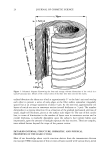
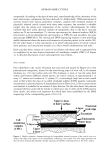
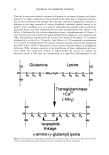
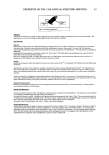
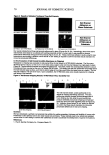
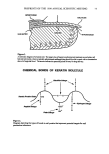
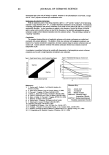
72 JOURNAL OF COSMETIC SCIENCE importance, but also the antifungal potency, which expressed as minimum inhibitory concentration (MIC). An efficacy coefficient E is therefore introduced, which should be maximum for high ther.apeutie effectiveness (9): E = Flux \ MIC Thus one wishes to obtain a high flux of drug through the nail and a low MIC for maximum efficacy. Flux is also directly proportional to molecular size of the drug(9). Recent Progress of the Research of Topical Drug Delivery to the Nail for Onyehomyeosis Treatment Fungal infections of the nails (onychomycosis) makes up about 30% of fungus infections of the skin. Onychomycosis involves about 2-5% of general population. Of the 245 million people in the United States, between 4.9 and 12.3 million are infected with onychomycosis. Onychomycosis takes a profound psychosocial toll on the sufferer. Although there are many potent antifungal drugs currently available, nail fungal infections remain a disease very difficult to treat. In the U.S., only oral administration of three antifungal drugs is approved by FDA as effective therapy for nail fungal infection: itraconazole (Sporanox©), terbinafine (Lamisil©), and an old drug, griseofulvin. Because of the long duration of oral treatment for onychomycosis (3-12 months), potential adverse effects, such as hepatotoxicity and drug interactions, are often of concern. In addition, relapse rate is rather high. To minimize the undesirable side effects associated with systemic treatment, it is highly desirable to have an efficacious topical product to treat onychomycosis. However, ability for a topical drug to penetrate the nail plate has hampered this approach. Keratolyic agents, such as urea and salicylic acid are often used to soften nail plates. Urea and a combination of urea and salicylic acid were reported to be used for nonsurgical avulsion of nail dystrophies in clinical studies prior to topical treatment of onyehomyeosis with satisfactory results (10-12). Lauharanta (13) reported another favorable clinical study of using an amorolfine-containing nail lacquer (Loeeryl nail lacquer} with a special nail preparation procedure (cleaning, filing and cutting} to treat onyehomyeosis in clinical trials. Clinical trials demonstrated that this special procedure was essential. The physical elimination of a part of the nail barrier certainly facilitated the drug penetration for a better efficacy. Similar results were also observed from a Cilcopirox lacauer product. By exploiting target sites on the nail keratin (Figure 2), we discovered a novel way of using chemical enhancers that act directly on the nail keratin to increase nail elasticity, and consequently, to enhance drug permeation through the nail (14). Certain sulfhydryl compounds, such as cysteine, a natural amino acid, or its derivative acetylcysteine (NAC), cleave the disulfide bonds of nail keratin. Urea was used to interact with hydrogen bonds of nail keratin to facilitate the disulfide bond breaking (Figure 2). The chemical reaction that occurs between the cystinc linkages in nail keratin and cysteine is

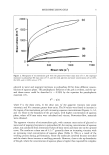
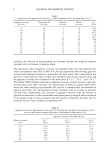
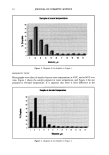
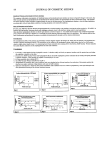
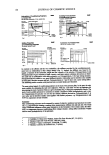
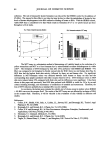
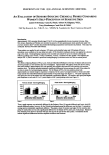
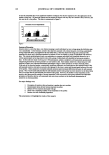
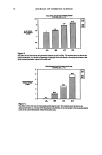
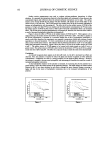
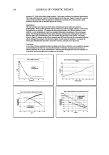
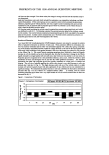
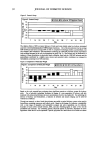
PREPRINTS OF THE 1998 ANNUAL SCIENTIFIC MEETING 73 shown in the reaction below. Both cysteine and acetylcysteine have been used in Japan as hair-waving agents (15). Chemical Reaction Sequence: Nail-S-S-Nail + 2HSCH2t2qH2)COOH -• Cysteine -- 2 Nail-SH + HOOCH0qH2) CH•-S-S-CH(NH•)COOH Cysfine Reducing the disulfide bonds in the nail along with softening the nail plate could serve to open up the nail plate to drag penetration. To demonstrate enhanced penetration of anti-fungals into nail, in vitro methodologies such as nail swelling test, drug partitioning test, and drug permeation through human nails were used. The ability of a drug in a formulation to penetrate nail plate should be reflected by the rate and extent of the nail uptake of the formulation (i.e., nail swelling in the formulation), as well as by the amount of the drug migration into the nail (drug partitioning). Nail swelling and drug partitioning tests were conducted by immersing human nail clippings in a topical drug formulation at 32øC for two days. After washing off the surface-bond formulation, the nail clippings were first examined for weight gain, then digested and analyzed for drug analysis with a high pressure liquid chromatography method. Figures 3 and 4 show the effect of NAC and urea as penetration enhancers on the nail swelling and itraconazole partitioning. All four itraconazole formulations contained 1% itraconazole and different enhancer compositions: Formulation A was the control, containing neither NAC nor urea Formula B contained 10% urea but no NAC Formula C contained 5% NAC but no urea and Formulation D contained both 5% NAC and 10% urea. The numbers over the bars are the enhancement factors, i.e., the ratio of the nail weight gain (Figure 3) or nail itraconazole content (Figure 4) from the test formulations to those from the control (Formulation A). Figure 3 shows that Formulation D produced the highest nail swelling, which corresponds to the highest drug uptake into the nail, 93.6 fold higher than the control. The benefits of incorporating nail penetration enhancers into topical antifungal formulations are clearly demonstrated by these examples. The amount of antifungal drags penetrated through the nail in these in vitro studies are over a thousand fold higher than that required to have therapeutic effect. Conclusions In summary, the chemical composition of human nail is significantly different from the other body membranes such as the skin, vaginal and gastrointestinal membranes. In topical delivery of actives to the nail, the nail plate does not mimic the behavior of a
Purchased for the exclusive use of nofirst nolast (unknown)
From: SCC Media Library & Resource Center (library.scconline.org)