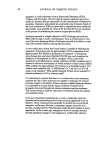
74 JOURNAL OF COSMETIC SCIENCE lipophilic membrane, which has been the case for almost all the other body membranes, including the skin. Instead, a nail plate behaves more like a hydrogel membrane in its barrier properties. Effectiveness of topical formulation at treating nail disease is increased dramatically by enhancers that disrupt protein structure of the nail plate. REFERENCES 1. Fleckman, P. (1990). Basic science of the nail unit. In Nails: therapy, diagnosis, surgery. edited by Scher, R.K. and Daniel, C.R.W.B. Saunders Company, Philadelphia, pp. 42-43. 2. Walters, K.A., Flynn, G.L., and Marvel, J.R. (1983b). Physiochemical chemical characterization of the human nail: permeation pattern for water and the homologous alcohols and difference with respect to the stratum corneum. J.Pharrn. Pharmcol. 35:28-33. 3. Baden, H.P., Goldsmith, L.A., and Fleming, B. (1973). A comparative study of the physicochemical properties of human keratinized tissues. Biochim. Biophys. Acta. 322:269-278. 4. Scheuplein, R.J. and Morgan, L.J. (1967). Bound water in keratin membranes measured by a microbalance technique. Nature. 214:456. 5. Haneke, E. (1991). Fungal infections of the nail. Seminars in Dermtol. 10:41-53. 6. Walters, K.A., Flynn, F.L., and Marvel, J.R. (1985a). Penetration of the human nail plate: the effects of vehicle pH on the permeation ofmiconazole. J. Pharrn. Pharrncol. 37:498-499. 7. Mertin, D. and Lippold, B.C. (1997b). In-vitro permeability of the human nail and a keratin membrane from bovine hooves: penetration of chloramphenicol from lipophilic vehicles and a nail lacquer. J. Pharm. Pharmacol. 49:241-245. 8. Mertin, D. and Lippold, B.C. (1997a). In-vitro permeability of the human nail and a keratin membrane from bovine hooves: influence of the partition coefficient octanol/water and the water solubility of drugs on their permeability and maximum flux. J. Pharrn. Pharrnacol. 49:30-34. 9. Mertin, D. and Lippold, B.C. (1997c). In-vitro permeability of the human nail and a keratin membrane from bovine hooves: prediction of the penetration rate of antimycotics through the nail plate and their efficacy. J.Pharm. Pharmacol. 49:866- 872. 10. Farbet, E.M. and South, D.A. (1978). Urea ointment in the nonsurgical avulsion of nail dystrophies. CUTIS.22:689-692. 11. South, D.A. and Farbet, E.M. (1980). Urea ointment in the nonsurgical avulsion of nail dystrophies - a reappraisal. CUTIS.25.609-612. 12. Buselmeier, T.J. (1980). Combination urea and salicylic acid ointment nail avulsion in nondystrophic nails: a follow-up observation. CUTIS.25:397-405. 13. Lauharanta, J. (1992). Comparative efficacy and safety of amorolfine nail lacquer 2% and 5% once weekly. Clin. Exp. Dermatol. 17 (Suppl. 1): 41-43. 14. Sun, Y., Liu, J.C., Kimbleton, E. and Wang, J. (1977). Antifungal treatment of nails. US patent No. 5,696,164. 15. Iwaski, A. (1994). Cysteine Waving Lotions - Past Improvement and Future Prospects. Cosmetics & Toiletdes. 109:69-78.

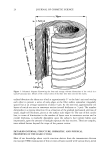
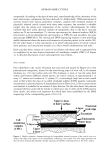
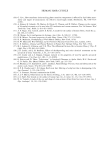
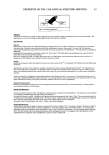
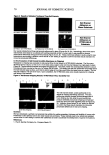
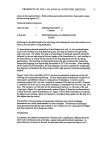
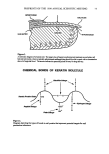
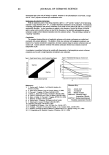
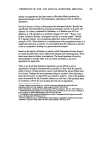
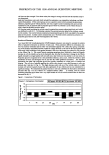
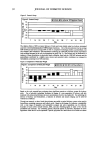
PREPRINTS OF THE 1998 ANNUAL SCIENTIFIC MEETING 75 • '?////• NAIL MATHIX EPONYCHIUM NAIL PLATE HYPONYCHIUM Figure 1. A schematic diagram of a human nail. The target sites of topical onychomycosis treatment are nail plate, nail bed and nail matrix. where a topically administered antifungal chug should be able to reach with a concenlrafion above its fungicidal level. The arrows indicate the potential points of end, for drag delivery. CHEMICAL BONDS OF KERATIN MOLECULE I Disulfide linkage I $ $ • • Hydrogen linkage Peptide iin!•ge CO0' N -, I Polar linkage Figure 2. Diagram depicting the types of bonds in nail protein that represent potential targets for nail penetration enhancers.
Purchased for the exclusive use of nofirst nolast (unknown)
From: SCC Media Library & Resource Center (library.scconline.org)