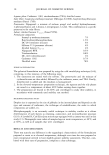
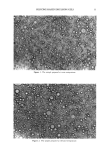
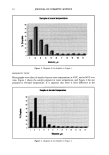
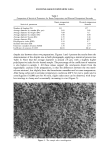
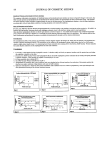
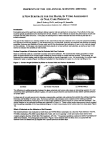
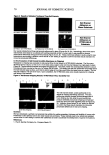
86 JOURNAL OF COSMETIC SCIENCE Active containing Formulations Prototype 1otiou and ointment formulations were prepared coutaining 25% bis(trimethylsilyl)lactate. This concentration ofbis(trimethylsilyl)lactate corresponds to an effective concentration of 10% lactic acid after complete hydrolysis of the active. Because of the moisture sensitivity of the active, anhydrous formulations were prepared and packaged to minimize exposure to water or water vapor during repeated dispensing. In addition to the active, other ingredients present in the lotion were Hexyl Methicone, Dimethiconol, Polybutene and Caprylyl Trimethicone. Other ingredients present in the ointment, in addition to the active, were C24-28 Alkyl Dimethicone wax, Caprylic/Capric/Stearic Triglycerides, Hexyl Methicone, Caprylic/Capric Triglycerides, and Caprylyl Trimethicone. Both formulations contained 0.5% fragrance. Human Repeat Insult Daily Topical Application Testing In a pilot study the above prototype lotion was applied to the back of the hand and to the inside of the forearm using the ASTM Method E 1490-92, "Sensory Evaluation of Materials and Products" protocol twice daily for 45 days. No irritation or reddening of the skin was observed or felt during this period and no indications of sensitization to the formulation were observed. By comparison to the untreated back of the opposite hand and inside of the forearm, increased smoothness and reduction of aging spots were observed. Human Efficacy Study and Three Dimensional Digital Imaging Analysis A lotion and an ointment containing the same ingredients as described above, except without the active bis(trimethylsilyl)lactate, were prepared. An efficacy study of the four formulations, using over 100 women, of ages ranging from 30 to 60 years, was conducted over a 90 day period. The group was divided into approximately 35 with the active lotion, 17 with the inactive lotion, 35 with the active ointment, and 17 with the inactive ointment. Participants were requested to apply their test material twice daily. Visual analysis of participants was conducted at the beginning, and weeks 2, 4, 8, and 12. A trained dermatologist supervised these analyses. Silicone negative skin replicates were made of all participants at the beginning, and weeks 4 and 12. Quantitative analysis of the skin replicates was obtained by laser light scanning directed at a 25 degree angle from the plane of the replica. A Cohu Solid State B&W camera was used to photograph each of the scans. The B&W luminanee pattern of each scan was then converted into a visible color image of each replica. Changes in the skin surface during the 90 day efficacy test are readily seen via these color images. Standard statistical methods were used to analyze all of the data obtained in this study. Twenty nine within treatment study parameters and fifteen between treatment study parameters were determined to be statistically significant. These include reductions in free lines, coarse wrinkling, mean spacing of lines, tactile roughness, mottled pigmentation, yellowing, and e•tthema. Reduction in the % of the negative skin replicate area covered by shadows was statistically significant. Conclusions Treatment of human skin with lotion or ointment formulations comprising 25% bis(trimethylsilyl)- lactate, which corresponds to the ultimate delivery to the epidermis of 10% lactic acid after complete hydrolysis of this active, has demonstrated no significant irritation or inflammation of the skin even after repeated application. Although it is known that bis(trimethylsilyl)lactate is hydrolyrically unstable and that the skin has a high moisture content, lactic acid is apparently not formed in the upper layers of the epidermis. The lipophilic nature of bis(trimethylsilyl)lactate would suggest that it should have an affinity for the lipophilic domains in the lower layers of the epidermis such as those sites which synthesize collagen and promote new cell growth. The forty four study parameters which identified statistically significant improvements to the skin, in the 90 day efficacy test, suggest that bis(trimethylsilyl)lactate is reaching the lower layers of the epidermis. The location in the epidermis and the mechanism of hydrolysis of bis(trimethylsilyl)lactate to liberate lactic acid therein is unknown at this time and is the subject of ongoing research. References 1. Stiller, M.J., "Topical 8% Glycolic Acid and 8% Lactic Acid creams for the Treatment of Photodamaged Skin", Archives of Dermatology, 132 631-636 (1996). 2. http://www.mistyisle.corn/alpha.htm 3. US Cosmetics Industry, "Special Report, AHA Consumer Products 1990o1993," p. 6 4. http://www.dc.enews.corn/maqazines/gen• news/archives/960401-005.html 5. Hahn, G.S., "A New Line of Defense Against Aging: Breaking the Irritation Barrier", DCI, 162 (2) 18- 22 (1998). 6. Kligman, A., '•ext Generation of Skin Care for Aging Skin?", DC1160 (4) 6 (1997). 7. http://www.mistyisle.com/beta.htm

PREPRINTS OF THE 1998 ANNUAL SCIENTIFIC MEETING 87 COSMETIC ACTIVE INGREDIENTS: THE NEW MILLENIUM AND BEYOND Lisa Lods, Caren Dres, Christopher Johnson, Durant Scholz, Geoffrey Brooks Brooks Industries, South Plainfield, NJ 07080 Generally speaking the new millenium is not holding forth any bold new promises, other than perhaps employment opportunity for computer consultants caused by the Y2K situation. The approaching millenium does seem to be ushering some interesting changes within the approach the cosmetic industry is taking towards active ingredients. In many ways the changes within the cosmetic industry mirror the development of medical practices as they evolve from the herbal approach of primitive indigenous cultures to crude drugs, to today's application of purified pharmaceutical compounds. Perhaps the strongest driving forces behind the changes which occurred in the medical community was the increased ability of the healer to accurately treat patients with well characterized if not highly purified compounds. A good example of this would be the adoption of foxglove as an herbal remedy. Literally an old wives remedy for dropsy, foxglove was widely adopted as a treatment for hypertension. Unfortunately the therapeutic dosage is very close to the lethal dose. Due to seasonal and regional variation in active content, patients were sometimes rushed to an untimely end. Consequently the active component, digitalis was isolated and purified to eliminate such problems. Traditionally many of the active ingredients available to the cosmetic chemists such as thymus or placenta extract were derived from animal sources. Now because of both public relations and safety concerns, animal derived actives are no longer acceptable to global marketers. Plant extracts, long a mainstay as both active and promotional materials are currently under what has become not necessarily a positive review by the CIR. These developments have caused cosmetic companies to look for actives with defined activity or purified phytochemicals. With these changes in mind we have looked at two plant derived materials as examples of this trend. The first material we will discuss is an extract from the seeds of Fennel (Foeniculum vulgate Miller). Seeds, due to the heightened metabolism and consequent exposure to oxidative stress encountered during germination are ideal sources of antioxidants. Among the antioxidants present are significant
Purchased for the exclusive use of nofirst nolast (unknown)
From: SCC Media Library & Resource Center (library.scconline.org)