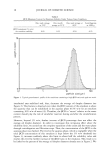
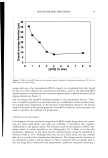
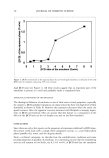
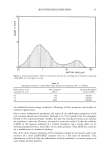
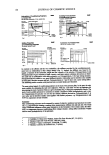
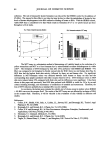
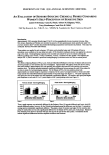
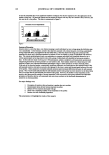
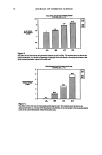
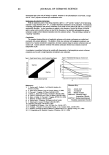
88 JOURNAL OF COSMETIC SCIENCE quantities of oxido-reductases such as Superoxide Dismutase (SOD), Catalase, and Peroxidase. We have used an aqueous extraction process to isolate the enzymes that are responsible for the neutralization of destructive peroxides. Enzymatic antioxidants are a particular area of interest. Much of the work conducted on SOD has shown that is outperforms more traditional antioxidants, most probably by virtue of the fact that SOD is not consumed in the process of neutralizing the reactive oxygen species (ROS). Hydrogen peroxide is a highly destructive ROS. Hydrogen peroxide can effect cells through a variety of mechanisms. From a cellular point of view one of the most damaging effects of hydrogen peroxide is its ability to react with cell membrane lipids producing lipid peroxides. In vitro studies have shown that Fennel extract is capable of inhibiting the generation of lipid peroxides by approximately 84% in comparison to the approximately 40% inhibition produced by Tocopherol. A biologically active human skin equivalent (MatTek EPI-200) was used to analyze the inhibition of Prostaglandin F--a (PGE2) synthesis. PGF_.a is part of the arachidonic acid inflammatory cascade. Inhibition of PGF_a synthesis may be inferred to block the development of visible irritation. Fennel extract inhibits PGF_a synthesis by approximately 45% relative to an irradiated control. The cultures were irradiated with 1.5 MED/hr/cm 2 (31.5 mJ/cm 2) UVA/UVB using a solar simulator( When applied topic.ally Fennel extract reduced UV induced erythema by 65% in a human panel •. It is interesting to consider that there is no evidence that oxido-reductases penetrate the skin. Oxido-reductases are capable of reducing UV induced erythema. Based on the ability of these enzymes to inhibit lipid peroxidation it is reasonable to assume that the topical oxidation of lipids tend to propagate downward through the stratum comeurn promoting erythema. This concept brings to light the importance of materials that protect against environmental insult. In the area of purified phytochemicals a variety of materials which are characterized as phytoestrogens have been receiving significant levels of attention. These compounds may generally be divided into several broad categories: isoflavones, flavones, coumestans, lignans, resorcylic acid lactones, and phytosterols. Phytoestrogens make attractive targets as active ingredients. As the women age, endogenous levels of estrogen decrease eliciting significant changes in skin appearance. Traditionally placenta

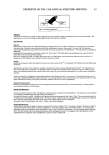
PREPRINTS OF THE 1998 ANNUAL SCIENTIFIC MEETING 89 extract or progesterone has been used to offset the effects produced by decreased estrogen levels. Phytoestrogenic materials provide an effective alternative. We have chosen to focus on the pentacyclic triterpene betulin. Betulin has specifically been identified as possessing estrogenic activity in human cell cultures. In a study conducted by Mellanen, et al Betulin was 45% as effective as 1713-estradiol at a minimum dosage of 23 nM iii. Recio, et al, further evidences Betulin's estrogenic activity in a recent paper iv. Betulin (0.5 mg/ear)reduces 12-O-tetradecanoylphorbol acetate (TPA) induced edema by 45%. When betulin is co-administered with progesterone there is a significant reduction in activity. It is postulated that the reduction in activity is due to competitive binding at a glucocorticoid receptor. Based on the ability of Betulin to inhibit cAMP-Dependent Protein Kinase v it is quite possible that it may inhibit both elastase and melanogenesis. Both these areas deserve further investigation. The broad spectrum of activity demonstrated by betulin make it an excellent candidate as an active ingredient for aging skin. There is no doubt that botanical ingredients can be effective active ingredients if properly characterized or purified. In fact while the specific mode of action of these products can be well defined the actual effects tend to be broad. Perhaps the most important thing to consider when selecting a plant derived active is what effect you intend to achieve. One of the greatest areas of potential for the Cosmetic Industry as well one of the greatest areas of contention will be the use of plant derived active ingredients. i Thomas J Stephens and Associates, Inc. "MatTek Corporation Epidenn Skin Model (EPI-200) Antioxidant Study with PGE2 Endpoint" Study Number L98-D037 (MTr/PGE) • AMA Laboratories, "Evaluation of Sun Protection by SPF Determination". Ref. No. WP97-BERN1-33 ß •i "Wood-derived estrogens: studies in vitro with breast cancer cell lines and in vivo in Irout" Mellanen P, et al Toxicology & Applied Pharmacology 1996 Feb: 136(2): 381-388 i• "Investigations on the steroidal anti-inflammatory activity if triterpenoids from Diospyros leucomela", Pieco et al, Planla Med 1995 Feb 61(l):9-12 v "Selective inhibition of cyclic AMP-dependent protein kinase by amphiphilic triterpenoids and related compounds.", Bing Hui Wang, Gideon M. Polya, Phytochemisuy 1996:41(1):55-63
Purchased for the exclusive use of nofirst nolast (unknown)
From: SCC Media Library & Resource Center (library.scconline.org)