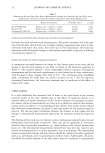
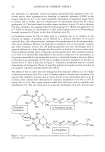
2 JOURNAL OF COSMETIC SCIENCE posure period, the UV filters used should not be altered by UV sunlight. Thus, the determination of photostability is an important part of the product efficacy evaluation (1). Various i, vitro methodologies, based on photometric or spectroradiometric measure- ments, are commonly used for the evaluation of the photochemical stability of organic UV filters. But these methods usually give global data on the sunscreen and not on each UV filter contained in the product, and, as they are i, vitro methods, they do not reflect what really happens in the skin. Therefore we used an i, vivo method to assess the photostability of UV filters. This method is based on a tape-stripping technique com- bined with HPLC analysis (2-4). Moreover, the application of several successive adhe- sives allows the determination of the distribution profile of these filters in the upper layers of the skin and of their possible degradation after 40-MED UV exposure. MATERIALS AND METHODS MATERIALS S/•bjects. Six healthy volunteers participated to the test after having signed a written informed consent. Inclusion criteria: ß Caucasian with skin types II, III (Fitzpatrick classification) ß Female ß Considered as healthy after a clinical examination ß 20-40 years old ß Registered with Social Security in agreement with French law (Huriet law no. 88- 1138, 20.12.88). Exclusion criteria: ß Naevi or freckles on tested areas ß Dermatological problems ß History of hypersensitivity to at least one drug or one cosmetic ß Pregnant or lactating women ß Pre-existing intense skin tanning Sunscreen. The sunscreen studied contained five different UV filters (four UVB, one broad-spectrum UVB + UVA see Table I). The SPF of this sunscreen, determined on 16 volunteers in our laboratories, according to the Colipa method, was 62.8 + 13.29. Table I UV Filters Contained in the Sunscreen Tested UV filters Octocrylene (Uvinul 539T) 4-methylbenzilidene camphor (Uvinul MBC 95) Octyl methoxycinnamate (Uvinul MC 80) Dioctylbutamido triazone (Uvasorb HEB) Methylen bis benzotriazoyl tetramethylbutylphenol (Tinosorb M)

PHOTOSTABILITY OF UV FILTERS 3 Ba/a,ce. All the weighings were done on a Mettler balance (Max 205 g/62 g, d = 0.1 mg/0.01 mg). Syringe. The sunscreen was applied with a 50-pl micro-syringe (Hamilton Bonaduz Schweiz, #705) and spread with a finger glove (Romed, latex finger cots prepowdered, large 4). Adhesive. Tape strippings were done using adhesive tape (Tesa film no. 5529). They were conserved after withdrawal in 10-ml amber flasks (Merck). Extraction. Chloroform (RPE quality for analysis, Carlo Erba) and methanol (RS quality for spectrophotometry, Carlo Erba) were used to extract the UV filters. Filtration. For filtration, 0.45-pro pore diameter filters (Gelman GHP acrodisc GF, no. 4558) were used. Irradiation. Black blotting paper (six squares of 0.7 x 0.7 cm) was used for the MED (minimal erythema dose) determination of the volunteer, and another one (size 1.8 x 2 cm) for the irradiation of the site of application. The irradiation apparatus used was a solar simulator (Xenon lamp ORIEL power: 400 watt) with a spectrum close to sun spectrum in the UV range. The radiation emitted passed through a WG 320 filter (1-mm thick) that eliminated most of the UV under 320-nm wavelength. The energy delivered was 255 pwatt/cm 2. HPLC. The HPLC system used consisted of: ß Waters 600E solvent delivery pump ß Waters 712D WISP autoinjector ß Waters 484 absorbance detector ß Computer with chromatography software, Millennium version 2.10 ß Column: Cls Supelcosil (50-mm ß 4.6 mm ID, 5-pm packing), obtained from Su- pelco ß Mobile phase: gradient of methanol (RS quality for spectrophotometry, Carlo Erba), THF (RS quality for spectrophotometry, Carlo Erba), and distilled water ß 1-ml amber glass shell vial (Waters WA T02503) ß Carrousel of 96 positions (Waters, WA T078727) METHODS In vitro method. With a finger glove, 2 l•l/cm 2 of sunscreen was spread on a well-defined 2 x 2-cm area in the middle of two quartz plates (control plate and test plate). Both plates were placed inside a dark oven at 35øC for 15 minutes to allow the sunscreen films to dry. Then the test plate was irradiated at 40 MED with a sun simulator. UV filters were extracted from each plate with 10 ml of a mixture of chloroform/ methanol in a ratio of 2:1 (v/v). The resulting solutions and each finger glove used were filtered and assayed by HPLC. The whole process was repeated three times on the same sunscreen, and the results were compared with those obtained in vivo. MED determination. The MED, which is defined as the smallest UV (A + B) dose to induce a definite erythema on a skin area of a volunteer, was determined following the Colipa guidelines.
Purchased for the exclusive use of nofirst nolast (unknown)
From: SCC Media Library & Resource Center (library.scconline.org)