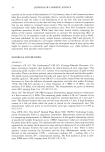
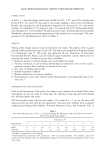
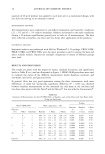
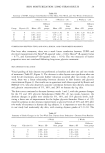
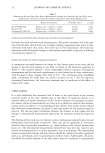
4 JOURNAL OF COSMETIC SCIENCE The first day, in order to obtain a gradient of energy for the MED determination, the black blotting paper with the six square holes was fixed on one forearm of the volunteer (randomized choice). Then each square was irradiated with an exposure time that varied with a geometric progression (1.25 rate) because the sun simulator used in this experi- ment delivered only one light beam. The MED for unprotected skin was read the second day of the test, 24 hours after UV exposure. Application. On the second day, two sites with dimensions of 2 x 2 cm were marked out on the other forearm. On the two sites, 2 pl/cm 2 of the product was applied with a finger glove, one hour before the beginning of exposure for one site and one hour before tape stripping for the other site (reference). Tape stripping. Fifteen tape strippings were performed one hour after product application on the non-irradiated site: a 2 x 1.9-cm piece of adhesive was cut with scissors and immediately applied on the skin. The tape was pressed for one minute with a 500-g mass, then stripped in one quick move with forceps and then put in a 10-ml amber flask. This was repeated on the same skin area 15 times, and the tapes were grouped by five, to be assayed from the 11th to the 15th tape, because the concentrations of UV filters in these tapes were supposed to be below the detection limit of HPLC. The finger glove was conserved in a 10-ml amber flask in order to be assayed as well. The other site was irradiated at 40 MED one hour after product application. Tape stripping was performed immediately after irradiation in the same manner as the non- irradiated site. Extraction. The organic filters were extracted by adding 5 ml of chloroform/methanol, in a ratio of 2:1 (v/v), to each flask, except for the flask containing the finger glove in which 9 ml was introduced in order to obtain a better extraction. The solutions were filtered on a 0.45-pm pore diameter filter in a 1-ml amber shell glass. HPLC method. The calibration was done with an external standard method using four standards. The programs for the mobile phase and the detector absorbency were determined in a preliminary study, and the reproducibility was found to be greater than 95%. Table II presents the final operating conditions entered in the Millenium program. General conditions: © Volume of injection: 5 pl © Temperature: 25øC © Wavelength of detection: 310 nm © Flow rate: 1.5/min Table II Operating Conditions of the Millenium Program (mobile phase) Time (rain) % of Methanol % of Water % of THF 0 80 20 0 3 80 20 0 5 80 0 20 10 80 0 20 12 80 20 0 15 80 20 0

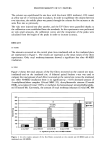
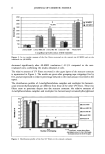
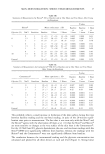
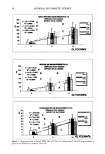
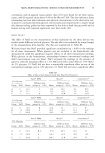
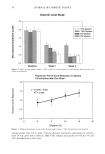
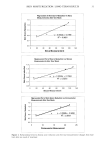
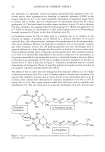
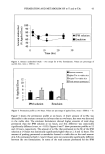
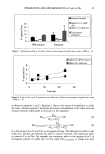
PHOTOSTABILITY OF UV FILTERS 5 The column was equilibrated for one hour with the eluent (80% methanol, 20% water) at a flow rate of 1.5 ml/min prior to analysis. In order to equilibrate the column between two injections, the mobile phase was passed through the column for five minutes at the same flow rate as previously. The vials were injected one after another, and the UV filters were quantified thanks to the calibration curve established from the standards. As the experiments were performed on very small amounts, the calibration curves and the integration of the peaks were calculated from the height of the peaks in order to increase accuracy. RESULTS IN VITRO The amounts recovered on the control plate (non-irradiated) and on the irradiated plate are represented in Figure 1. The results are expressed as the mean values of the three experiments. Only octyl methoxycinnamate showed a significant loss after 40-MED irradiation. IN VIVO Figure 2 shows the total amount of the five filters recovered on the control site (non- irradiated) and on the irradiated site. A bilateral paired Student t-test was used to compare the total amount of each filter recovered on the control site versus the irradiated one. After 40-MED irradiation there is no significant (p 0.05) decreased amount of 4-methylbenzilidene camphor (Uvinul MBC 95), dioctylbutamido triazone (Uvasorb HEB), octocrylene (Uvinul 539T), or methylen bis benzotriazoyl tetramethylbutylphe- nol (Tinosorb M). Conversely, the amount of octyl methoxycinnamate (Uvinul MC 80) 900 8( 7( 6( 5( 3( 2( 1( S . -41,10% Uvinu1539T Uvinul MBC 95 Uvinul MC 80 Uvasorb HEB Tinosorb M S. significant (p0.05) versus 0 MED irradiation I I•0 MED I a41 O•ED j Figure 1. In vitro results: amount of the five filters recovered on the control site (0 MED) and on the irradiated site (40 MED).
Purchased for the exclusive use of nofirst nolast (unknown)
From: SCC Media Library & Resource Center (library.scconline.org)