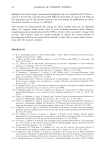
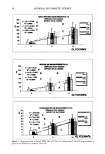
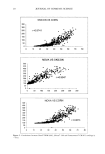
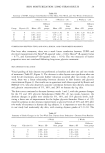
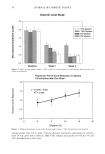
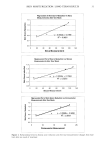
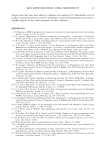
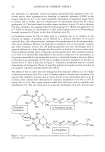
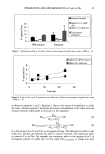
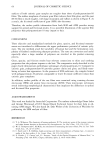
SKIN MOISTURIZATION: LONG-TERM RESULTS 31 Regression of Skin Score Reduction Vs Nova Measurements after One Week 1.1 0.9 0.7 0.5 y = 0.0053x + 0.7366 R 2 0.9651 = 2O 40 60 80 100 120 140 Nova Measurement Regression Plot of Score Reduction vs Skicon Measurement after One Week __•• . y = 0.0046x + 0.7684 R 2 = 0.9241 20 40 60 80 100 120 140 Skicon Measurement 1.3 1.1 0.9 0.7' 0.5 Regression Plot of Skin Score Reduction vs Corneom eter Measurement after One Week • y = 0.0368x + 0.5656 •'"""""""""• R 2 = 0.8757 5 10 15 20 25 Corneometer Meaurement Figure 4. Relationship between dryness score reduction and electrical measurements (changes from base- line) after one week of treatment.

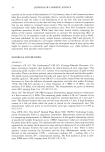
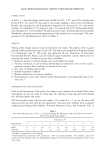
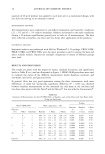
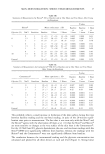
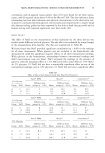
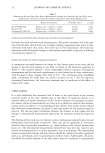
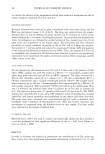
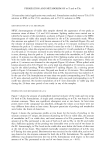
32 JOURNAL OF COSMETIC SCIENCE Table V Relationship Between One-Hour Device Measurements (change from baseline) and One-Week Score Improvement: Prediction of Long-Term Skin Conditions by Short-Term Measurements Regression equations R-squared values p-values Nova © DPM 9003 Dryness score = 0.0025x + 0.6922 0.9169 0.042 Skicon © 200 Dryness score = 0.0024x + 0.8114 0.9694 0.015 Corneometer © CM 828 Dryness score = 0.0209x + 0.7556 0.8427 0.082 CORRELATION BETWEEN SKIN GRADES AND ELECTRICAL MEASUREMENTS For both one-week and two-week measurements, skin grades correlated well with read- ings from all three electrical devices. A higher reading, suggesting more water in skin, correlated with lower skin scores. Even with salt in the formulations, electrical mea- surements could distinguish changes in skin dryness attributable to glycerin at different concentrations (Figure 4). PREDICTIVE ABILITY OF SHORT-TERM MEASUREMENTS A comparison was made between the change in skin dryness grade at one week and the change in the electrical reading at one hour, as shown in the regression equations in Table V. This analysis showed a linear relationship between one-hour instrumental measurement and the one-week improvement in skin dryness for all three instruments, with R-squared values ranging from 0.84 to 0.97. The correlations were remarkably good, considering the small base size of the one-hour test (n = 10). For glycerin- containing formulations, the short-term measures may be predictive of the effects of longer-term usage. CONCLUSIONS It is well established that sustained lack of water in the outer layers of the stratum corneum results in dry skin, whether due to the effects of exogenous factors or to inherent defects in barrier formation (19,20). In the evaluation of treatments to modu- late xerosis, electrical measurements can serve as (a) a predictive index of skin moistur- ization and (b) an adjunct to visual grading of skin dryness. Our results clearly indicate that short-term measurements can predict long-term results for moisturizers based on glycerin. We also saw good correlations between the changes in skin grades and the changes in instrumental measurements induced by the treatment within the long-term test. The findings of this study are very relevant to skin conditioning induced by glycerin and formulations based primarily on glycerin. They may also be applicable to treatments based on other hygroscopic ingredients, e.g., alpha hydroxy acids, natural moisturizing factor, etc. The instrumental measurements reported here may have less value for pre- diction of moisturization by occlusive treatments such as petrolatum. The relationships among instrumental readings and skin dryness should be evaluated for other ingredient types, e.g., petrolatum, prior to generalization of these results. Additionally, the poten- tial effects of residual material on the skin surface must be considered in experimental
Purchased for the exclusive use of nofirst nolast (unknown)
From: SCC Media Library & Resource Center (library.scconline.org)