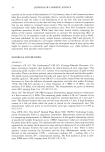
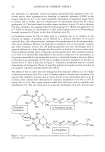
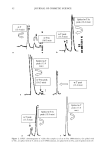
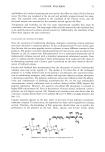
36 JOURNAL OF COSMETIC SCIENCE acts primarily as a lipophilic radical-scavenging antioxidant and suppresses chain ini- tiation and/or chain propagation by donating its phenolic hydrogen (6-OH) to the oxygen radicals (4). ot-T is the major lipophilic antioxidant of exogenous origin found in tissues and is widely used for enhancement of antioxidant protection by topical application. ot-T has been found to reduce tumor incidence in mice (5) and to decrease fine lines, wrinkles, and sagging induced by photoaging (6,7). While oral application of ot-T failed to increase its concentration in skin, topical application of ot-T homologues strongly increased ot-T levels in the skin of hairless mice (8). ot-Tocopheryl acetate (ot-TAc) is often used as a prodrug due to its stability in the presence of oxygen. A prodrug can be defined as a chemical derivative of an active molecule that, after administration, undergoes biotransformation to the pharmacologi- cally active substance. Because the epidermis is relatively rich in non-specific esterases and other enzymatic activity (9), the prodrug approach has been increasingly used to improve delivery of a drug through the skin and/or to localize its action within skin. Various dermal prodrug esters of naproxen and ketoprofen have been studied by Rautio et al, (10). It is theoretically impossible for the acetate to function as an antioxidant, as the group responsible for the antioxidant activity is chemically bound as the ester. Hence to function as an antioxidant, ot-TAc has to undergo enzymatic hydrolysis in the skin to release free ot-T. This is depicted in Figure 1. Cutaneous metabolism may be a critical determinant of therapeutic efficacy of topically applied ot-tocopheryl esters and thus of carcinogenic responses and photoprotective effects. The ability of skin to cleave this ester linkage has been disputed. Alberts et al. (11) failed to show bioconversion of ot-TAc to ot-T in human subjects. Gensler and co-workers (12) reported the inability of mouse skin to cleave ot-TAc to the antioxidant form, ot-T. In contrast, other authors have demonstrated cutaneous metabolism of ot-TAc to ot-T in mouse skin (13,14). Skin organ culture models have also been used to establish such metabolism (15). The use of pig skin to study the metabolism of ot-TAc has not been 6/.kq.. '3 "/ • '3 H CH3 7/J• • &l,/• H3C .....
CH3CO.. :/•H•3C"',,•H• • H3C 8 CH3 Enzymatic CH3 3 l tx-Tocopheryl acetate Hydrolysis C, H3 HO•••..• C. H3 -- M• II I,, H3C ..... •H HBC,,,,•/H l •_ 1 CH3 , [ -Tocopheo I Figure 1. Structure of a-tocophe•l acetate and a-tocopherol. The encircled 6-OH group is essential for its antioxidant effect.

PERMEATION AND METABOLISM OF tx-T and tx-TAc 37 reported in the literature. Also, the kinetics and rate and extent of permeation and metabolism of tx-TAc has not been very clearly elucidated thus far. The permeability of pig and miniature pig skin has been widely studied, and they have proven to be good animal models for human skin. Pig and human skin have similar surface lipids, barrier thickness, and morphology, making excised pig skin a useful model to estimate i, vitro human skin permeation behavior. The animal model chosen for this study, excised viable micro-Yucatan pig skin, permitted us to evaluate the permeation and bioconversion of (x-TAc to its major metabolite. Also, the formulation vehicle may modify properties of the stratum corneum (e.g., increased hydradon), which could influence the penetration of active ingredients (16). It is believed that skin is capable of many of the same types of metabolic processes that are present in the liver and other organs (9). The overall metabolizing capacity of the skin is less than that of the liver by nearly two orders of magnitude. However, Shiratori (17) suggested that the skin may be an important storage site for tx-T and play a major role in the distribution and metabolism of (x-T. Studies have shown that mouse skin (18) and human skin (19) contain esterases capable of converting prodrug ester compounds to bioactive drugs. Meyer and Neurand (20) found non-specific esterases to be located in the epidermis, subcuds, hair follicles, dermis, and sebaceous and apocrine glands of pig skin. The present work was carried out with the intent to (i) find out if metabolism of (x-TAc occurs in pig skin, (ii) identify the nature of the metabolite, and (ii) elucidate the kinetics in terms of rate and extent of such metabolism. The influence of two prototypic formulations on permeation and metabolism, viz., a solution of (x-TAc and (x-T and an (x-TAc emulsion, was determined. MATERIALS AND METHOD CHEMICALS AND INSTRUMENTS D-(x-Tocopheryl acetate, Covitol © 1360, was obtained as a gift from Henkel Nutrition and Health Group (Illinois). D-tx-Tocopherol was obtained as a gifk from Archer Daniels Midland Company (Illinois). The following chemicals were obtained directly from the manufacturer and used without purification: SD alcohol from Eastman (Tennessee) isopropyl myristate and mineral oil from Sigma Chemical Company (New Jersey) diisopropyl adipate and isocetyl alcohol (Ceraphyl © 230 and Ceraphyl ©, respectively) from ISP Vandyk (New Jersey) carbomer (Carbopol ©) from BF Goodrich (Ohio) Bis (2-hydroxyethyl)-ammonium hexadecyl hydrogen phosphate, DEA-cetyl phosphate (Amphisol ©) from Roche Vitamins and Fine Chemicals (New Jersey) diazolidinyl urea (Germall ©) from Sutton Laboratories (New Jersey) Ethomeen C/25 from Akzonobel (Illinois) and hydroxypropyl cellulose (Klucel ©) from Hercule (Germany). Special 30-ml centrifuge tubes were obtained from Corning Inc. The solvents acetonitrile, chloroform, and n-hexane of HPLC grade were obtained from Fisher Scientific (Springfield, N J). Water refers to freshly deionized water. The centrifuge used was from Fisher Centrific (Fisher Scientific). Organic solvents were evaporated using a Savant Speed Vac ©, SC 110. The wrist-action shaker used was from Burrell (Ohio). Vortexing was done with a Vortex-Genie (New York).
Purchased for the exclusive use of nofirst nolast (unknown)
From: SCC Media Library & Resource Center (library.scconline.org)