52 JOURNAL OF COSMETIC SCIENCE Cationic polymers are formulated into hair care products to impart and to promote conditioning of hair. These polymers are highly substantive to hair because the hair surface bears a net negative charge at pH above its isoelectric point of 3.67 (1). Cationic polymers in general improve combability, provide curl retention in high-humidity conditions, and afford long-lasting static reduction. Due to the difficulty and subjec- tivity of hair measurements, objective screening methods are of great interest to the cosmetic industry. Cosmetic scientists have developed many test methods in attempts to translate the consumer-perceived hair conditions into physically measurable properties. This paper describes three such methods to quantify gloss, opacity, and friction of cationic polymer films in the absence and presence of surfactant. These test methods are used in a comparative study to differentiate the performance characteristics of polyquar- ternlure-10 and cationic guar samples. GLOSS OR SHINE Gloss or shine is one of the most sought-after hair properties, as it implies health and beauty. Several instruments have been developed to measure the shine of human hair. The method of Thompson and Mills (2) measured the reflectance from an assembly of hair fibers. Reich and Robbins (3) employed a photogoniometer to measure the gloss of a single hair or aligned hair fibers. They monitored the changes caused by soiling, cleaning, and interaction on the hair surface. The results showed excellent correlation with the subjective evaluations of hair shine. A computer-interfaced photogoniometer utilized by Guiolet eta/. (4) yielded information regarding the structural parameters of hair surface, luster, and pigmentation. Unfortunately, fiber curvature, light scattering, degree of alignment, and hair color all contribute to the discernment of gloss. All these variables must be considered when taking gloss measurements on hair. COMBING PROPERTY AND FRICTION OF HAIR Combability can be defined as the subjective perception of the relative ease or difficulty encountered when human hair is combed. Fiber properties such as curvature, friction, stiffness, diameter, length, and cohesion all affect combing ease. Combing difficulty arises with increased fiber curvature, friction, or static charge. On the other hand, increasing fiber stiffness, diameter, or cohesive forces makes hair easier to comb. Hair feel is usually judged subjectively by sliding the fingers over hair or by rubbing fibers between the fingers. Scientists have translated this subjective evaluation into an objec- tive measurement of friction, with the assumption that hair variability has no conse- quence. Friction is the resistance of two contacting surfaces to relative motion. It is proportional to normal force, and the proportionality constant is defined as the coefficient of friction. Friction measurements can usually differentiate the performance of similar shampoo formulations because they are more sensitive and quantitative than subjective combing tests. Schwartz and Knowles (5) utilized a torsion balance to record the frictional force of a single fiber as a cylinder moved against the hair. The hair fiber was draped over a cylinder with equal weight applied to both ends. Another method, introduced by Scott

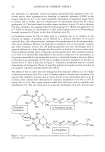
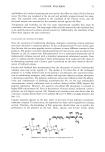
CATIONIC POLYMERS 53 and Robbins (6), involved attaching the root end of a hair fiber to a load cell of an Instron tester. The fiber was weighted at the tip end and partially wrapped around two man- drels. The mandrels were attached to the crosshead of the Instron tester, and the frictional tension was measured as the mandrels moved against the fiber. Temperature and humidity are the two main experimental variables that must be controlled in friction tests. The wrap angle of hair and the material for the mandrels have to be carefully selected to achieve utmost sensitivity. Additionally, the variability of hair fibers often impacts the data consistency. EVALUATION OF CATIONIC POLYMERS Since the invention of conditioning shampoos, shampoos containing cationic polymers have been disclosed in numerous patents. In fact, polyquaternium-10 and cationic guar have become the two most popular cationic polymers in many different commercial hair products. The generic structures of polyquaternium-10 and cationic guar are depicted in Schemes la and lb, respectively. Polyquaternium-10 is a quaternary ammonium salt of hydroxyethyl cellulose reacted with a trimethyl ammonium substituted epoxide. Guar gum is a polysaccharide consisting of linear polymannose with a galactose side chain on an alternating mannose unit. Cationic guar is produced by the same chemical deriviti- zation of hydroxyl groups. Faucher and Goddard have demonstrated that the adsorption of cationic hydroxyethyl cellulose onto hair occurs rapidly (7). The uptake is 50 times that of the uncharged polymer. It is widely believed that in the presence of surfactants, the coacervate forma- tion in conditioning shampoos, body washes, and soap bars enhances polymer adsorption to keratinous substrates. The polymer-surfactant interaction influences both the adsorp- tivity and conformation of adsorbing macromolecules (8). At low and intermediate concentrations, anionic surfactants such as sodium dodecyl sulfate (SDS) depress the polymer adsorption. However, the quantity of polymer JR adsorption is restored at higher SDS concentration (9). Even in the presence of excess anionic surfactant, cationic polymer can still deposit on hair (10). Hannah and coworkers have also shown that the coacervate complex formed from 0.1% polymer JR and 1% SDS is strongly bound to the hair (11). Cationic polymers deposit on the hair, either in the form of neat polymer or polymer/ surfactant complex. To some extent, the deposited thin layer can be regarded as a coating on hair. Therefore, the knowledge of film properties should allow one to predict the performance of the polymer on the hair. Gloss, opacity, and friction results imply OH OH CH3 CI' I Scheme la. Generic structure of polyquaternium-10.
Purchased for the exclusive use of nofirst nolast (unknown)
From: SCC Media Library & Resource Center (library.scconline.org)