j. Cosmet. Sci., 52, 67-88 (January/February 2001) Papers Presented at the 2000 Annual Scientific Meeting (Thursday's Program) December 7-8, 2000 New York Hilton New York, NY 67

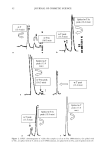
68 JOURNAL OF COSMETIC SCIENCE SKIN CARE TECHNOLOGY APPLIED TO HAIR CARE PRODUCTS - DOES IT WORK? Ho Ming Chun •, P. Wertz 2, D. Deppa • and L. DuveP •Amway Corporation, Ada, M149355 and •Dows Institute, The University of lowa, Iowa City, 52242 Introduction In recent years, there have been many talks and activities in hair care marketing about using skin care technology in hair care. Using skin care ingredients or a skin care approach to hair care is not new. Collagen, elastin, PCA, keratin, lactic acid, vitamins, and many more have been used in hair care products for a long time. With increasing competition and fighting for survival among brands, the trend of taking a skin care approach to hair care is entering a new stage. "Companies will put much of the same philosophy they now place behind their skin care ranges into hair care." (1) A major marketer has recently introduced a new specialty hair care line and here is what was said in an article about the line. "The formulas were adopted from the concept of a daily skin care regime...their ad campaign reinforces the manufacturer's idea of skin care thinking for your hair... use half the amount of conditioner as usual, but like a facial moisturizer for skin, delivers a precise conditioning benefit...similar to the wrinkle cream that pumps up fine lines, the silicone smoothes out irregularities in the surface of the hair." (2) The question of does skin care technology actually work in hair care products or is this just another marketing gimmick is in fact often in many people's minds. A fully formed hair structure consists of cuticle, cortex, medulla and cell membrane complex (CMC). The cuticle, like the stratum corneum (SC) of the epidermis, serves a protective function and determines the surface properties of hair. Like stratum corneum, the cuticular cells are bounded by a cross-linked proteinaceous envelope with covalently attached lipid (3). The physical condition of the cuticle has a great influence on consumer perception of their hair and the products they use. The CMC, which lies between cuticular and cortical cells, acts as "cement" that binds the cells together and as a "barrier" to prevent the entry or diffusion process into the hair. It also plays an important role in the integrity of the hair cuticle and therefore, the hair's surface property (4, 5). The CMC is laminar in structure and is composed of protein and lipid layers. The bulk of structural lipids, which are not phospholipids, is located in the CMC (6). The structural lipids in CMC consist of ceramides, cholesterol, cholesterol sulfate and fatty acids (7, 8). In the epidermis of skin, SC is built up in a 4-stage differentiation process starting with the cell division in the basal layer. During the last stage of differentiation, comification and development of the l ipid barrier take place. As in the CMC of hair, the SC does not contain phospholipids (9). Wertz reported that the major lipid classes that can be extracted from SC are ceramides, cholesterol, and fatty acids, which make up approximately 50, 25, and 10 percent of the SC lipid mass, respectively. Small amounts of cholesterol sulfate and cholesterol esters are also present (10). While lipids have been used in the hair care products for many years, the incorporation of polar lipids to hair care, and the ability to look inside the hair structure to treat the problem is a rather recent development. When 2-oleamide-l,3 octadecanediol (Ceramide R) was incorporated into a shampoo and conditioner, it was the first time that hair care products actually talked about ceramides. Braida, Dubief and Lang reported that structural lipids are vulnerable to chemical and environmental insults and damages from which can lead to total absence of CMC from the cuticle. However, when hair was treated with a synthetic ceramide II homolog, N-oleoylsphinganine, the surface property, such as hydrophobicity was improved. Because "it infiltrates between adjacent cuticle cells, the increase in cuticle cohesion observed may be a driving parameter for controlling peptide loss" (11). This paper talks to the incorporation of experimental lipids, which mimic the polar lipids found in the stratum corneum and the CMC of hair, in some typical hair care formulations. Through various testing methods we were able to show the benefits of these lipids to the hair. Experimental l ) A pilot study was conducted to determine whether a ceramide-containing formulation could restore ceramide from ceramide-depleted hair. A simple lipid composed of Ceramide 3 (stearoyl phytosphingosine at 50%, cholesterol at 40%, and cholesterol - 3-sulfate, sodium salt at 10%) was prepared. European brown virgin hair was used for this study. A 1.0% dispersion of experimental lipid in distilled water (1.1 gm in 110 ml) was prepared by sonication at 60-68øc for I hour. A 10 ml aliquot of the resulting dispersion was diluted to 100 ml to prepare a 0.1% lipid preparation. Samples (1 g. each) oflipid-depleted, washed hair were treated with 20 ml of each of the formulation (0.1% and 1.0%) for 5 minutes at room temperature. The lipid dispersion was removed by
Purchased for the exclusive use of nofirst nolast (unknown)
From: SCC Media Library & Resource Center (library.scconline.org)