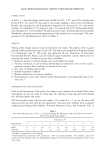
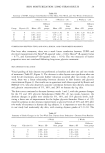
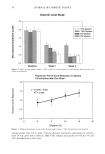
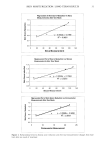
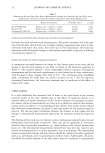
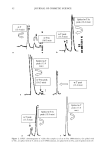
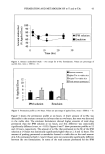
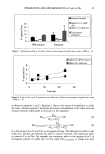
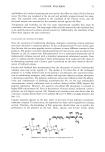
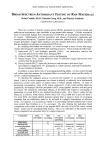
2000 ANNUAL SCIENTIFIC MEETING 69 pipet. Hair samples treated with lipid were each rinsed 3 times with 80 ml portions of distilled water. The samples were analyzed by TLC in conjunction with photodensitometry. The result of this study was clearly positive (Table l). The densitometer profiles are an average of the 4 samples from each treatment group. In the untreated group, there is a very high proportion of non-polar lipids, mainly from sebum. It also showed that the untreated hair contains several incompletely resolved ceramide types. The lipid-depleted hair contains a trace of ceramide-2, whereas the formulations contain ceramide-3, which is seen on the densitometer tracings centered at 79 mm. This study could not tell whether lipid was deposited only on the cuticle surface or penetrated inside the hair, or both. The SEM micrographs indicate minimal coating effect on the lipid-depleted hair after treated with lipid containing formula and subsequently rinsed. Table 1: Ceramide Content ug / I• hair Mean S.D. Untreated Hair 803 204 Lipid Depleted Hair 8 4 Treated with 0.10% Lipid-A 73 1 l Treated with 1.0% Lipid-A 116 27 In each case N=4, S.D.= sample standard deviation ll) The objective of this work was to determine tensile property of the hair after being treated with lipid containing conditioners. In this study, we evaluated an experimental "lipid-A" (a 100% lipid, composed of 40% ceramide-3, 20% cholesterol, 10% cholesterol sulfate, and 20% behenic acid). We also evaluated two commercially available "lipid-B" (Dermatein BRC from Hormel, a 25% lipid solution, composed of 40% phospholipids, 30% cholesterol, 20% glycosphingolipids, 5% free fatty acid and 5% sphingomyelin) and "lipid-C' (HLC •¾om Natural and Marine Resources, a 100% lipid, composed of 2% polar lipids and 98% non-polar lipids, triglycerides and hydrocarbons). Triple bleached blonde hair from De Meo was used for this study. The results indicated that the tensile properties (% Extension and Load -graf) of the hair after treatment with lipid containing conditioners were significantly improved over the control after a single and 5x treatment, with experimental "lipid-A" showing the best results. Ill) The objective of this work was to determine if it is possible to identify ceramide-2 and -3 from the lipid-depleted hair after being treated with lipid containing shampoos and conditions. European brown virgin hair from De Meo was used. The results showed that both ceramide-2 and -3 were identified and quantitatively determined in lipid- depleted hair after treatment with lipid containing shampoos and conditioners. Transmission Electron Microscopy (TEM) micrographs showed that there is significant uptake into the spaces between cuticle cells as opposed to simple surface deposition. IV) The objective of this work was to determine the effect of repeated use of lipid containing shampoo and conditioner on lipid-depleted hair. The results indicated that repeated use of conditioner showed much greater increase of lipid penetration/deposition to the hair than the shampoo, which showed no increase. V) In this study, another experimental lipid composition (7% ceramide-2, 9% ceramide-3, 7% cholesterol, 7% behenic acid, and 70% meadowfoam seed oil) was added to more complete shampoo and conditioner formulas to learn how lipids performs in "real life" formulations. TEM micrographs showed that the lost lamellae from CMC were restored after lipid-depleted hair was treated with lipid containing formulas. DVS isotherm analysis showed a better moisture retention (slower desorption rate) than the control. Dynamic contact angle showed improved hydrophobicity of the hair surface and formic acid diffusion analysis showed less porosity of the hair. SEM combing studies showed that lipid containing treatments improve the integrity of the cuticle, and DiaStron tensile properties showed significant improvement on break extension and break stress. Acknowledgments: The authors gratefully acknowledge some of the experimental work provided by TRI Princeton and Croda, Inc. Reference: (1) HAPPI, Vol.36, No.12, p.112,1999 (2) The Rose Sheet, Nov.8, p.6,1999 (3) Wertz P. "Integral Lipids of Hair and Stratum Comeurn " In: Jolles P.,Zahn H.,Hocker H., eds. Formation and Structure of Human. Basel Birkhauser Verlag, pp227-238, 1997 (4) Robbins C. Chemical and Physical Bebavious of Human Hair, 3 rd Ed., p.44

70 JOURNAL OF COSMETIC SCIENCE (5) Swift J. Fundamental Of Human Hair Science, Cosmetics Science Monograph No. 1,pp.48-49 (6) Robbins C. Chemical and Physical Behavious of Human Hair, 3 rd Ed. P.80 (7) Wertz P., Downing D. Polar Lipid Composition of Mammalian Hair, Comp. Biochem. Physiol. Vol.86B, No.4,pp 671-673, 1987 (8) Wertz P.,Downing D. Integral Lipids of Mammalian Hair, Comp. Biochem. Physiol. Vol.92B No.4, pp 759-761, 1989 (9) Petersen R. Ceramides-Key components for Skin Protection, Cosmetics and Toiletries, Vol. 107, pp45-49, Feb 1992 (10) Wertz P. Lipids and Barrier Function of the Skin, Acta Derm Venereo12000 Supp 208, p.7-11 (11) Braida D., Dubief C., Lang G. Ceramide -A New Approach To Hair Protection and Conditioning,' Costa. And Toil. Vol 109, pp.49-57, Dec. 1994
Purchased for the exclusive use of nofirst nolast (unknown)
From: SCC Media Library & Resource Center (library.scconline.org)