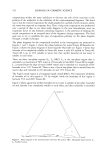
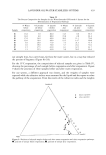
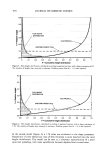
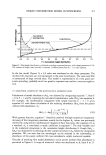
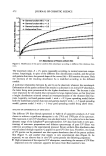
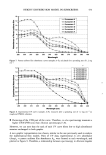
j. Cosmet. Sci., 54, 429-441 (September/October 2003) Investioation of the phase behavior and an evaporation study of systems of lavender oil, water, Laureth 4, and Tween 80 ABEER A1-BAWAB, Chemistry Department, Faculty of Science, University of Jordan, Amman 11942, Jordan. Accepted for publication June 16, 2003, Synopsis Natural essential lavender oil was obtained by steam distillation from the flowering plants. The phase behavior of a system of natural lavender oil, distilled water, and two stabilizers was investigated. The stabilizers that were used were tetraethyleneglycol lauryl ether (Laureth 4) and polyoxyethylen (20) sorbitan mono-oleate (Tween 80). For the first system (water, lavender oil, Laureth 4), the phase diagram shows an area of lamellar liquid crystal formed along the water-Laureth 4 axis. It solubilized up to 12% per weight of the lavender oil. The system formed one isotropic solution. The phase diagram for the second system (water, lavender oil, Tween 80) shows a small area of hexagonal liquid crystal that solubilized a maximum of only 3% of the lavender oil. The system shows two isotropic phases. Evaporation studies were done for the isotropic solutions in both systems. The results provided essential information about the behavior of lavender oil during evaporation. INTRODUCTION Lavender oil is obtained by steam distillation from the flowering plant Lavandula officinalis. The plant's habitat is the Mediterranean area, but it is cultivated in southern France, Spain, and Italy. The most important constituent is linalyl acetate, which occurs at a concentration of about 50 wt% in French oils, which are considered to be of the highest quality. In France, lavender oil is often extracted with volatile solvents, yielding concretes and absolutes. English lavender oil is produced from a hybrid, and its ester content is considerably lower than that of the French oil (1). Some of its constituents are also cineol, linalool, geraniol, pinene, limonene, borneol, coumarin, camphene, myrcene, linalyl acetate, terpineol, bornylacetate amyl-vinylcarbinol, ester of the geranyl linalyl, butyric acid, and valeric acid. Lavender oil is a stimulant and an ingredient of some USP preparations. It is used extensively in cosmetics, lotions, toilet waters, shaving preparations, and soaps, and is recommended as an insect repellent (1,2). It is mentioned in the literature as being 429

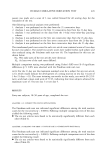
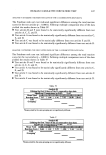
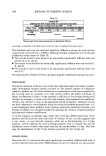
430 JOURNAL OF COSMETIC SCIENCE useful in the medical field for relieving perineal discomfort following childbirth, acting as aromatherapy for patients in the intensive care unit (3,4), inhibiting immediate-type allergic reactions in mice and rats (5), and relieving pain associated with rheumatic and musculoskeletal disorders (6). Lavender oil has been extensively studied, and much has been documented about its chemical constituents (1). There are many methods for its analysis (7). The supercritical extraction method was used to get high concentration of the oil (8). The effect of the place of growth on the oil composition was also studied (9). In addition to its previously mentioned uses, lavender oil is still used mainly in inex- pensive perfumes or fragrances. In many previous studies, a single compound of the whole oil was isolated, and its phase diagram, when combined with other compounds, such as water and surfactant, was studied. Some of these compounds are limonene and geraniol (10-15). Some studies prepared vesicles containing certain drugs in combina- tion with lavender oil and concluded that vesicles enhance skin penetration (16). In the present study, the flowering parts of the lavender plants were collected from the campus of the University of Jordan in Amman, and steam distillation was performed for the entire plant, including the flowering parts, to obtain the fresh lavender oil. For the first time in the literature, the phase behavior of all the constituents of lavender oil, when combined with water and surfactant, was investigated. Also, a vapor pressure and evaporation pathway study were performed for the lavender oil system. EXPERIMENTAL MATERIALS The following chemicals were used without further purification: polyoxyethylene (20) sorbitan mono-oleate (Tween © 80) from Fisher Scientific, Fair Lawn, NJ and polyoxy- ethylene-4-1aurylether, Laureth 4 (Brij © 30) from Uniqema Co, ICI Surfactants, Wil- mington, DE. Water was deionized and triple distilled. Lavender oil was freshly pre- pared by steam distillation from the flowering tops of the plant, which grew on the campus of the University of Jordan in Amman. INSTRUMENTS The following instruments were used: a Meiji ML 9400 polarizing microscope, a Mettier AJ150 analytical balance, a Vibrofix VFI electronic shaker, an SI TRON TINCA 4003 centrifuge with a maximum speed of 5500 rpm, and a Carl Zeiss 56627 refractometer. PHASE DIAGRAM DETERMINATION The solubility regions were determined by the addition of water to a combination of Tween 80 and lavender oil, while taking note of the point of clarity and turbidity. The extent of the solubility regions were confirmed first by centrifugation of the sample at 3500 rpm for 15 minutes second, by preparing a series of samples with compositions close to the solubility limits and third, by storing samples at room temperature for several days.
Purchased for the exclusive use of nofirst nolast (unknown)
From: SCC Media Library & Resource Center (library.scconline.org)