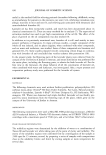
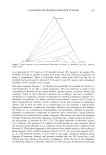
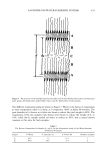
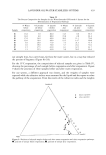
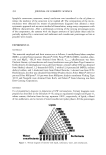
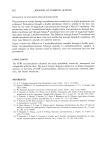
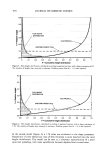
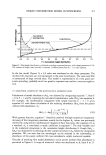
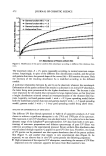
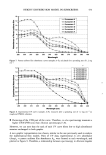
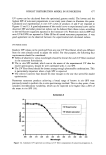
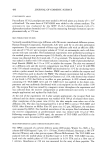
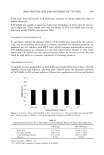
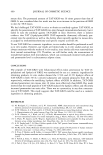
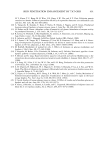
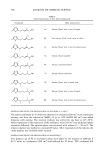
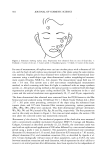
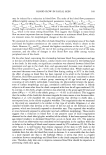
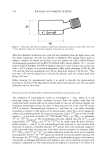
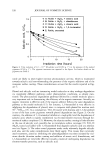
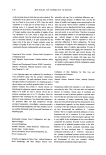
516 JOURNAL OF COSMETIC SCIENCE 25 ß Figure 1. Pyrex glass cell used for irradiation experiments (measures are given in mm). The level of the 5.0-ml suspension inside the cell and the magnetic stirring bar are also shown. After the scheduled irradiation time, each cell was withdrawn from the light source, and the whole suspension (5.0 ml) was filtered on Millipore HA syringe filters prior to analysis. Analysis of phenol and salicylic acid was carried out with a Merck-Hitachi chromatograph equipped with an RP-C18 LiChroCART column (Merck, 12.5 x 0.4 cm) packed with LiChrospher 100 RP-18 (particle diameter 5 pm). Elution was carried out with a 30/70 mixture of acetonitrile/phosphate buffer (total phosphate 0.050 M, pH 2.8), and the detection wavelength was 210 nm. Retention times at 1.00 ml min -1 flow rate were 3.65 min for phenol and 3.90 min for salicylic acid, the column dead time being 0.90 min. Before showing the experimental results it is useful to describe the photocatalytic processes at the basis of the degradation of both phenol and salicylic acid, the two model molecules used in this work. PHOTOCATALYTIC DEGRADATION PATHWAYS FOR PHENOL AND SALICYLIC ACID The irradiation of semiconductor oxides at wavelength }t hc/Ea,, where Ea, is the band-gap energy of the oxide, promotes electrons from the valence band into the conduction band, leaving holes in the valence band. In the case of titanium dioxide, the irradiation wavelengths giving the onset to these processes lie in the near-UV region (UVA or shorter). Photogenerated electrons (e-) and holes (h +) can either thermally recombine or migrate to the surface of the photocatalyst, where they can be trapped by surface and subsurface groups. Electrons are trapped as surface Ti TM species (often briefly named e-s•r f) and holes as surface TiIV-øOH (briefly øOHsurf or øOHad s) or subsurface Ti•v-o-ø-Ti•V (h+•ub_surf). The recombination between trapped electrons (Ti•n•urf) and trapped holes (Ti•v-øOH•urf and Ti•v-o-ø-Ti•V) is far slower than the direct recombi- nation between e- and h + in the semiconductor bulk (reaction 4), and reaction with molecules in solution is therefore possible. Ti TM species react with molecular oxygen to yield superoxide (they can also react with other electron acceptors in solution), while Ti•v-øOH•urf and Ti•v-o-ø-Ti TM can oxidize dissolved molecules, often up to complete mineralization. The Ti•v-o-ø-TiIV species are involved in electron-transfer reactions. On the contrary, the Ti•v-øOHsu•f groups usually act as hydroxylation agents with aromatic compounds, as hydrogen abstractors with aliphatic ones, and as electron acceptors with inorganic compounds (2). The cited processes are depicted in reactions 3-10, where S is

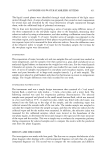
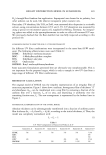
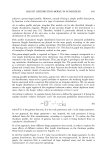
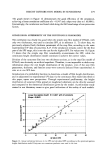
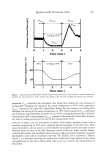
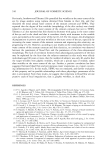
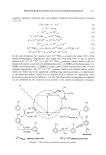
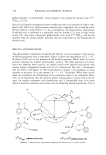
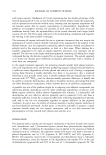
PHOTODEGRADATION BY RUTILE-BASED PIGMENTS 517 a generic (aromatic) molecule that can undergo oxidation and hydroxylation reactions (2,11,12): TiO 2 + hv -- e- + h + (3) e- + h + -- heat e- - TiIVsurf-- TinIsurf h + + TiIV-OH-surf • TiIV-øOHsurf h + + TiIV_O2_Ti•V __. TiIV_o-ø_TiIV Timsurf q- 02 --- TilVsurf + 02 -ø TiIV-øOHs•,ff + S + H20 --- TiIV-OH-s•,ff + Sø-OH + H + TiIV-o-ø-TilV + S --- TilV-o2--TiIV + S +ø (4) (5) (6) (7) (8) (9) (lO) In the case of phenol, the reaction with TiIV-øOHsurf accounts for about 90% of the overall photocatalytic degradation rate, while the remaining 10% is due to phenol oxidation by Ti•v-o-ø-Ti TM (13). The TiIV-øOHsurf pathway mainly leads to the hy- droxylated products catechol (1,2-dihydroxybenzene, 1,2-DHB) and hydroquinone (1,4- DHB), and to resorcinol (1,3-DHB) at a lesser extent. These intermediates will, in turn, undergo degradation. The TiIV-o-ø-TiIV pathway leads to the phenol radical cation, which can either react with superoxide, yielding ring-opening products, or deprotonate to the phenoxyl radical, which can be reduced back to phenol by superoxide. Such processes are summarized in Scheme 1 (16,18). The photocatalytic degradation of phenol can be inhibited by the addition of an alcohol to the system (2-propanol, t-butanol, hv ••'H• :Ti Iv • h• TilV_o2-_T•• • OH OH o I[ + )1 OH ' TilV•OHsu½ pat•ay (major one) TilV_o-'_•IV pat•ay (minor o•) Scheme 1. Photocatalytic degradation pathways for phenol.
Purchased for the exclusive use of nofirst nolast (unknown)
From: SCC Media Library & Resource Center (library.scconline.org)