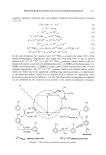
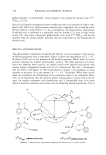
514 JOURNAL OF COSMETIC SCIENCE conductor oxides under irradiation can catalyze the degradation of a wide range of organic and inorganic molecules, a positive feature for application in waste decontami- nation techniques (2,3), but a problem from the point of view of cosmetics (4-7). Some semiconductor oxides also undergo self-degradation upon irradiation, but this is not the case for titanium dioxide and zinc oxide (2). The photoinduced transformation of organic compounds is potentially harmful in the case of topically applied sunscreens, since, for instance, damage to DNA and RNA (4,5) and enzyme inactivation (6) have been observed in the presence of irradiated titanium dioxide. In this context, much effort has been devoted to limiting the ability of titanium dioxide and zinc oxide to photodegrade organic molecules. Among the possible strategies, surface treatment with organic compounds or with inert inorganic oxides (usually alu- mina) is the most common one. In a comparative evaluation of treatment efficiency, organic treatments proved to be more effective than inorganic oxide surface coatings in reducing the photocatalytic degradation rate of acetaldehyde (7). The optimization of treatments relies upon the photocatalytic transformation of a model compound, with the purpose of assessing the efficiency of each treatment. Indeed, the best performing treat- ment is the one that provides the lowest photocatalytic degradation rate of the model compound under standardized conditions. Among the possible model compounds, uric acid (8), acetaldehyde (7), glycerin coupled with Pb 2+ reduction (9), and 1,1-diphenyl- 2-picrylhydrazyl radical (10) have been suggested. The use of a single model compound in the evaluation of the photocatalytic activity of inorganic pigments faces, however, a problem, since different degradation pathways are possible under photocatalytic conditions. When considering the oxidative pathways, reaction with surface hydroxyl radicals (Tiiv-'OH•u•o also named 'OHads) and with subsurface photoformed holes (Ti•v-o-'-Ti •v, also named h+•ub_•,rf) is possible (11,12). Each organic compound has a different reactivity towards Ti•v-'OH•rf and Ti•v-o-'- Ti Iv. For instance, 2-propanol and many other alcohols are particularly interesting molecules as they preferentially react with TiIV-'OH•u•f, which makes them an impor- tant tool in the evaluation of photocatalytic degradation pathways (13). Ti•v-'OH•rf + =CHOH --- Ti•V-oH-•rf + =C'-OH + H + (1) :C'-OH + 0 2 • =C=O -t- HO 2' (2) •Vde have recently evaluated the photocatalytic activity of various commercial sunscreens using phenol as a model molecule, which also allowed an indirect assessment of the degradation pathways by analysis of the degradation intermediates (14). Biogenikko UV Sperse (futile-based, coated with alumina and 1,3-butanediol) proved to be one of the least active pigments, and it has been studied in greater detail to gain insight into the effects of the different treatments (organic and inorganic) on its photocatalytic activity (15). The TiO 2 treatments we tested were very effective in inhibiting phenol photo- catalytic degradation, but almost completely ineffective in inhibiting degradation of salicylic acid (15). The consequence of these findings is that the use of a single model molecule is not conclusive in the evaluation of the activity of a pigment. Phenol and salicylic acid are interesting model molecules if used together since they undergo pho- tocatalytic degradation via different pathways (phenol mainly upon reaction with Ti tv- 'OH, L•rf, and salicylic acid mainly with Ti•v-o-'-Ti•V (13,16,17)). As a consequence, results obtained with these model molecules can be generalized to a wide variety of other

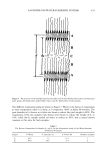
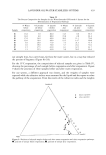
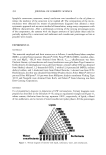
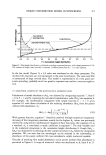
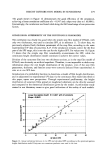
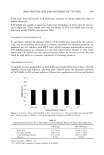
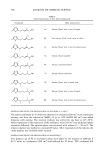
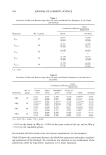
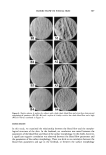
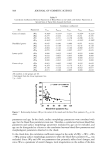
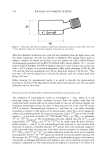
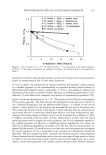
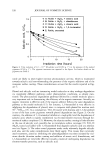
PHOTODEGRADATION BY RUTILE-BASED PIGMENTS 515 compounds undergoing degradation via either pathway or both (15). In this technical note the use of phenol and salicylic acid as model molecules is extended to a wider range of commercial inorganic pigments, with the aim of evaluating their overall photocata- lytic activity. EXPERIMENTAL We tested four coated rutile-based pigments, with Aldrich uncoated rutile as a control. The pigments used in this work are listed in Table I, together with their particle diameter (maximum of the distribution function of particle diameters, approximated with a Gaussian, as measured in reference 14). It was not possible to measure the particle size of the pigments coated with stearic acid (A and C) because they poorly dispersed in water. The poor water dispersion was also observed during photodegradation experi- ments, and thus the photocatalytic activity of these pigments is likely to be underes- timated in our experimental setup. Phenol (purity grade 99%) was purchased from Aldrich and salicylic acid (99%) from Carlo Erba. Aqueous suspensions of the pigments were obtained upon sonication with a Branson 2200 sonifier. The pigments (0.500 g 1-1) were irradiated in magnetically stirred Pyrex glass cells (diameter 4.0 cm, height 2.5 cm, suspension volume 5.0 ml) under a Solarbox (CO.FO.ME.GRA., Milan, Italy) equipped with a 1500-W xenon lamp and a 340-nm cutoff filter. Incident radiation in solution in the UVA region was 0.01 W cm -2 (14). The distance between the lamp and the Pyrex cells under the Solarbox (a closed irra- diation device with reflecting walls) was 21 cm. The Pyrex glass cells we used are shown in Figure 1. In the case of salicylic acid, the solution pH was about 3.5, and under such conditions the hydroxylation reactions are negligible when compared with the charge- transfer processes (17). Table I Pigments Used in Irradiation Experiments Partide Name Supplier Composition diameter (nm) (A) Micro titanium Tayca Corporation Rutile, coated with dioxide MT-100TV alumina and stearic acid (B) UV Titan M262 Variati & Co. Rutile, coated with alumina and dimethicone (C) Kemira UV Titan Variati & Co. Rutile, coated with M160 alumina and stearic acid (D) UV Sperse Biogenikko Rutile, coated with alumina and 1,3-butanediol (E) Titanium (IV) oxide Aldrich Rutile, uncoated 200 285 285 1400 (bimodal distribution) The particle diameters are taken from reference 14, where they were measured by means of a Coulter Model N4 MD laser-based submicron particle analyzer. The particle diameter could not be determined for the pigments coated with stearic acid since it was not possible to obtain a sufficiently homogeneous aqueous dispersion.
Purchased for the exclusive use of nofirst nolast (unknown)
From: SCC Media Library & Resource Center (library.scconline.org)