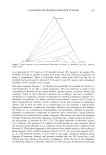
j. Cosmet. Sci., 54, 493-498 (September/October 2003) Synthesis of new fragrances from -methylfuran. Part III JANUSZ NOWICKI, Institute of Heavy Organic Synthesis "Blachownia," Energetykgw 9, 47-225 Kgdzierzyn-Kooe1e, Poland. Accepted for publication October 18, 2002. Synopsis The synthesis of new 2-methylfuran-based alcohols is described. The odor and physicochemical character- istics of all new compounds are also presented. INTRODUCTION This paper is a continuation of our research intended to find new outlets for commercial furan intermediates that can be converted into new fragrances (1-6). The investigations presented in Parts I and II covered the synthesis of new alcohols, esters, and acetals from 2-methylfuran. The obtained new furan derivatives offered very interesting flavor char- acteristics (5,6). In particular, cyclic acetals were found very attractive. One of their significant advantages is their relatively high chemical stability. A similar high stability is offered by a group of alcohols that has numerous representative compounds within both naturally occurring and synthesized fragrance materials. The obtained furfuryl alcohols are characterized by original floral fragrances. The purpose of this work was to synthesize a new group of alkylfurfuryl alcohols with expectedly interesting fragrances. Extension and branching of the alkyl chain should favorably affect the profoundness and diversity of the fragrance performance of these compounds. RESULTS AND DISCUSSION Furfuryl aldehydes 1 as described in earlier parts (5,6) were employed for the synthesis of new derivatives. HO 493

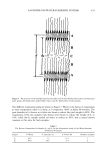
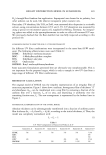
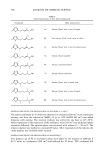
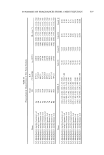
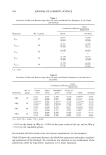
494 JOURNAL OF COSMETIC SCIENCE /•CHO R• 1 /•CHO R• CHO OH- Figure 1 O OH- Figure 2 NaBH4 NaOH/MeOH NaBH4 NaOH/MeOH Figure 3 2a-c 2a: Rl = H, R2 = CH3 2b: R• = H, R2 = C2H5 2c: R• = CH3, R2- CH3 3a,b 3a' R• = H 3b ß R• = CH3 4a-c 4a: R1 = H, R2 = CH3 4b: R1 = H, R2 = C2H5 4c: R1 = CH3, R2 = CH3 5a,b 5a:R• = H 5b: R• = CH3 These aldehydes were subjected to Claisen condensation with propanal, butanal, or 2-butanone to yield corresponding unsaturated aldehydes 2 (Figure 1) and ketones 3 (Figure 2). They were then reduced with NaBH 4 and converted to corresponding alco- hols 4 and 5 (Figure 3). Another group of alcohols was produced by first hydrogenating aldehydes 2a and 2c with the use of Pd/C (cyclohexene as hydrogen donor) to corresponding saturated alde- hydes 6 (Figure 4) and then by converting them into alcohols 7 by means of NaBH 4 (Figure 5), or by subjecting them to the Grignard reaction with CH3Mg J (Figure 6). The new synthesized furan alcohols possessed intensive floral fragrances with interesting side notes (Table I).
Purchased for the exclusive use of nofirst nolast (unknown)
From: SCC Media Library & Resource Center (library.scconline.org)