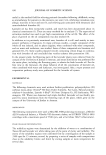
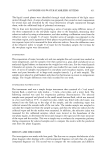
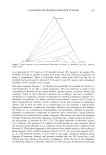
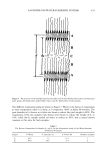
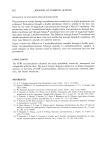
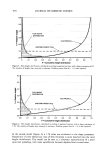
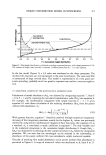
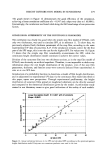
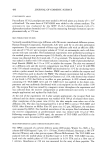
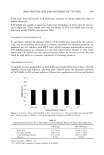
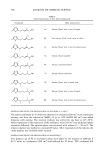
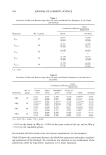
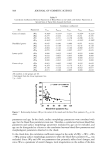
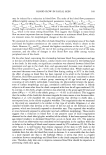
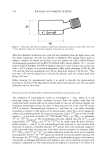
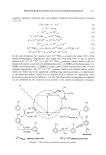
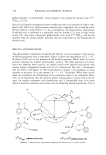
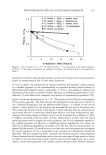
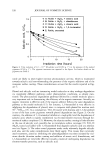
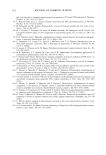
518 JOURNAL OF COSMETIC SCIENCE furfuryl alcohol, 1,3-butanediol), which competes with phenol for reaction with Ti •v- 'OHsur• (15,16). Salicylic acid mainly undergoes electron-transfer reactions via formation of surface com- plexes with Ti(IV) ions. Hydroxylation reactions play a negligible role, at least for acidic pH (see Scheme 2 and reference 17). As a consequence, the photocatalytic degradation of salicylic acid is inhibited at a negligible level by alcohols (17), even in large molar excess (15), since these compounds preferentially react with Ti•v-'OHsurf and do not interfere with the charge-transfer processes that are responsible for the degradation of salicylic acid. RESULTS AND DISCUSSION The photocatalytic degradation of phenol and salicylic acid was assessed in the presence of different pigments used as sunscreens. Figure 2 reports the degradation of 5.3 x 10 -4 M phenol (0.050 g/l) in the presence of the studied pigments. Naked rutile (E) is the pigment showing the highest photocatalytic activity. The other pigments, all rutlie- based and showing lower activity, are surface-coated with alumina and treated with various organic compounds [stearic acid (A, C), dimethicone (B), and 1,3-butanediol (D) see Table I and Figure 2]. The results shown in Figure 2 are analogous to those reported in reference 14 in the presence of 1.1 x 10 3 M phenol. When these results alone are considered, the effectiveness of the treatments seems to be confirmed. More- over, in the hypothesis that the alumina surface coating plays a similar role in all the cases, the organic treatments with dimethicone and 1,3-butanediol seem to be more effective than the treatments with stearic acid in inhibiting phenol degradation. This is TilV'OHsurf pathway (minor one) 'rilV-o-'-'l'ilV pathway (major one) Scheme 2. Photocatalytic degradation pathways for salicylic acid in acidic solution.

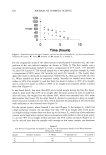
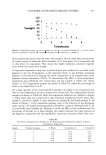
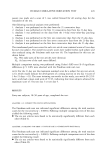
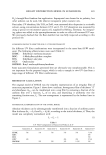
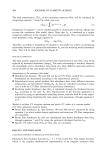
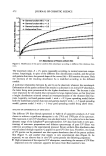
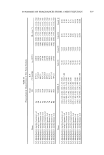
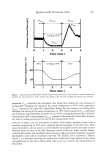
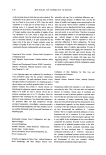
PHOTODEGRADATION BY RUTILE-BASED PIGMENTS 519 1.5 0 1.o _ 0 A: Rutile + AI203 + stearic acid ß • B: Rutlie + AI202 + dimethicone O C: Rutlie + AI203 + stearic acid -k D: Rutlie + AI203 + 1,3-butanediol ß E: Rutlie, uncoated O ,, ' ' • ' I • • ' ' I ' ' ' • I [ • ' • I ] ' ' ' I 0 5 10 15 20 25 Irradiation time [hours] Figure 2. Time evolution of 5.3 x 10- 4 M phenol (0.050 g 1 •) in the presence of the studied pigments (0.500 g 1 •). The pigment treatments are reported in the figure. For further details on the pigments see Table I. much more evident in that the photocatalytic activity of the stearic acid-coated pigments might be underestimated due to poor water dispersion. At least in theory, the combination of organic treatment and inorganic surface coating is a valuable approach in the manufacturing of pigments showing limited ability to photocatalytically degrade organic compounds (7). In fact, this approach combines the advantages of the organic treatment [higher efficiency in inhibiting photocatalytic deg- radation (7)] with those of the inorganic one [absence of degradation by-products (15)]. Figure 3 shows the degradation of 3.6 x 10 4 M salicylic acid (0.050 g/l) in the presence of the various pigments. The time scale for the degradation of salicylic acid is similar to that of phenol degradation, but the difference from Figure 2 is evident. In the case of Figure 3, naked futile (E) is the pigment that degrades salicylic acid at the lowest rate. The comparison between Figure 2 and Figure 3 clearly indicates that the treatments are much more effective in protecting phenol than salicylic acid from photocatalytic deg- radation. The results shown in Figure 2 and 3 can be accounted for as follows: (i) TiO 2 E (Aldrich untreated futile) has lower intrinsic photocatalytic activity than the naked futile specimens used to prepare the other pigments, and (ii) the treatments applied to the studied pigments are effective in inhibiting phenol degradation, but much less effective in inhibiting degradation of salicylic acid. The fact that the uncoated futile we adopted (Aldrich futile, E) would be less active than the futile specimens used to prepare the coated pigments (A-D) is reasonable if one considers the distribution of particle diameters. The data reported in Table I indicate that Aldrich uncoated futile (pigment E) has a bimodal particle distribution with a relevant percentage of large particles, which are likely to be less active than smaller particles due to lower surface area. As a conse- quence, futile-based pigments with smaller particle diameter than Aldrich uncoated
Purchased for the exclusive use of nofirst nolast (unknown)
From: SCC Media Library & Resource Center (library.scconline.org)