j. Cosmet. Sci., 54, 451-462 (September/October 2003) O/W microemulsion as a vehicle for sunscreens M. EUGENIA CARLOTTI, MARINA GALLARATE, and VALERIA ROSSATTO, Dipartimento di Scienza e Tecnologia del Farmaco, Universit,3 degli Studi di Torino, via Giuria 9 (M. E. C., M.G.), and Dipartimento di Chimica Analitica, Universita degli Studi di Torino, via Giuria 5 (V.R.), 10125 Turin, Italy. Accepted for publication June 16, 2003. Synopsis In recent years, transparent dispersions or diluted milks have been used as sunscreens. These products contain water-soluble sunscreen agents, and quite frequently are washed away from the skin. However, O/W microemulsions are now being prepared as transparent vehicles for sunscreens. They are waterproof, non- sticky, and easily spreadable. The microemulsions are prepared by using pseudoternary diagrams, by combining lipids with surfactant blends and a polar phase. Soya lecithin and decylpolyglucose produce transparent systems with the lowest percentage of surfactants. These microemulsions contain 4-methylbenzilidene camphor or octylmethoxy- cinnamate as sunscreen agents. Cyclomethicone, menthol, and allantoin give products a good skin feel, and stearyl methicone gives the waterproof effect. These systems show a Newtonian flux. Little permeation of the sunscreens' trough lipophilic and hydro- philic membrane is evidenced. INTRODUCTION At present the formulations of sunscreens is subjected to many technical and legislative requirements (1,2) that restrict the choice of materials and of UV sunscreens. The stability of the sunscreens is influenced not only by their molecular structure, but also by the vehicle (3). For good efficiency, the vehicle, the adhesion to the horny layer, and the possible percutaneous resorption must be investigated. In recent years, transparent dispersions or diluted milks have found wide application as sunscreens such products contain water-soluble sunscreen agents, which are frequently washed off from the skin, no longer providing protection against rash and sunburn (4-9). This study aims to demonstrate the preparation of transparent, nonsticky, easy-spreading, water-proof sun- screens, which can be supplied with a mechanical diffuser. O/W microemulsions were chosen as transparent systems having a sufficient amount of lipid phase to dissolve Address all correspondence to M. Eugenia Carlotti. 451

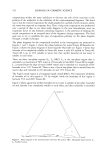
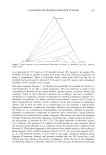
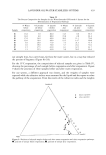
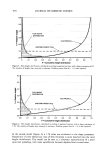
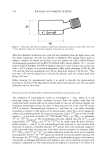
452 JOURNAL OF COSMETIC SCIENCE lipophilic sunscreens moreover, stearyl methicone was introduced in the oil phase to reduce the tendency of the sunscreen to be washed off. The compositions of the micro- emulsions were obtained by means of pseudoternary diagrams that allowed a more systematic approach and an easier method of formulation, using many components with different characteristics. After a preliminary screening of the varying percentages ratios of the components, the systems with the largest amounts of lipid phase (that could be partially replaced by a sunscreen) and surfactant and cosurfactant percentages as low as possible were chosen. EXPERIMENTAL MATERIALS The materials employed and their sources are as follows: 4-methylbenzylidene camphor (MBC), octylmethoxycinnamate (Eusolex © 6300, Parsol © MCX (OMC), menthol, allan- toin and MgCI2 ß 6H20 were obtained from Merck C•2_•5-alkylbenzoate was from Prodotti Gianni cyclomethicone and stearyl methicone were gifts from Tego Cosmetics- Goldschmidt decylpolyglucose was a gift from Seppic cetearyl sulfate (CS) was obtained from Henkel ethanol, 1,2-hexanediol (HD), 2-methyl-2,4-pentanediol (MPD), sodium dodecyl sulfate, and 1-dodecanol were from Fluka-Chemika 1-decanol was from ICN- Biochemicals lecithin was obtained from Rh6ne-Poulenc Rorer Filter Millex©-GS 0.22 lam and Filter Millipore © 3.0 lam were from Millipore dialysis membrane Visking Type 36/32 and Neopelle were obtained from Roth and Silastic © brand sheeting was from Dow Corning Corporation. METHODS Use of pseudoternary diagrams in preparation of O/W microemulsions. Ternary diagrams were prepared as described in the literature (4-9), using an equilateral triangle (see Figure 1), whose corners, clockwise from the top, represent 100%, respectively, of lipids, a blend of two surfactants, and a mixture of water/cosurfactant (polar phase). All the percentages Lipids ?0/30 8O/20 Water/ Surfactants cosurfactants Figure 1. Ternary diagram of systems with lipids, surfactants, water, and cosurfactants.
Purchased for the exclusive use of nofirst nolast (unknown)
From: SCC Media Library & Resource Center (library.scconline.org)