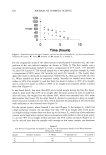
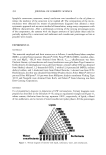
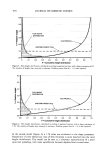
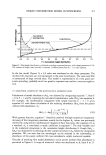
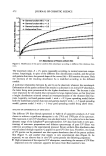
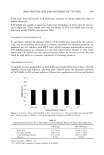
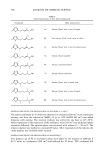
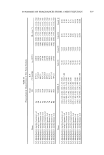
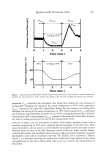
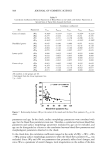
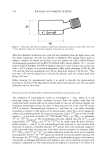
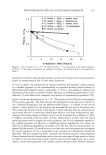
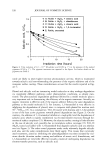
522 JOURNAL OF COSMETIC SCIENCE with larger reactors. Irradiation of 5.0-ml suspensions has the double advantage of the limited optical path (0.4 cm), so that no dark zones will be present inside the suspension, and an optimal air-to-solution volume ratio, assuring that the aqueous suspension will not become anoxic due to oxygen consumption in photocatalytic degradation. The problems of incomplete stirring, the presence of dark zones, and the onset of anoxic conditions heavily limit the reproducibility of the results obtained with larger bench reactors (21,22). The Pyrex glass cells have to be stirred during irradiation and magnetic bar stirring is the most suitable technique. The screening of organic molecules for use as pigment treatments does not require the preparation of coated titanium dioxide. Inclusion of the compound to be studied, in the desired amount, into the suspension containing naked titanium dioxide and phenol or salicylic acid is the simplest procedure, at least in a first stage. When looking for a suitable compound to be used as organic pigment treatment, two strategies can be adopted. The first one is the single-treatment approach, consisting in looking for a single compound having the features required for an organic treatment. The second approach is to obtain the desired goal (inhibition of pigment photoactivity) with a mixture of more than one compound. In the single-treatment approach, the screening should consider both phenol and sali- cylic acid degradation rates, and the best performing organic molecule should inhibit to a sufficient extent degradation of both phenol and salicylic acid. Finding a compound having these features is highly desirable, but there is no assurance that a molecule behaving as such actually exists, since it should undergo efficient degradation both via reaction with Ti•v-øOHsu•f-and via electron-transfer processes. Moreover, it should also be usable in cosmetic formulations, and thus is should be nontoxic and compatible with the other formulation components, which narrows the list of candidate compounds. A possible way out of the problem might be in adopting two different compounds, one inhibiting phenol degradation and the other inhibiting degradation of salicylic acid. Many organic additives inhibit phenol degradation [for instance, 1,3-butanediol and dimethicone are very effective and are presently used in cosmetics (14)], and thus it should be sufficient to look for a compound effectively inhibiting degradation of salicylic acid, and to use the two compounds together as organic additives in the pigment treatment. In such a way, the ability of titanium dioxide to oxidize organic molecules of any kind should be prevented. At this point, it should be advisable to prepare a coated titanium dioxide using the two organic treatments, and to test this sunscreen for photocatalytic activity towards both phenol and salicylic acid. CONCLUSION The alumina surface coating and the organic treatments of titanium dioxide with stearic acid, dimethicone, and 1,3-butanediol protect phenol from photocatalytic degradation (Figure 2). When considering the degradation rate of phenol in the presence of Aldrich uncoated rutile as a reference, the pigments coated with stearic acid show a decrease in phenol degradation rate by 12% (pigment A, MT-100TV) and 56% (pigment C, M160). The pigments treated with 1,3-butanediol and dimethicone show a relevantly better performance, since the decrease in the degradation rate reaches 95% in the case of dimethicone (pigment B) and 94% in the case of 1,3-butanediol (pigment D). The

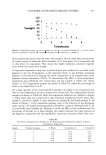
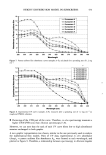
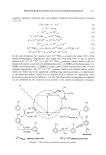
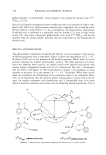
PHOTODEGRADATION BY RUTILE-BASED PIGMENTS 523 effectiveness of both 1,3-butanediol and dimethicone, coupled with alumina surface coating, would be even higher when considering that the Aldrich uncoated rutile we used as a reference is likely to show lower photocatalytic activity than the naked rutile specimens used to prepare the cited coated pigments. This is due to the larger average particle diameter in the case of Aldrich naked rutile when compared with the other two pigments (see Table I). In contrast, the treatments we studied are much less effective (probably completely ineffective) in protecting salicylic acid, as shown in Figure 3. The reason for this different behavior is that phenol mainly degrades upon reaction with Ti•v-øOHsurf (13,16), while salicylic acid degrades via electron-transfer reactions involving surface-adsorbed species (17). The treatments we studied thus give limited protection to molecules undergoing photocatalytic transformation processes similar to those involving salicylic acid. In the case of Figure 3, Aldrich uncoated rutile is the pigment giving the lowest degradation rate of salicylic acid, most likely due to the larger particle diameter and lower surface area resulting in lower photocatalytic activity. The problem of incomplete inhibition of titanium dioxide photodegradation activity is likely to affect many other commercial pigments and is caused by the use of a single model molecule in the development of organic additives used as pigment treatments, as is commonly found in the literature (7-10). The treatments are thus usually evaluated by measuring the photocatalytic degradation rate of the model molecule, and the one assuring the lower rate is then chosen. In this way, however, only one photocatalytic degradation pathway is taken into account. For instance, a treatment showing excellent performance in inhibiting phenol photocatalytic degradation might be completely in- effective in inhibiting degradation of salicylic acid, as we have shown in this paper. This means that the choice of the model molecule used to assess the photocatalytic activity of the pigments is critical to the success of the assessment procedure. An effective way to test the photocatalytic activity of pigments used as sunscreens should make use of at least two model molecules, one undergoing photocatalytic degradation via reaction with TiIV-øOnsurf (e.g., phenol), and the other transforming via electron-transfer processes (e.g., salicylic acid) (15). The best-performing treatment in this context would be that assuring a low photocatalytic degradation rate of both molecules. As an alternative, since organic treatments able to inhibit the degradation of phenol already exist, the solution of the problem might be to find a treatment able to inhibit degradation of salicylic acid. The adoption of a double treatment should then be able to block both the photocatalytic degradations occurring via reaction with Ti•v-øOHs•rf and those taking place via elec- tron-transfer processes. REFERENCES (1) G. Proserpio, I. Bonardo, and M. A. Ghiglione, Raggi UV, Cute, Cosmetici (Sinerga, Milan, Italy, 1988). (2) D. Bahnemann, J. Cunningham, M. A. Fox, E. Pelizzetti, P. Pichat, and N. Serpone, "Photocatalytic Treatment of Water," in Aquatic and Surface Photochemistry, G. R. Helz, R. G. Zepp, and D. G. Crosby, Eds. (Lewis, London, 1994), pp. 261-316. (3) M. A. Fox and M. T. Dulay, Heterogeneous photocatalysis, Chem. Rev., 93, 341-357 (1993). (4) R. Dunford, A. Salinaro, L. Z. Cai, N. Serpone, S. Horikoshi, H. Hidaka, and J. Knowland, Chemical oxidation and DNA damage catalysed by inorganic sunscreen ingredients, FEBS Lett., 418, 87-90 (1997). (5) H. Hidaka, S. Horikoshi, N. Serpone. and J. Knowland, In vitro photochemical damage to DNA, RNA
Purchased for the exclusive use of nofirst nolast (unknown)
From: SCC Media Library & Resource Center (library.scconline.org)