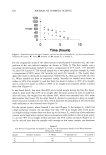
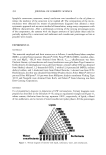
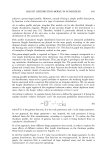
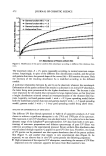
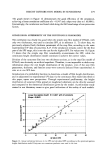
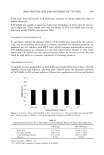
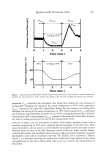
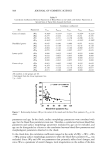
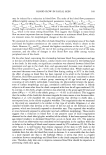
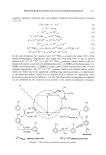
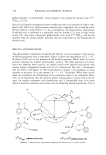
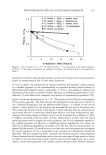
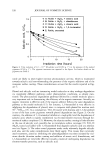
520 JOURNAL OF COSMETIC SCIENCE 1.5 ..• 1.0 ._o o 0.5 o A: Rutile + AI203 + stearic acid ß • B: Rutile + AI203 + dimethicone o C: Rutlie + AI20 • + stearic acid -k D: Ruffle + AI=Oa + 1,3-butanediol ß E: Ruffle, uncoated Irradiation time {hours} Figure 3. Time evolution of 3.6 x 10 -4 M salicylic acid (0.050 g 1 •) in the presence of the studied pigments (0.500 g 1-•). The pigment treatments are reported in the figure. For further details on the pigments see Table I. rutile are likely to show higher intrinsic photocatalytic activity, which is maintained towards salicylic acid notwithstanding the presence of the organic additives and of the inorganic surface coating. These considerations account for the results reported in Fig- ure 3. Phenol and salicylic acid are interesting model molecules as they undergo degradation via completely different pathways under photocatalytic conditions, as already men- tioned. The photocatalytic degradation pathway followed by a model molecule plays a very important role in determining the efficiency of the organic treatment. Actually, an organic treatment is effective only if the organic additive follows the same degradation pathway as the model molecule (15). For instance, 1,3-butanediol is very effective in inhibiting the degradation of phenol, since it competes with phenol for reaction with Ti•v-'OHs•rf (15). As a consequence, TiO 2 D (coated with alumina and 1,3-butanediol) is one of the least active pigments towards phenol degradation (see Figure 2). On the contrary, the addition of 1,3-butanediol inhibits at a negligible level the degradation of salicylic acid, which is mainly transformed via electron-transfer reactions through for- mation of surface complexes (15). Moreover, the alumina surface coating is little effective in the case of salicylic acid, possibly due to incomplete surface coverage (15). TiO 2 D (A1203-coated and added with 1,3-butanediol) thus degrades salicylic acid at a relevant rate (see Figure 3). The other coated pigments under study relevantly degrade salicylic acid also, and the same considerations most likely apply. This means that commonly used treatments, aimed at inhibiting the photodegradation reactions initiated by tita- nium dioxide (alumina surface coating and addition of stearic acid, dimethicone, and 1,3-butanediol) are very little effective towards a molecule undergoing degradation via electron-transfer processes, such as salicylic acid.

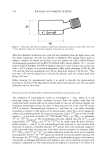
PHOTODEGRADATION BY RUTILE-BASED PIGMENTS 521 In the case of the skin, the protection of which is the purpose of the pigment treatments, the wide variety of possible target molecules for photocatalytic degradation makes it very likely that some molecules transform like phenol upon reaction with Ti•v-øOH•,rf, and others like salicylic acid via electron-transfer processes. As a consequence, pigment treatments should assure protection to both classes of molecules. In real solar creams and gels, however, the presence of other components such as rheological modifiers may assure a certain degree of protection to skin molecules, but often at the expense of the modifier degradation. In fact, various rheological modifiers are able to inhibit the photocatalytic degradation of both phenol and salicylic acid, and in the case of salicylic acid they are more effective than pigment treatments (19). Interestingly, when adopting Lubrajel as rheological modifier (glyceryl polymethacrylate + propylene glycol), we have observed a marked inhibition of the photocatalytic degradation of both phenol and salicylic acid, without relevant degradation of the modifier itself, which could be an important result for solar cream formulations (19). PROPOSAL OF A NEW METHODOLOGY FOR THE ASSESSMENT OF PIGMENT TREATMENT EFFICIENCY The traditional way to assess the efficiency of pigment treatments is to choose a model molecule and then measure the degradation rate of this molecule upon irradiation in the presence of the treated pigments, the best pigment being that assuring the lowest degradation rate. The limitations of this single-molecule approach have already been described. The new approach we propose considers that the oxidative photoactivity of titanium dioxide is due to two distinct kinds of processes, namely degradation via reaction with Ti•v-øOH•urf and degradation via charge-transfer processes involving sur- face complexes. The first process can be evaluated by monitoring the phenol degradation rate, the second by monitoring the degradation of salicylic acid. In this way, the whole oxidative reactivity of titanium dioxide will be taken into account, and not just the fraction involving Ti•v-øOH•urf. The use of phenol instead of an alcohol as a molecule reacting with Ti•v-øOH•rf is due to our using the HPLC-UV to make the analyses (differently from most alcohols, phenol absorbs radiation above 200 nm) in another analytical setup the use of an alcohol (we suggest 2-propanol) might be more suitable. As to the molecule undergoing charge- transfer reactions, at the present state of knowledge the choice is restricted to benzoic acid and salicylic acid, but in the absence of other considerations, salicylic acid is preferable due to its higher reactivity and stronger complex formation with titanium dioxide (15,17). The setup for irradiation experiments, which can be built up with limited expense, requires a lamp emitting in the UVA range, a photochemical reactor, and a stirring device. It is not necessary to use the Solarbox equipped with the xenon lamp as an irradiation device: the use of a solarium lamp emitting in the UVA range (for instance, the 40 W Philips TL K05 lamps are excellent for this purpose) gives the same results at a much lower cost (20). In such a case, however, the distance between the light source and the irradiated samples should not exceed 5-10 cm if one wants to obtain reasonable degradation times. The cylindrical Pyrex glass cells shown in Figure 1 are among the best performing photocatalytic reactors available, and their manufacturing poses few problems in spite of their not being standard glassware. Their first advantage consists in their being thoroughly stirred systems, thus avoiding the stirring problems connected
Purchased for the exclusive use of nofirst nolast (unknown)
From: SCC Media Library & Resource Center (library.scconline.org)