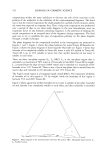
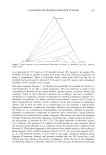
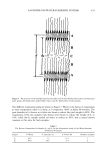
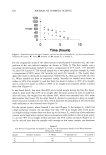
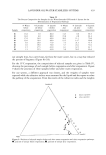
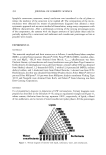
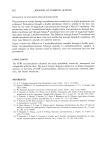
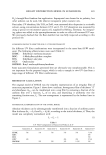
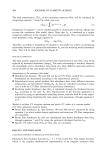
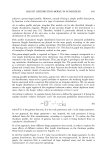
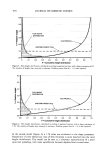
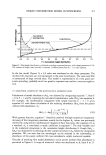
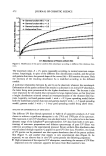
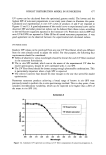
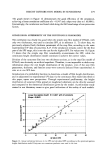
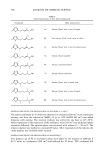
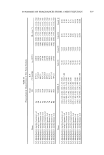
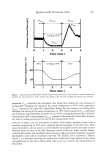
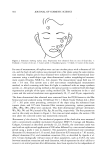
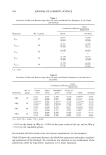
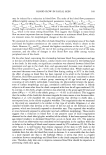
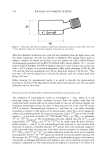
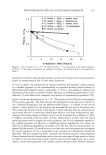
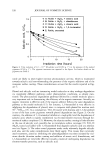
LAVENDER OIL/WATER/STABILIZER SYSTEMS 435 d B A Figure 4. The structure of the lameliar liquid crystal (LLC) may be described by three layers: (A) water plus polar groups, (B) hydrocarbon polyethylene chains, and (C) hydrocarbon methyl groups. The different evaporation paths are shown in Figure 5. Water is the fastest in evaporation at room temperature when it is alone, as it evaporates 100% in about 60 minutes. The pure lavender oil is slower, as it takes two hours to reduce the total weight to 80%. The evaporation of the two samples took almost seven hours to reduce the weight of S• to 10%, while the S 2 sample needed six hours to reduce to 40%, and it stayed almost constant at this ratio for both samples. Table I The Percent Composition for Samples S• and S 2 for the Evaporation Study of the Water/Lavender Oil/Tween 80 System Sample % Water % Lavender oil % Tween 80 Number of phases S1 83.5 1.3 15.2 1 S 2 64.0 29.5 6.5 2

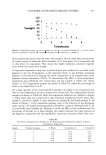
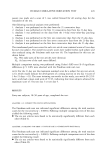
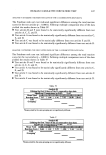
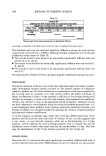
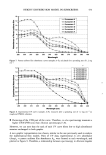
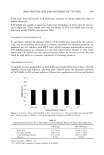
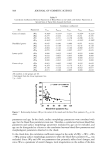
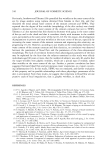
436 JOURNAL OF COSMETIC SCIENCE 120 100 80 %weight 60 40 20 0 x iJ x & & & [] [] 5 10 Time (hours) Figure 5. Evaporation paths for water, lavender, and the two selected samples (S•, S 2) of the water/lavender oil/Tween 80 system. ', water I, lavender oil ', sample S1 x, sample S 2. For the evaporation study of the other system (water/Laureth 4/lavender oil), the com- position of the two selected samples are shown in Table II. The first sample was a one-phase microemulsion (sample S 3) with a composition of 41% water, 17% lavender oil, and 42% Laureth 4. The second sample was a two-phase emulsion (sample S4) with a composition of 80% water, 8% lavender oil, and 12% Laureth 4. The results show again that water is the fastest in evaporation, followed by S 4, then pure lavender oil, then S3. Water needed one hour to evaporate totally, lavender oil needed seven hours to reduce to 10% of its weight, S 4 took less than two hours to reduce to 20% of its weight, and S3 took seven hours to reduce to 80% of its weight and remained almost constant after that (Figure 6). It was found that S• lost more than 80% of its initial weight during the first five hours, while S 2 kept more than 40% of its weight after the same amount of time. In addition, after one hour, the weight lost was almost 40%, which was extended only 10% more after another four hours. On the other hand, S 2 showed its potential to keep its weight better than pure lavender oil over time, which indicates the possibility of the interaction with surfactant at this selected ratio (Figure 5). For the second system, where Laureth 4 was used (Figure 2), for sample S3, which has a high surfactant content, the one phase lost only 10% of its weight after seven hours, its weight staying constant from one hour up to six hours. S4, which has a low surfactant content and a high water content, has an evaporation path similar to that of pure water it can lose 70% of its weight within one hour and 95% within six hours (Figure 6). It can be noticed here that the samples with average-to-low water content can dominate Table II The Percent Composition for Samples S• and S4 for the Evaporation Study of the Water/Lavender Oil/Laureth 4 System Sample Number of phases % Water % Lavender oil % Laureth 4 S• 1 41 17 42 S4 2 80 8 12
Purchased for the exclusive use of nofirst nolast (unknown)
From: SCC Media Library & Resource Center (library.scconline.org)