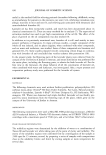
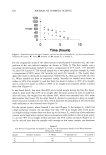
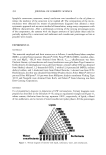
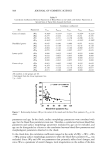
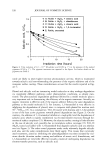
488 JOURNAL OF COSMETIC SCIENCE droplets (20). Long-term culture with insulin to differentiate the preadipocytes increases basal lipolysis (21), and lipolytic effects could be underestimated in 3T3-L1 differenti- ated adipocytes. To identify the possibility of underestimation of GKH lipolytic effects by the use of different cell lines, adipocytes from rats were isolated to measure the lipolytic effects. TAT-GKH and GKH induced approximately 41.5% and 36.3% maximal lipolytic effects at 10 -5 M (0.77 + 0.01 and 0.74 + 0.04 glycerol pmol/lipid mg/h), respectively (Table I). TAT-GKH showed identical pattern lipolytic effects at the same concentra- tions of GKH in epididymal adipocytes isolated from rats. In addition, the lipolytic effects of TAT-GKH and those of GKH in isolated adipocytes showed the same patterns as in 3T3-L1 differentiated adipocytes (Figure 2). These results suggest that the GKH lipolytic effects were not underestimated in both cultured adipocytes and isolated adi- pocytes. Unlike a previous Leroux study (12) that the lipolytic effects of Pal-GKH and GKH in human isolated adipocytes represented 31.6% and 34.9% at 3 x 10 6 M concentration, respectively, our results showed the lipolytic effects in higher concentration (10 -5 M) than in Leroux's study. This may be due to the fact that GKH originated from human Table I Maximal Lipolytic Effects of TAT-GKH in Epididymal Adipocytes From Rats Compared With Those of GKH and Isoproterenol Lipolytic agents Glycerol (pmol/lipid mg/h) Basal lipolysis 0.54 _+ 0.01 Isoproterenol (10 6 M) 5.74 _+ 0.64 GKH (10 -5 M) 0.74 _+ 0.04* TAT-GKH (10 M) 0.77 _+ 0.01' Values are mean + SEM (n = 6). * P 0.01 when compared to values obtained with basal lipolysis. 60 .-. 50 ß .• 40 "• 3o o • 2o o •10 10 • 10 3 10 • 10 -7 [] GKH ß " TAT-GKH Concentration (mol/L) Figure 2. Lipolytic effects of TAT-GKH in epididymal adipocytes from rats compared with those of GKH. Values are mean + SEM (n = 6), expressed as percent (%) vs basal lipolysis for glycerol and are significantly different from those for basal lipolysis.

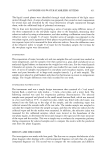
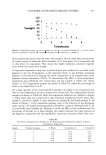
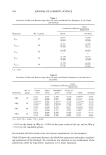
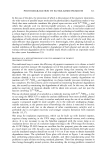
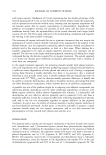
SKIN PENETRATION ENHANCEMENT BY TAT-GKH 489 PTH binds more specifically to [•-adrenergic receptors in human adipocytes than in rodent adipocytes. TAT-GKH was capable of inducing triglyceride breakdown in both cultured and iso- lated adipocytes. These results show that the fusion of TAT into GKH does not sig- nificantly modify GKH's own lipolytic effect. CYTOTOXICITY ON PREADIPOCYTES To determine whether the lipolytic effects of TAT-GKH were induced by the cytotox- icity, and the possibility of its use as a cosmetic ingredient for slimming products, we measured the cell viability with MTT tests, which evaluates mitochondria integrity. TAT-GKH produces no cytotoxicity at any dose concentration (Figure 3). This result shows that TAT-GKH not only induces lipolytic effects by its own activity, but also could be used safely as a cosmetic ingredient in slimming products. SKIN PERMEATION STUDY To identify the skin permeability of TAT-GKH in excised hairless mouse skin, vertically assembled Franz-type diffusion cells were used. Table II shows the permeated amounts of TAT-GKH in 20% ethanol solution 24 hours after application to the excised hairless 0.7 0.6 ..-. 0.5 E o 0.4. •' 0.3 t:: 0.2 0.1 0 10% serum 10 -4 10 -• 10 -6 10 -7 Concentration (mol/L) Figure 3. Cytotoxic effects of TAT-GKH at dose concentrations on 3T3-L1 preadipocytes through MTT tests. Values are mean + SEM (n = 6) and are expressed as absorption (ABS) at 570 nm. Table II Total Permeated Amount (%) of TAT-GKH in Excised Hairless Mouse, 24 Hours After Application GKH (pg) TAT-GKH (pg) Mice skin 2.73 + 0.22 119.66 + 9.33* Receptor solution 1.60 + 0.13 36.67 + 4.85* Total permeated amount 4.34 + 0.35 156.34 + 9.02* Percent 0.43% 15.63% Values are mean + SEM (n = 6). * P 0.001 when compared to values obtained with GKH.
Purchased for the exclusive use of nofirst nolast (unknown)
From: SCC Media Library & Resource Center (library.scconline.org)