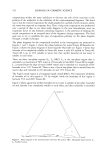
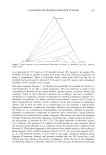
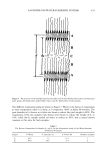
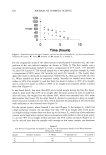
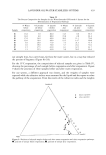
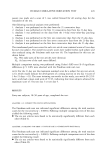
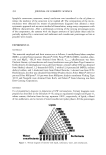
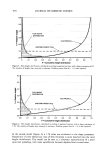
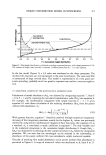
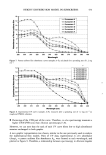
OW MICROEMULSION IN SUNSCREENS 453 throughout are weight/weight. The combinations of the surfactant blend and lipid phase are located to the right side, and the dilutions of the surfactant blend/lipid with the polar phase are located to the lower side. From the intersections of the lines departing from 100% water/cosurfactant to the opposite side, dissecting the triangle and the lines parallel to the surfactant/lipid side, we can determine the proportion of ingredients that give O/W microemulsions or systems that separated. Simple systems were obtained by diluting the concentrated surfactant/lipid mixtures with different amounts of water/ cosurfactant solution. This method can be extended to very complex systems, locating several ingredients together at each corner of the pseudoternary diagram, on the basis of their similar chemical-physical behavior. For this purpose it is important to state the exact proportions of the mixture of ingredients. Ternary diagrams can also allow one to obtain oily solutions at different component ratios and to choose the best ones to be used to redraw ternary diagrams, whose corners, respectively, represent the mixture of lipid/ethanol/cyclomethicone/sunscreen, the sur- factants, and the water/cosurfactant solution. Preparation of microemulsions. Blends of the two surfactants were prepared with different proportions. Appropriate amounts of fluid lipids or mixtures of fluid lipids and lipo- philic actives were added. Some of these systems were diluted with amounts of polar phase corresponding to percentages individualized at preselected points of the ternary diagram. Among all the obtained mixtures, only the clear ones were microemulsions. Characterization of Microemulsion (a) Microscopy and laser light scattering Microemulsions were examined by optical microscopy and under polarized light (Mi- croscope Leitz Labovert). Microemulsions, filtered through Millex©GS (0.22 larn), were also analyzed by means of a laser light-scattering technique (Laser 90 Plus Particle Sizing Software 2.27, Brookhaven Instruments). Each determination was the mean of three runs. With these techniques, concentrated and diluted systems were examined. (b) Evaporation at constant humidity A thin layer of microemulsion was placed in a Petri vessel in a closed chamber at 37% relative humidity (MgC12 ß 6H20). At scheduled times, the weight loss and the rheo- logical flux of the microemulsions were determined. The systems were then analyzed by microscopy. (c) Rheology studies Flux rheograms were determined for microemulsions 24 hours after preparation or after evaporation, using a rotational viscometer (Brookfield RVTDVII, with a small adapter chamber and spindle SC 4-21/13R) at 25øC + 0.5. Apparent viscosity was determined at three shear rates (2.325 s -•, 4.65 s -•, and 18.6 s-•). (d) Water resistance Water resistance was tested on amounts of microemulsion spread on a collagen felt sheet and placed in water. Microemulsions with a poor water resistance gave an aqueous dispersion. The sheets used consisted of pure collagen (sequence alpha 1, first type).

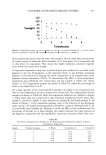
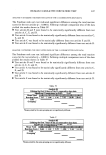
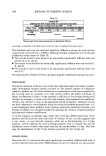
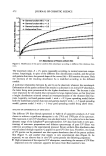
454 JOURNAL OF COSMETIC SCIENCE Permeation of sunscreens from microemulsions. The runs were performed using two- compartment horizontal cells (3.14 cm 2 section, 18 ml volume) separated by a mem- brane. The donor phase was the sunscreen microemulsion, and the receiving phase was an SDS 2.0 ß 10 -3 M aqueous solution (to dissolve sunscreens). A hydrophilic cellulose membrane and a Millipore membrane soaked with a (1:1) 1-decanol/1-dodecanol mix- ture constituted a double membrane a lipophilic membrane (Millipore membrane soaked with a (1:1) 1-decanol/1-dodecanol mixture) and Silastic © sheeting were also used. At scheduled times, small amounts of the receptor solution were withdrawn and the sunscreens were determined spectrophotometrically (4-methylbenzylidene camphor = UV•,•x: 306 nm, e: 23210 octylmethoxycinnamate = UV•,ax: 312 nm, e: 17630). All runs were repeated three times. RESULTS AND DISCUSSION USE OF PSEUDOTERNARY DIAGRAMS IN O/W MICROEMULSION PREPARATION The existence of transparent systems, i.e., O/W microemulsions, was shown by ternary diagrams, which are a useful tool in selecting the components of a system and their ratios. This experimental approach was suitable for obtaining multicomponent formu- lations as cosmetic products. Transparent formulations were obtained with optimal lipophilic mixtures comprising a fluid lipid, cyclomethicone, ethanol, a sunscreen agent, and surfactant blends. The more complex systems were formulated by assembling ingredients with similar chemical- physical properties at the same corner of the triangle. Solutions of (2:1) water/1,2 hexanediol and (2.5:1) water/2 methyl-2,4 pentanediol were used as polar phase. In a preliminary study a large number of blends of primary/secondary surfactant were prepared. The most significant blend studied was 5/95 (w/w) sodium cetearyl sulfate/ decylpolyglucose. In a further study, cetearyl sulfate was replaced by soya lecithin, which is more skin compatible. The soya lecithin/decylpolyglucose w/w ratio was 33/67, much higher than that of cetearyl sulfate/decylpolyglucose, since large amounts of lecithin were required for efficiency. Different blends of primary/secondary surfactant were then mixed with the appropriate amount of lipid phase. Only those lipid phase/surfactant mixtures that did not undergo phase separation were chosen to prepare microemulsions. First the 5/95 cetearyl sulfate/decylpolyglucose blend was mixed with different propor- tions of the lipid phase, and the different mixtures were diluted with the polar phase. Appropriate amounts of 30/70, 20/80, and 10/90 oil/surfactant mixture were added to the polar phase to obtain the following lipidic/polar phase ratios: 90/10, 60/40, 50/50, 40/60 and 10/90. The mixture of water/2-methyl 2,4-pentanediol (2.5 / 1) was allowed to obtain a transparent system with the lowest percentage of surfactants when the 20/80 mixture was diluted with 10% of the polar phase. The 10/90 oil/surfactant mixture could successfully be diluted with the polar phase, giving transparent systems in the range of 90% oil/surfactant to 60% oil/surfactant, this last being the limit of possible dilution. When water/1,2-hexanediol (2/1) was used as polar phase, an intermediate oil/surfactant mixture, i.e., 15/85 was also used. Employing this polar phase, transparent systems were
Purchased for the exclusive use of nofirst nolast (unknown)
From: SCC Media Library & Resource Center (library.scconline.org)