j. Cosmet. Sci., 54, 499-511 (September/October 2003) Relationship between physical parameters and blood flow in human facial skin KAZUE TSUKAHARA, YOSHINAO NAGASHIMA, SHIGERU MORIWAKI, TSUTOMU FUJIMURA, MICHIHIRO HATTORI, and YOSHINORI TAKEMA, Biological Science Laboratories, Kao Corporation, Tochigi (K. T., S.M., T.F., Y.T.), Health Care Products Research Laboratories II, Kao Corporation, Tokyo (Y.N.), and Skin Care Products Research Laboratories, Kao Corporation, Tokyo (M.H. ), Japan. Accepted for publication January 6, 2003. Synopsis We evaluated the association between the cutaneous blood flow and the three-dimensional morphology of the skin by measuring various aspects of blood flow (resting blood flow, mean blood flow during cooling, minimum blood flow during cooling, mean blood flow after cooling, and maximum blood flow after cooling) of the cheeks and foreheads of 40 healthy women (aged 60-77 years). We also analyzed the three-dimensional morphology of the skin surface (sWa, sWp, sWt, sWq) in replicas obtained from foreheads, cheeks, and other sites on the faces of those subjects. In addition, we measured the skin elasticity and water content of the stratum comeurn on the cheeks of those women. No correlation was observed between the parameters of the blood flow and the surface morphology of the forehead. On the cheek, however, significant negative correlations were observed between those parameters. Among the blood flow parameters, the resting blood flow and the mean blood flow during cooling showed particularly high correlations. Concerning the surface morphology parameters, high correlations were observed in parameters related to local changes such as sWp and sWt. None of the cutaneous properties examined (including the skin elasticity and water content of the stratum corneum) correlated with the blood flow or the surface morphology parameters of the cheek. Facial wrinkles are classified into linear grooves, which develop at the corner of the eye and on the forehead, and glyphic wrinkles, which develop as deep grooves in areas such as the cheek. These results suggest that a reduction in blood flow is one of the putative causes of local irregularities observed in the cheek, that is, the glyphic wrinkles, of elderly women. INTRODUCTION The morphology of the cutaneous surface has been studied by a number of investigators in the past (1-3). Those studies were carried out primarily to quantitatively evaluate age-associated changes in microreliefs or site-specific changes in the surface morphology Address correspondence and reprint requests to Yoshinori Takema. 499

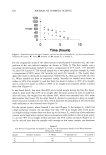
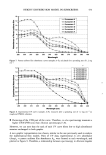
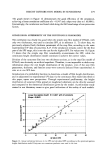
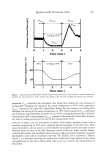
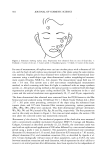
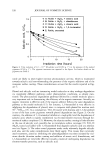
500 JOURNAL OF COSMETIC SCIENCE (4-7). There have also been many reports about the effects of cosmetics on the mor- phology of the cutaneous surface using these methods (6,8,9). In previous studies, we analyzed replicas of the skin obtained from eight sites (forehead, glabella, corner of the eye, upper eyelid, lower eyelid, nasolabial groove, corner of the mouth, and cheek) on the faces of 136 healthy Japanese females (aged 18-83 years) using a three-dimensional surface morphology measurement system, and we evaluated age-associated changes (10). The results indicated that age-associated increases in the depth of wrinkles were the greatest in the corner of the eye, followed by the glabella, the corner of the mouth, the nasolabial groove, the upper eyelid, the forehead, the lower eyelid, and the cheek. We hypothesized that wrinkles are formed under the influence not only of ultraviolet rays but also of other factors. However, how this surface morphology is related to other parameters of skin properties has scarcely been evaluated except for its relationship with the physiologic state of the cutaneous surface (11,12). Concerning cutaneous blood flow, there have been a few reports on its age-associated changes in human facial skin (13-15) and other studies concerning its relationships with primary stimuli such as transepidermal water loss (TEWL) and erythema (16,17). Al- though decreases in cutaneous blood flow are generally supposed to have adverse effects on the skin, little is known about how such changes affect cutaneous properties in normal skin. Thus, clarification of the effects of cutaneous blood flow on the three- dimensional morphology of the skin surface, particularly wrinkles formed on the face, is important. In this study, therefore, we evaluated the relationship between the surface morphology and blood flow of facial skin by measuring the cutaneous blood flow in 40 elderly subjects, quantifying the three-dimensional morphology of the skin surface using rep- licas, and examining correlations between blood flow and morphological parameters. MATERIAL AND METHODS SUBJECTS AND DESIGN OF THE STUDY The subjects used in this study were 40 healthy Japanese women aged 60-77 years, who lived in the suburbs of Tokyo and gave informed consent. The subjects washed their faces with liquid face-washing agents (Kao Corporation, Tokyo) prior to each measurement. MEASUREMENTS USING INSTRUMENTS Measurement of blood flow and analytical parameters. Blood flow was measured by the method of Nagashima et al. (15,18,19). Each measurement was performed using an integration-type skin blood laser-Doppler flowmeter with a temperature loading instru- ment (ILD-T, Kao Corporation, Tokyo, Japan) at two points, on the forehead and on the cheek. The measurement on the cheek was made on the zygomatic bone to ease attaching the probe. After the subject had been acclimated at 25øC and 50% RH for 15 minutes, the blood flow was measured with the subject in the spine position. The blood flow was monitored serially for one minute at a probe temperature of 30øC, for two minutes with cooling at a probe temperature of 10øC, and for two minutes after the end of cooling. Figure 1 shows the definitions used for blood flow parameters. Parameter Frest represents the mean resting skin blood flow for 30 seconds at a sensor temperature of 30øC (mV),
Purchased for the exclusive use of nofirst nolast (unknown)
From: SCC Media Library & Resource Center (library.scconline.org)