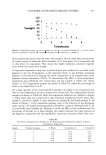
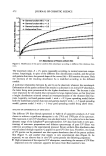
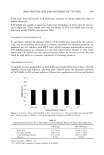
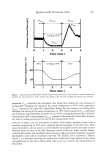
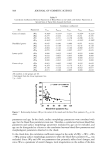
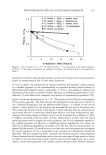
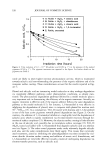
PHOTODEGRADATION BY RUTILE-BASED PIGMENTS 523 effectiveness of both 1,3-butanediol and dimethicone, coupled with alumina surface coating, would be even higher when considering that the Aldrich uncoated rutile we used as a reference is likely to show lower photocatalytic activity than the naked rutile specimens used to prepare the cited coated pigments. This is due to the larger average particle diameter in the case of Aldrich naked rutile when compared with the other two pigments (see Table I). In contrast, the treatments we studied are much less effective (probably completely ineffective) in protecting salicylic acid, as shown in Figure 3. The reason for this different behavior is that phenol mainly degrades upon reaction with Ti•v-øOHsurf (13,16), while salicylic acid degrades via electron-transfer reactions involving surface-adsorbed species (17). The treatments we studied thus give limited protection to molecules undergoing photocatalytic transformation processes similar to those involving salicylic acid. In the case of Figure 3, Aldrich uncoated rutile is the pigment giving the lowest degradation rate of salicylic acid, most likely due to the larger particle diameter and lower surface area resulting in lower photocatalytic activity. The problem of incomplete inhibition of titanium dioxide photodegradation activity is likely to affect many other commercial pigments and is caused by the use of a single model molecule in the development of organic additives used as pigment treatments, as is commonly found in the literature (7-10). The treatments are thus usually evaluated by measuring the photocatalytic degradation rate of the model molecule, and the one assuring the lower rate is then chosen. In this way, however, only one photocatalytic degradation pathway is taken into account. For instance, a treatment showing excellent performance in inhibiting phenol photocatalytic degradation might be completely in- effective in inhibiting degradation of salicylic acid, as we have shown in this paper. This means that the choice of the model molecule used to assess the photocatalytic activity of the pigments is critical to the success of the assessment procedure. An effective way to test the photocatalytic activity of pigments used as sunscreens should make use of at least two model molecules, one undergoing photocatalytic degradation via reaction with TiIV-øOnsurf (e.g., phenol), and the other transforming via electron-transfer processes (e.g., salicylic acid) (15). The best-performing treatment in this context would be that assuring a low photocatalytic degradation rate of both molecules. As an alternative, since organic treatments able to inhibit the degradation of phenol already exist, the solution of the problem might be to find a treatment able to inhibit degradation of salicylic acid. The adoption of a double treatment should then be able to block both the photocatalytic degradations occurring via reaction with Ti•v-øOHs•rf and those taking place via elec- tron-transfer processes. REFERENCES (1) G. Proserpio, I. Bonardo, and M. A. Ghiglione, Raggi UV, Cute, Cosmetici (Sinerga, Milan, Italy, 1988). (2) D. Bahnemann, J. Cunningham, M. A. Fox, E. Pelizzetti, P. Pichat, and N. Serpone, "Photocatalytic Treatment of Water," in Aquatic and Surface Photochemistry, G. R. Helz, R. G. Zepp, and D. G. Crosby, Eds. (Lewis, London, 1994), pp. 261-316. (3) M. A. Fox and M. T. Dulay, Heterogeneous photocatalysis, Chem. Rev., 93, 341-357 (1993). (4) R. Dunford, A. Salinaro, L. Z. Cai, N. Serpone, S. Horikoshi, H. Hidaka, and J. Knowland, Chemical oxidation and DNA damage catalysed by inorganic sunscreen ingredients, FEBS Lett., 418, 87-90 (1997). (5) H. Hidaka, S. Horikoshi, N. Serpone. and J. Knowland, In vitro photochemical damage to DNA, RNA

524 JOURNAL OF COSMETIC SCIENCE (18) (19) (20) (21) (22) and their bases by an inorganic sunscreen agent on exposure to UVA and UVB radiation,J. Photochem. Photobiol. A, 111, 205-213 (1997). (6) T. Hancock-Chen and J. C. Scaiano, Enzyme inactivation by TiO 2 photosensitization, J. Photochem. Photobiol. B, 57, 193-196 (2000). (7) M. Kobayashi and W. Kalriess, Photocatalytic activity of titanium dioxide and zinc oxide, Cosmet. Toiletr., 112, 83-86 (1997). (8) W. C. Dunlap, Y. Yamamoto, M. Inoue, M. Kashiba-Iwatsuki, M. Yamaguchi, and K. Tomita, Uric acid photo-oxidation assay: In vitro comparison of sunscreening agents, Int. J. Cosmet. Sci., 20, 1-18 (1998). (9) R. K. Chauduri and G. Majewski, Amphiphilic microfine titanium dioxide: Its properties and appli- cation in sunscreen formulations, DCI, 24-31 (May 1998). (10) G. Dransfield, P.J. Guest, P. L. Lyth, D.J. McGarvey, and T. G. Truscott, Photoactivity tests of TiO2-based inorganic sunscreens. Part I. Non-aqueous dispersions, J. Photothem. Photobiol. B, 59, 147-151 (2000). (11) O. Legrini, E. Oliveros, and A.M. Braun, Photochemical processes for water treatment, Chem. Rev., 93, 671-698 (1993). (12) M. R. Hoffmann, S.T. Martin, W. Choi, and D.W. Bahnemann, Environmental applications of semiconductor photocatalysis, Chem. Rev., 95, 69-96 (1995). (13) C. Richard and P. Boule, Photocatalytic oxidation of phenolic derivatives: Influence of OH' and h + on the distribution of products, NewJ. Chem., 18, 547-552 (1994). (14) T. Picatonotto, D. Vione, M. E. Carlotti, and M. Gallarate, Photocatalytic activity of inorganic sunscreens, J. Disp. Sci. Technol., 22, 381-386 (2001). (15) T. Picatonotto, D. Vione, and M. E. Carlotti, Effect of some additives used in the cosmetic field on the photocatalytic activity of rutile. J. Di•p. Sci. Technol., 23, 845-852 (2002). (16) C. Minero, G. Mariella, V. Maurino, D. Vione, and E. Pelizzetti, Photocatalytic transformation of organic compounds in the presence of inorganic ions. 2. Competitive reactions of phenol and alcohols on a titanium dioxide-fluoride system, Langmuir, 16, 8964-8972 (2000). (17) S. Tunesi and M. A. Anderson, Influence ofchemisorption on the photodecompositions of salicylic acid and related compounds using suspended TiO 2 ceramic membranes, J. Phys. Chem., 95, 3399-3405 (1991). C. Minero, G. Mariella, V. Maurino, and E. Pelizzetti, Photocatalytic transformations of organic compounds in the presence of inorganic anions. I. Hydroxyl-mediated and direct electron-transfer reactions of phenol on a titanium dioxide-fluoride system, Langmuir, 16, 2632-2641 (2000). V. Rossatto, T. Picatonotto, D. Vione, and M. E. Carlotti, Behavior of some rheological modifiers used in cosmetics under photocatalytic conditions, J. Disp. Sci. TechnoL, 24, 259-271 (2003). D. Vione, V. Maurino, C. Minero, M. Vincenti, and E. Pelizzetti, Formation of nitrophenols upon UV irradiation of nitrate in aqueous solutions and in TiO2 aqueous suspensions, Chemosphere, 44, 237-248 (2001). C. Minero, Kinetic analysis of photoinduced reactions at the water semiconductor interface, Catal. Today, 54, 205-216 (1999). A. E. Cassano and O. M. Alfano, Reaction engineering of suspended solid heterogeneous photocatalytic reactors, Catal. Today., 58, 167-197 (2000).
Purchased for the exclusive use of nofirst nolast (unknown)
From: SCC Media Library & Resource Center (library.scconline.org)