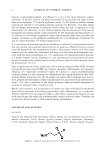
J. Cosrnet. Sci. J 57, 11-21 CTanuary/February 2006) New cosmetic agents for skin whitening from Angelica dahurica Y. H. CHO, J. H. KIM, S. M. PARK, B. C. LEE, H. B. PYO, and H. D. PARK, R&D Center, Hanbul Cosmetic CorporationJ 72-7 Yongsung-ri, Samsung-myun, Umsung-kun, Chungbuk 369-834 (Y.H.C., ].H.K., S.M.P., B.C.L., H.B.P.), and Department of Biotechnology, College of Engineering, Daegu University, Gyeongsan-si, Gyeongbuk 712-714 (H.D.P.) Korea. Accepted for publication on August 9, 2005. Synopsis To develop a new whitening agent for cosmetics from natural products, Angelica dahurica was selected for its inhibitory effect on melanogenesis in Bl6 melanoma cells. From the mechanism study, it was clarified that the ethanolic extracts of this plant showed the suppression of tyrosinase synthesis but no inhibition of tyrosinase activity. In order to find the active constituents from this plant, the ethanol extracts were chromatographed repeatedly with silica gel. Two coumarin compounds were isolated from A. dahurica. Their structures were identified by physicochemical and spectral data such as UV, IR, NMR, and MS. It was shown that the active substance was isoimperatorin (10-[(3-methyl-2-butenyl)oxy}-7H-furo[3,2-g}[l} ben- zopyran-7-one) and imperatorin (9-[(3-methyl-2-butenyl)oxy }-7H-furo[3,2-g}[l} benzopyran-7-one). They significantly inhibited tyrosinase synthesis in B 16 melanoma cells. To elucidate the action mechanism of the active compounds of A. dahurica, we investigated the changes in the mRNA level of tyrosinase using the RT-PCR technique. As a result, the mRNA level of tyrosinase was markedly reduced by active compounds of A. dahurica. From these results, we suggest that these extracts might be useful as a new whitening agent in cosmetics, but the in vitro findings must be verified in in vivo skin-lightening studies. INTRODUCTION Melanin production is principally responsible for skin color and plays an important role in the prevention of sun-induced skin injury (1). However, abnormal hyperpigmentation such as freckles, chloasma, lentigines, and other forms of melanin hyperpigmentation could be a serious aesthetic problem (2). In mammalian melanocytes, melanins are synthesized within melanosomes that contain tyrosinase, which plays a key role in melanogenesis, as it catalyzes the rate-limiting reaction of the melanogenic process (3-5). Accordingly, melanin production is mainly controlled by the expression and activation of tyrosinase ( 6). Address all correspondence to Y. H. Cho. 11

12 JOURNAL OF COSMETIC SCIENCE Concerns of changes in skin color are frequently raised for medical or cosmetic reasons. Hyperpigmentation disorders are often treated with hydroquinones, retinoids, arbutin, kojic acid, ascorbic acid, and tyrosinase inhibitors, but results of such treatments are sometimes disappointing (7). Nowadays, tyrosinase inhibitors from natural plants, such Morus alba L. (8), Glycyrrhiza glabra L. (9), and green tea (10), have been studied in consideration of safety. To develop plant materials protecting hyperpigmentation, we have checked the effect of 20 medicinal plant extracts on the inhibition of melanogen- esis, the inhibition of tyrosinase synthesis, and the activity of tyrosinase in B16 mela- noma cells, respectively. From the results of these screening procedures, we found that Angelica dahurica exerted a strong melanogenic inhibitory effect on B16 mouse mela- noma cells. A. dahurica has been used in Korea, Japan, and China as a folk medicine to treat menstrual disorder, abdominal pain, hysteria, bleeding, headache, and excessive leukorrhea (11). We also identified the active compounds in the extract of A. dahurica. To elucidate the action mechanism of the active compounds of A. dahurica, we inves- tigated the changes in the mRNA level of tyrosinase using the reverse transcription- polymerase chain reaction (RT-PCR) technique. EXPERIMENTAL MATERIALS Medicinal plants were purchased from a local market (Kyeong-Dong market, Korea). The plants were extracted in 7 0% aqueous ethanol under reflux for four hours. The extracts were filtered and concentrated in vacuo. For evaluation, the plant extracts were dissolved in dimethylsulfoxide (DMSO). The melting points were taken on a Mel-Temp II (Laboratory Devices, USA) melting- point-determining apparatus and uncorrected. 1H- and 1 3C-NMR spectra were recorded with a Unity Inova 500 (Varian, USA) and a DPX 300 (Bruker, Germany). Chemical shifts were given in O (ppm) from TMS. IR, EIMS, and UV spectra were measured on an FT/IR-5300 Qasco, Japan), a JMS 700 Qeol, Japan), and a Cary 1E (Varian, Austra- lia), respectively. The purity of the compounds isolated was identified with high- performance liquid chromatography (Waters Alliance 2695-996 PDA detector, Waters, USA). Thin-layer chromatography (TLC) was performed on pre-coated Kieselgel 60 F 254 (Art. 1.05554 and 1.13895) and RP-18 F 254 (Art. 1.05559) plates (Merck, Germany). Silica gel 60 was purchased from Merck. The organic solvents and chemicals were obtained from Sigma (USA), Bio Whittaker (USA), and Gibco BRL (USA), and purified by the appropriate methods before use. CELL VIABILITY ASSAY Cell survival was measured by the level of mitochondrial respiration in cells after treating the samples, which was determined by the reduction of the tetrazolium salt, 3-(4,5-dimethylthiazol-2-yl)-2,5-diphenyltetrazolium bromide (MTT), into a blue formazan precipitate. The cells were plated at a density of approximately 1 x 10⁴ cells/well in a 96-well microplate. After sample treatment for 24 hours, the cells were incubated in MTT solution (0.5 mg/ml) for four hours at 3 7°C. The blue formazan produced was solubilized in 0.4 ml of acid-isopropanol (0.04 N HCl in isopropanol), and
Purchased for the exclusive use of nofirst nolast (unknown)
From: SCC Media Library & Resource Center (library.scconline.org)