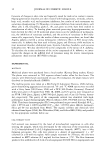
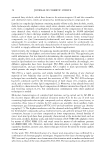
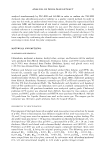
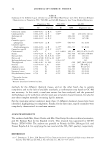
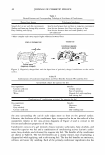
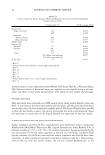
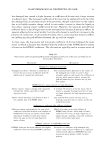
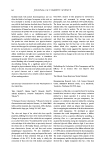
NANOTRIBOLOGICAL PROPERTIES OF HAIR 41 specific functions and roles that affect the performance of the entire product. Table III displays the functions of the major conditioner ingredients and Table IV displays their chemical structure. Cationic surfactants are critical to the forming of the lamellar gel network in conditioner, and also act as a lubricant and static control agent, since their positive charge aids in counteracting the negative charge of the hair fibers. Fatty alcohols are used to lubricate and moisturize the hair surface, along with forming the gel network. Finally, silicones are the main source of lubrication in the conditioner formu- lation. Recently AFM/FFM work has been done on the roughness, friction, and adhesion changes of various experimental and commercial treatments applied to the damaged hair surface (3,4). It was found that, in general, chemical and mechanical damage to the hair caused the outer lubricious layer of the cuticle to wear off, resulting in an increased nanoscale coefficient of friction. Conditioner treatment was found to slightly increase the nanoscale coefficient of friction for virgin hair (due to meniscus effects), while decreasing it for damaged hair (the higher negative charge on the surface caused more conditioner to deposit and therefore shear more easily). For both virgin and damaged hair, adhesive pull-off force increased with conditioner treatment, largely due to meniscus effects brought on by the interaction of the AFM tip and conditioner layer. Since conditioner is such a complex network of ingredients, it is necessary to also study the effects of these individual components to reveal the significance each has on nano- tribological properties when applied to the hair. In this study, AFM/FFM is used to conduct nanotribological studies of surface roughness, friction force, and adhesive force as a function of silicone type, silicone deposition level, and cationic surfactant type. Since most application of conditioner is typically done on wet hair, the coefficient of friction differences between dry and wet damaged hair (with and without commercial condi- tioner) are also discussed. EXPERIMENT AL DETAILS HAIR SAMPLES Caucasian hair samples were received from Procter & Gamble (Cincinnati, OH) and prepared per Appendix A. The samples arrived as hair swatches approximately 0.3-m long. Although the exact location from the root is unknown, it is estimated that hair samples used for testing were between 0.1 and 0.2 m from the scalp. All hair samples had undergone two rinse-wash cycles of commercial shampoo application (in the case of Table III Individual Conditioner Ingredients and Their Corresponding Purpose/Function Conditioner gel network chassis for desired viscosity, texture, and performance Conditioner ingredient Quanternary amine-based cationic surfactant Fatty alcohol Silicone Purpose/function Aids formation of lamellar gel network Lubricates and controls static Lubricates and moisturizes Aids formation of lamellar gel network along with cationic surfactant Primary source of lubrication Gives hair a soft and smooth feel

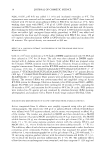
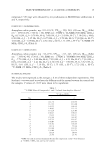
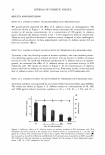
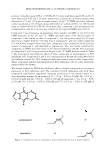
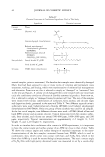
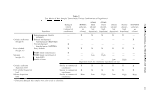
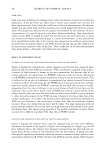
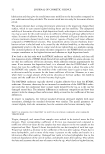
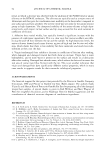
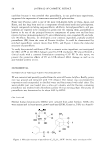
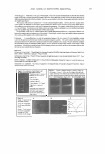
42 Cationic surfactants JOURNAL OF COSMETIC SCIENCE Table IV Chemical Structures of Conditioner Ingredients Used in This Study Ingredient Water Glutamic acid Stearamidipropyl dimethylamine Behenyl amiodopropyl dimethylamine glutamate (BAPDMA) Behentrimonium chloride (BTMAC) CH3(CH2)21N(Cl)(CH3)3 Chemical structure O � OH H,N OH II H,c ,N �N �CH ' H ' CH, CH,(CH,),,CH,-1-CH] 3 Cl. � CH, Fatty alcohols Stearyl alcohol (C 18 0H) CH, HO�CH, Cetyl alcohol (C16OH) HO�CH, Silicones PDMS blend (dimethicone) CH, treated samples, prior to treatment). The baseline hair samples were chemically damaged fibers that had been exposed to one or more cycles of coloring and permanent wave treatment, washing, and drying, which were representative of common hair management and alteration. From now on, this is referred to simply as "damaged" or "untreated" hair in the text and figures. A similar set of damaged fibers were treated with one rinse/wash cycle of a conditioner similar to a Procter & Gamble commercial product. From now on, this is referred to simply as "damaged treated (commercial)" hair. The rest of the samples were treated with various combinations of surfactant, fatty alcohol, and silicone types and deposition levels, presented in the matrix of Table V. Two different types of cationic surfactants were used: behentrimonium chloride (BTMAC) and behenyl amidopropyl dimethylamine (BAPDMA). Only one group of fatty alcohols was used for all samples. In the last set of samples, two different silicones were used: a PDMS (blend of low and high MW) silicone and an amino silicone. Typical deposition levels for cationic surfac- tant, fatty alcohol, and silicone are around 500-800 ppm, 1000-2000 ppm, and 200 ppm, respectively. Typical concentrations are approximately 2-5 weight %, 5-10 weight %, and 1-10 weight %, respectively. In order to simulate hair conditioner-skin contact in AFM experiments, it is important to have the contact angle and surface energy of an AFM tip close to that of skin. Table VI shows the contact angles and surface energies of materials important to the nano- characterization of the hair samples: untreated human hair PDMS, which is used in conditioners skin, which comes into contact with hair and Si 3 N 4 film, which in the form of an AFM tip is used for nanotribological measurements. The static contact angle of Si 3 N4 film with high-purity deionized water was measured in air by a sessile-drop
Purchased for the exclusive use of nofirst nolast (unknown)
From: SCC Media Library & Resource Center (library.scconline.org)